


The world of aluminum alloys is vast, and choosing the right one for the right manufacturing process is crucial. You might know that 3003 aluminum is a versatile workhorse for sheet metal, but what happens when you need a custom profile? Can you simply extrude 3003 aluminum to get the shape you need?
This guide will give you the direct, technical truth about extruding 3003 aluminum. We'll explain if it can be done, why it's rarely the right choice, and what you should be using instead for high-quality aluminum profiles.
Can You Extrude 3003 Aluminum?
Yes, technically, 3003 aluminum can be extruded into simple shapes like tubes and bars. However, it is not an ideal alloy for extrusion and is rarely used for complex profiles. Its chemical composition and properties result in poor extrudability, a moderate surface finish, and limited strength. For almost all extrusion applications, specialized alloys like 6063 aluminum are the far superior and standard choice.
What Is 3003 Aluminum?
First, let's remember what 3003 aluminum is designed for. It's a member of the aluminum-manganese (Al-Mn) family.
- Alloy Family: Al-Mn
- Heat Treatment: It is non-heat-treatable. Its strength comes from cold working (strain hardening).
- Key Strengths: Excellent corrosion resistance and fantastic formability (bending, drawing).
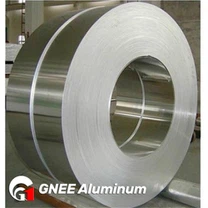
- Primary Forms: It is overwhelmingly produced and used as sheet, plate, and coil.
The critical point here is that its entire design philosophy is centered around being rolled into flat products and then formed, not being pushed through a die.
Can 3003 Aluminum Really Be Extruded?
From a purely technical standpoint, you can heat an aluminum billet and force it through a die to create a shape. In that sense, 3003 can be extruded.
However, in an industrial and commercial context, the answer is mostly no. Here's why:
- Poor Extrudability: It doesn't flow smoothly or predictably through a die, especially one with complex details.
- Limited Profile Complexity: You cannot create intricate shapes, sharp corners, or thin walls that are easily achieved with other alloys.
- It's Inefficient: The process is slower, requires more pressure, and results in higher die wear compared to a true extrusion alloy.

Extrusion Characteristics of 3003 Aluminum
Let's rate its performance based on what matters in the extrusion process.
| Property | Performance of 3003 Aluminum | What this means for you |
| Extrudability | Fair to Poor | Difficult to produce complex or detailed shapes. High risk of defects. |
| Surface Finish | Moderate | The surface will not be as smooth or clean as a 6063 extrusion. Not suitable for decorative use. |
| Profile Complexity | Very Limited | Best suited for simple, solid shapes like round tubes or basic channels. |
| Strength After Extrusion | Medium / Low | Since it cannot be heat-treated, the final profile will have only moderate strength. |
Conclusion: Extruding 3003 is only feasible for the most basic shapes where strength and appearance are not primary concerns.
Why 3003 Aluminum is a Poor Choice for Extrusion
1. It's Non-Heat-Treatable
This is the single biggest limitation. The best extrusion alloys, like 6063, get their final strength from a T5 or T6 heat treatment process after extrusion. This allows them to be extruded in a softer state and then hardened. With 3003, the strength you get after extrusion is all you get. There's no way to significantly strengthen the profile, leaving you with a relatively weak part.
2. Poor Metal Flow Characteristics
The alloying elements in 3003 (mainly manganese) do not promote smooth, uniform flow through a complex die. The metal can flow at different speeds in different parts of the die, leading to internal stresses, surface defects, and an inability to fill sharp corners or thin sections of the profile.
3. Average Surface Quality
3003 extrusions tend to have a rougher, less appealing surface finish. This makes them unsuitable for architectural or decorative applications where appearance is critical. It does not provide the clean, smooth surface required for high-quality anodizing.
| Property | 3003 Aluminum | 6063 Aluminum (The Standard) |
| Extrudability | Poor | Excellent |
| Surface Finish | Moderate | Excellent |
| Strength (Final) | Medium | Medium-High (T5/T6) |
| Heat-Treatable | No | Yes |
| Common Use | Limited (Simple Tubes) | All Complex Profiles |
Conclusion: If you need to create a custom aluminum profile, 6063 is the right tool for the job. 3003 is the wrong one.
Are you trying to design an extruded profile but unsure which alloy to use? Don't risk specifying a material that can't be manufactured effectively. Contact our technical support team for a free consultation. We can review your design and recommend the perfect aluminum extrusion alloy for your needs.
The Right Way to Process 3003 Aluminum
So if 3003 isn't for extrusion, what is it for? It excels in processes related to sheet metal fabrication. The best processing methods for 3003 are:
- Rolling: This is how it's made into sheets, plates, and coils.
- Bending and Forming: It can be easily shaped on a press brake.
- Deep Drawing and Stamping: It's perfect for creating stamped parts or deep-drawn shapes like tanks and cookware.
- Welding: It has good weldability.
Conclusion: You should choose 3003 when your primary manufacturing process involves cutting, bending, or forming sheet material, not creating a linear profile.
Where Might a 3003 Extrusion Be Used?
- Seamless Tubing for Chemical Transport: In some cases, its superior corrosion resistance might be prioritized over strength for carrying specific chemicals.
- Basic Industrial Conduits: In a non-structural role where it just needs to protect wires and a high-quality finish isn't needed.
- Heat Exchanger Tubes: Its good thermal conductivity combined with corrosion resistance makes it a candidate for simple extruded tubes in heat exchange units.
When You Should Choose 6063 Instead
For 99% of extrusion projects, you need 6063. Choose it when:
- You are designing any complex or custom profile.
- The part is for architectural use (e.g., window frames and door frames).
- The part requires a high-quality, decorative anodized finish.
- The profile needs a good balance of strength and extrudability.

Why Choose GNEE for Your Aluminum Materials?
- Full Range of Aluminum Supply: We are your single source for all major alloys. We stock and supply 3003 sheet and plate for your fabrication needs and 6063 profiles and bars for your extrusion projects.
- Professional Production & Export Experience: We have served the international market for years, providing high-quality aluminum to the construction, industrial, and manufacturing sectors worldwide.
- Strict Quality Control: Our materials adhere to international standards like ASTM and EN. We provide a Mill Test Certificate (MTC) with every shipment to guarantee its quality.
- Customization Capabilities: We offer cut-to-size services for plates, custom extrusion profiles based on your drawings, and support for various surface finishes.
- Expert Technical Support: Our team is ready to help you with material selection to ensure you get the most efficient and cost-effective solution.
Have a project and need a price? Whether it's for a 3003 sheet or a custom 6063 profile, we're ready to help. Get a quick aluminum quotation from our team today. You can also ask for our packaging details to see how we protect your investment.