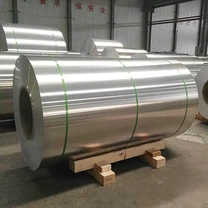
Why 3003-O Aluminum Tube?
When sourcing 3003-O aluminum tubes for heat exchangers, HVAC systems, or chemical transfer lines, price alone is not a sufficient selection criterion. For manufacturers of automotive radiators, condenser tube assemblies, and food-grade processing equipment, choosing the wrong temper or supplier can lead to production failures:
- Temper Substitution: The delivered material is H14 instead of genuine O temper, causing cracking during flaring or bending operations.
- Wall Thickness Variation: Out-of-tolerance wall thickness causes inconsistent heat transfer performance in fin-tube assemblies.
- Surface Defects: Die marks or longitudinal scratches require additional polishing or result in rejected batches.
- Welding Issues: Improper alloy chemistry (excess Si or Fe beyond specification) leads to poor weld quality in tube-to-header joints.
- Traceability Gaps: Mill Test Certificates (MTC) do not match heat numbers stamped on the tube, creating compliance audit failures.
- Delayed Delivery: Shipping delays disrupt tight production schedules for seasonal HVAC manufacturing.
Need 3003-O Aluminum Tube Pricing?
GNEE supplies ASTM B210-compliant 3003-O aluminum tubes to customers worldwide. Our quality system includes 100% dimensional inspection on drawn tubes, full heat-number traceability, and EN 10204 3.1 MTC documentation with every shipment.
Why Choose 3003-O Over Other Tempers or Alloys?
3003 is a non-heat-treatable Al-Mn alloy (1.0–1.5% Mn) that cannot be strengthened by T6-type solution heat treatment. Instead, its mechanical properties are developed through strain hardening (cold working), designated by the H-series tempers. The O temper (fully annealed) provides the maximum ductility available in this alloy system.
When your application involves severe bending, flaring, beading, expansion-fit operations, or complex end-forming, 3003-O is the correct choice. Its elongation at break (25–35%) is roughly 3× that of H14 and 7× that of H18, meaning it can undergo significant plastic deformation before failure.
| Property | 3003-O | 3003-H14 | 3003-H18 | 6061-T6 |
|---|---|---|---|---|
| Tensile Strength (MPa) | 95–130 | 140–180 | 185–220 | 290–310 |
| Yield Strength (MPa) | 35–50 | 115–150 | 165–200 | 240–276 |
| Elongation (%) | 25–35 | 8–12 | 4–6 | 10–12 |
| Hardness (HB) | 28 | 40 | 55 | 95 |
| Best For | Bending, flaring, deep drawing | General purpose | Rigid applications | Structural |
Source: ASTM B210/B210M, Aluminum Association Standards & Data, ASM Handbook Vol. 2. Values are typical; actual properties vary with tube dimensions and production route (seamless vs. welded-drawn).

How GNEE Ensures 3003-O Aluminum Tube Quality
Quality assurance for 3003-O aluminum tubes involves verifying four critical areas:
| Checkpoint | Method | Standard | Acceptance Criteria |
|---|---|---|---|
| Chemical Composition | Optical Emission Spectrometry (OES) | ASTM E607 / E1251 | Mn 1.0–1.5%, Cu 0.05–0.20%, Fe ≤0.70%, Si ≤0.60% |
| Mechanical Properties | Tensile Test | ASTM B557M / E8 | UTS ≥95 MPa, Elongation ≥25% (O temper) |
| Dimensional Accuracy | 100% Inline Laser Measurement | ASTM B210 Table 3 | OD ±0.5%, Wall ±10%, Straightness ≤1.5 mm/m |
| Surface Quality | Visual + Eddy Current | ASTM E309 | No die marks, scratches, or laps deeper than 0.05 mm |
| Flattening Test | Compression to 6× Wall Thickness | ASTM B210 Section 10 | No visible cracks at 60% OD reduction |
| Flare Test | Tapered Pin Expansion | ASTM B210 Section 11 | No cracking at 30% OD expansion |
Standard Reference: ASTM B210/B210M-19a (or latest revision). Each batch ships with an EN 10204 3.1 MTC documenting heat number, chemistry, and mechanical test results.


Can 3003-O Aluminum Tube Crack After Welding or Bending?
Welding: 3003-O has excellent weldability using TIG (GTAW), MIG (GMAW), and resistance welding methods. Unlike 6xxx-series alloys, 3003 does not contain magnesium-silicide precipitates, so it does not suffer from solidification cracking in the weld zone. However, the weld metal and HAZ will have properties closer to the O temper (lowest strength) due to the annealing effect of the weld thermal cycle. Post-weld strength cannot be recovered by heat treatment because 3003 is a non-heat-treatable alloy.
Bending: 3003-O is the optimal temper for tube bending. Its high elongation (25–35%) and low yield-to-tensile ratio allow significant plastic deformation before necking occurs. Minimum bend radius recommendations:
| Tube OD (mm) | Wall (mm) | Min Centerline Radius (×OD) | Notes |
|---|---|---|---|
| 6–12 | 0.5–1.0 | 1.5× OD | Rotary draw bending recommended |
| 12–25 | 1.0–2.0 | 2.0× OD | Use mandrel for thin wall |
| 25–50 | 2.0–4.0 | 2.5× OD | Wiper die required for OD > 40 mm |
| 50–80 | 3.0–6.0 | 3.0× OD | Heat induction bending for tight radii |
Source: Aluminum Association Designation System for Aluminum Tube Bending Guidelines; values are conservative starting points - always validate with your specific tooling and lubricant combination.
Dimensional Tolerances per ASTM B210
Dimensional tolerances for drawn seamless 3003-O aluminum tubes are specified in ASTM B210/B210M. The tables below reflect the standard tolerance bands. Tighter tolerances (e.g., ±0.002″ OD) are available for precision applications on request.
OD Tolerances - Drawn Seamless Tube (Metric)
| Nominal OD (mm) | OD Tolerance (±mm) | Wall Thickness Range (mm) | Wall Tolerance |
|---|---|---|---|
| 6 – 12 | ±0.08 | 0.5 – 2.0 | ±10% of nominal wall |
| 12 – 25 | ±0.10 | 0.75 – 3.0 | ±10% (±8% on request) |
| 25 – 50 | ±0.13 | 1.0 – 5.0 | ±10% (±8% on request) |
| 50 – 80 | ±0.15 | 1.5 – 8.0 | ±10% |
| 80 – 120 | ±0.20 | 2.0 – 10.0 | ±10% |
| 120 – 200 | ±0.25 | 3.0 – 15.0 | ±10% |
Source: ASTM B210/B210M-19a, Table 3 (metric). For inch-pound values, see ASTM B210 Table 2. Coiled tube: wall ≤2.0 mm only.
Additional Tolerance Requirements
| Parameter | Standard Tolerance | Precision Grade |
|---|---|---|
| Straightness (per 1,000 mm) | ≤1.5 mm | ≤0.5 mm |
| Length (cut, < 2,000 mm) | +3 mm / -0 mm | +1 mm / -0 mm |
| Length (cut, ≥ 2,000 mm) | +5 mm / -0 mm | +2 mm / -0 mm |
| Out-of-Roundness | ≤ 50% of OD tolerance | ≤ 30% |
| End Squareness | ≤0.015″ (0.38 mm) | ≤0.008″ (0.20 mm) |
Source: ASTM B210/B210M-19a. Precision grade tolerances require centerless grinding or precision drawing - specify when requesting a quote.
Stock Availability and Delivery Speed
GNEE maintains stock of commonly used 3003-O tube specifications and coordinates multiple production lines for rapid response:
| Order Type | Typical Lead Time | Notes |
|---|---|---|
| Standard specification (stock) | 7 – 15 working days | Common OD/wall combos in O temper |
| Custom specification (drawn) | 15 – 25 working days | Depends on OD, wall, and temper |
| Custom specification (extruded) | 20 – 30 working days | Large OD or non-round profiles |
| OEM machining/custom cutting | +5 – 10 days on base | Cutting, bending, end-forming, anodizing |
MTC, PMI, and Third-Party Inspection Reports
Every batch of 3003-O aluminum tubes ships with the following documentation:
| Document | Standard | Contents |
|---|---|---|
| Mill Test Certificate (MTC) | EN 10204 3.1 | Heat number, chemical composition, mechanical test results |
| Chemical Analysis Report | ASTM E607 | OES spectrometry, all elements per ASTM B210 |
| Mechanical Test Report | ASTM B557M / E8 | UTS, yield, elongation, hardness |
| Dimensional Inspection Record | ASTM B210 Table 3 | 100% inline measurement log |
| Flattening & Flare Test Report | ASTM B210 Sec. 10–11 | Pass/Fail with test parameters |
| Third-Party Inspection (optional) | SGS / BV / TÜV | Independent verification on request |
OEM Machining and Custom Processing Services
In addition to supplying raw tubes, GNEE provides a range of value-added processing services for 3003-O aluminum tubes:
| Service | Capability | Tolerance |
|---|---|---|
| Precision Cutting | Cut-to-length, ±0.5 mm | Length tolerance ±1 mm |
| Tube Bending | Rotary draw, CNC, min radius 1.5×OD | Angle ±0.5° |
| End Forming | Flaring, expanding, reducing, beading | Per ASTM B210 flare test |
| Surface Treatment | Anodizing, alodine, powder coating, polishing | Per customer spec |
| CNC Machining | Flanges, threads, grooves, custom features | ±0.02 mm |
| Custom Packaging | VCI paper, wooden crates, bar coding | Export seaworthy |
We manufacture 3003-O aluminum tubes with OD ranging from 6 mm to 200 mm, wall thickness 0.5 mm to 15 mm, in lengths up to 6,000 mm or cut to specification.
3003-O Aluminum Tube Price Guide
Disclaimer: The prices below are indicative reference ranges only, based on August 2026 Chinese domestic market data (SMM / market quotations). Always request a formal quotation for current pricing.
| Tube Type | Specification | Process | Indicative Price Range |
|---|---|---|---|
| Round Tube (O temper) | OD 6–25 mm, Wall 0.5–2.0 mm | Drawn Seamless | 18,000 – 22,000 CNY/ton |
| Round Tube (O temper) | OD 25–80 mm, Wall 1.5–5.0 mm | Drawn Seamless | 17,000 – 20,000 CNY/ton |
| Round Tube (O temper) | OD 80–200 mm, Wall 3.0–15 mm | Extruded | 16,000 – 19,000 CNY/ton |
| Coiled Tube (O temper) | OD ≤12 mm, Wall ≤2.0 mm | Drawn (Coil) | 20,000 – 25,000 CNY/ton |
Price basis: August 2026 Chinese domestic market reference (SMM A00 aluminum ~23,700 CNY/ton + processing premium). Export pricing in USD available on request - includes alloy surcharge, processing cost, and freight to port. Prices valid for 7 days from quotation date.
Request Current 3003-O Tube Quote
Complete Specification Sheet of ASTM B210 3003-O Aluminum Tube
3003-O Aluminum Tube - Quick Specifications
| Product Name | 3003-O Aluminum Tube (ASTM B210) |
| Alloy / UNS | 3003 / A93003 |
| Temper | O (Fully Annealed) |
| Standard | ASTM B210/B210M, ASTM B483 |
| Shape | Round, Square, Rectangular |
| OD Range | 3 mm – 500 mm |
| Wall Thickness | 0.5 mm – 50 mm |
| Length | Up to 6,000 mm (custom cutting available) |
| Manufacturing Process | Drawn Seamless, Extruded, Welded-Drawn |
| Surface Finish | Mill Finish, Bright, Anodized, Powder Coated |
| OD Tolerance | ±0.5% of nominal (precision ±0.05 mm) |
| Heat Treatment | Not Applicable (non-heat-treatable alloy) |
| Inspection | PMI, Eddy Current, Dimensional, Flattening, Flare Test |
| Certificate | EN 10204 3.1 / 3.2 MTC |
| Third-Party Inspection | SGS, BV, TÜV (on request) |
| Packaging | VCI Paper + PE Wrap + Wooden Crates |
| Delivery Time | 7–15 days (stock); 15–25 days (custom) |
| Trade Terms | EXW, FOB, CFR, CIF, DDP |
| Payment Terms | T/T, L/C at Sight |
Equivalent Designations
| System | Designation | Issuing Body |
|---|---|---|
| AA (USA) | 3003 | The Aluminum Association |
| UNS (USA) | A93003 | ASTM/SAE |
| EN (Europe) | EN AW-3003 | CEN |
| DIN (Germany) | 3.0517 | DIN |
| ISO | AlMn1Cu | ISO |
| GB/T (China) | 3003 | SAC |
| JIS (Japan) | A3003 | JISC |
Source: ANSI H35.1/H35.1M, EN 573-3, GB/T 3190, JIS H4000.
Chemical Composition
The chemical composition of 3003 aluminum conforms to ASTM B210 and EN 573-3 requirements. Manganese (1.0–1.5%) is the primary alloying element, providing strength beyond that of pure aluminum (1xxx series) while maintaining excellent formability. The small copper addition (0.05–0.20%) contributes modest additional strengthening without significantly impairing corrosion resistance.
| Element | Composition (%) |
|---|---|
| Aluminum (Al) | Balance (≥ ~96.8%) |
| Manganese (Mn) | 1.0 – 1.5 |
| Copper (Cu) | 0.05 – 0.20 |
| Iron (Fe) | ≤ 0.70 |
| Silicon (Si) | ≤ 0.60 |
| Zinc (Zn) | ≤ 0.10 |
| Others (each) | ≤ 0.05 |
| Others (total) | ≤ 0.15 |
Source: ASTM B210/B210M-19a Table 1, EN 573-3, GB/T 3190-2020, Aluminum Association Registration Record. Every heat is verified by OES and documented in the MTC.
Mechanical Properties (O Temper)
As a non-heat-treatable alloy, 3003's mechanical properties in the O temper represent the softest, most ductile condition. Properties are developed through annealing at 415°C (780°F) after cold working, which recrystallizes the grain structure and eliminates strain hardening.
| Property | 3003-O (Typical) | Test Standard |
|---|---|---|
| Ultimate Tensile Strength (UTS) | 95 – 130 MPa | ASTM B557M / E8 |
| Yield Strength (0.2% offset) | 35 – 50 MPa (min 35) | ASTM B557M / E8 |
| Elongation at Break | 25 – 35% | ASTM B557M / E8 |
| Brinell Hardness | 28 HB | ASTM E10 |
| Shear Strength | 75 MPa | ASTM B769 |
| Fatigue Strength (10⁷ cycles) | 50 MPa | ISO 1099 |
| Compression Yield | ~40 MPa | ASTM E9 |
| Deep Drawing Ratio (LDR) | 2.3 | ISO 12004 |
Source: Aluminum Association Standards & Data 2024, ASM Handbook Vol. 2 (10th Ed.), ASTM B210/B210M-19a. Values are typical for drawn seamless tube in O temper; actual values may vary with tube dimensions and production route.
Important: 3003-O maintains over 90% of its ductility at -196°C (liquid nitrogen temperature), making it suitable for cryogenic vessel tubing. However, its maximum service temperature for mechanical performance is approximately 180°C. For higher-temperature applications, consider 6061-T6 or 3004 alloy.
Physical and Thermal Properties
| Property | Value |
|---|---|
| Density | 2.73 g/cm³ |
| Melting Range (Solidus) | 643°C (1,190°F) |
| Melting Range (Liquidus) | 654°C (1,210°F) |
| Thermal Conductivity (O temper) | 193 W/m·K |
| Specific Heat Capacity | 900 J/kg·K |
| Coefficient of Thermal Expansion (20–100°C) | 23.2 µm/m·°C |
| Electrical Conductivity (equal volume) | 44% IACS |
| Electrical Conductivity (equal weight) | 140% IACS |
| Modulus of Elasticity (E) | 68.9 – 70 GPa |
| Shear Modulus (G) | 26 GPa |
| Poisson's Ratio | 0.33 |
| Thermal Diffusivity | 71 mm²/s |
Source: Aluminum Association Standards & Data, ASM Handbook Vol. 2, makeitfrom.com material database. Thermal conductivity values across references range from 159 to 193 W/m·K; the Aluminum Association value of 193 W/m·K is used as the authoritative reference. The discrepancy may stem from different Mn levels within the 1.0–1.5% specification range and measurement technique differences.
Corrosion Resistance
3003-O aluminum tube offers excellent corrosion resistance in atmospheric, freshwater, and mild chemical environments. The Mn addition improves corrosion resistance compared to pure aluminum in certain conditions. Key characteristics:
| Environment | Performance | Notes |
|---|---|---|
| Atmospheric (rural/urban) | Excellent | Forms protective Al₂O₃ layer; long-term durability |
| Atmospheric (marine/coastal) | Good | Performs well; 5052 is superior for sustained saltwater immersion |
| Freshwater / Potable Water | Excellent | NSF/ANSI 61 certified for drinking water systems |
| Dilute Acids (non-oxidizing) | Good to Moderate | Resistant to acetic, citric, nitric (dilute); avoid HCl |
| Strong Alkalis | Poor | Not recommended; amphoteric dissolution |
| Food & Beverage Contact | Approved | FDA CFR 21.177.1500 compliant for food contact |
| Galvanic Coupling | Caution | Isolate from copper, steel, and stainless to prevent galvanic corrosion |
| Stress Corrosion Cracking (SCC) | Not Susceptible | 3003 is not prone to SCC in any temper |
Source: ASM Handbook Vol. 13A (Corrosion), Aluminum Association corrosion guidelines, NSF/ANSI 61 listing.
3003 vs. 1100 vs. 5052 vs. 6061
| Property | 3003-O | 1100-O | 5052-H32 | 6061-T6 |
|---|---|---|---|---|
| Alloy Type | Al-Mn | Pure Al (99%+) | Al-Mg | Al-Mg-Si |
| Heat Treatable | No | No | No | Yes |
| UTS (MPa) | 110 | 90 | 230 | 310 |
| Yield (MPa) | 40 | 35 | 195 | 276 |
| Elongation (%) | 30 | 35 | 18 | 12 |
| Thermal Conductivity (W/m·K) | 193 | 222 | 138 | 167 |
| Best For | HVAC, heat exchangers, food equipment | General purpose, electrical | Marine, fuel tanks | Structural, aerospace |
Source: Aluminum Association, ASM Handbook Vol. 2. Values are typical for tube products; actual properties may vary with dimensions and production method.
Applications and Use Cases
3003-O aluminum tube is specified where formability, corrosion resistance, and thermal conductivity are more important than high mechanical strength. The O temper is specifically chosen when the tube will undergo bending, flaring, or expansion-fit assembly after delivery.
| Industry | Application | Why 3003-O? |
|---|---|---|
| HVAC & Refrigeration | Evaporator tubes, condenser tubes, expansion-fit header joints | O temper allows expansion fitting without cracking; high thermal conductivity (193 W/m·K) |
| Automotive | Radiator tubes, heater cores, intercooler tubing | Formable into complex serpentine bends; brazing-compatible |
| Chemical Processing | Chemical transfer lines for dilute acids, non-oxidizing fluids | Good corrosion resistance to many chemicals; not for strong alkalis |
| Food & Beverage | Food processing equipment, dairy tubing, brewing lines | FDA CFR 21.177.1500 compliant; non-toxic; easy to clean |
| Cryogenic Systems | Cryo-vessel tubing, LN₂ transfer lines | Retains >90% ductility at -196°C; no ductile-to-brittle transition |
| Agriculture | Drip irrigation systems, sprinkler components | Corrosion-resistant in soil/water; bendable for field installation |
| Architecture | Decorative tubing, handrail systems, lighting fixtures | Anodizes well; lightweight; easily formed into curves |
| Water Treatment | Potable water distribution, filtration housings | NSF/ANSI 61 certified for drinking water contact |
Not Recommended For: High-pressure piping (use 6061-T6), service above 180°C (use 3004 or 5xxx), structural load-bearing applications (use 6061-T6 or 7075), or environments with strong alkalis (pH > 9).
Packaging Methods by Tube Type
| Tube Type | Surface Finish | Recommended Packaging |
|---|---|---|
| Small OD Drawn Tube (< 20 mm) | Bright / Mill Finish | VCI paper interleaving + PE sleeve per bundle + Woven bag + Wooden crate |
| Medium OD Tube (20–80 mm) | Mill / Polished | PE wrap + Waterproof paper + Steel strapping + Wooden pallet |
| Large OD Extruded Tube (> 80 mm) | Mill Finish | Bundle with steel straps + End caps + Shipping tags on pallet |
| Coiled Tube (OD ≤ 12 mm) | Mill Finish | Coil wound on wooden spool + PE wrap + Desiccant + Wooden crate |
| Custom Cut Lengths | Per Spec | Individual PE sleeves + Bundle + Wooden case with foam inserts |
Packaging specifications conform to export seaworthy requirements (ISPM 15 compliant wooden packaging).