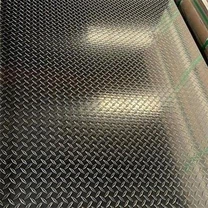
"3003" refers to the chemical composition of the aluminum alloy itself, while "3003-H14" specifies the exact physical condition (the temper) of that alloy. Specifically, H14 means the metal has been strain-hardened and partially annealed to a "half-hard" state. This gives the 3003-H14 aluminum higher strength and dent resistance compared to its fully soft (O temper) version, while still keeping it flexible enough to bend and form easily.
To put it in simple factory terms: 3003 is the recipe for the metal. H14 is how we cooked it.
If you just order "3003 aluminum" without specifying a temper, you are leaving your production line open to massive risks. In this complete B2B guide, we will break down the exact differences, compare their mechanical properties, and help you understand exactly which temper you need for your specific manufacturing application.
What Is 3003 Aluminum Alloy?
Before we talk about tempers, you must understand the base material. The 3xxx series represents aluminum alloyed primarily with Manganese (Mn).
The 3003 aluminum alloy is the most widely used general-purpose aluminum in the world. It contains about 1.2% manganese, which makes it roughly 20% stronger than commercially pure 1100 series aluminum.
Key Characteristics: It is a non-heat-treatable alloy. This means you cannot put it in an oven to make it stronger (like you can with 6061). It offers excellent corrosion resistance against moisture and chemicals, highly reliable weldability, and outstanding formability.
3003 is just a material grade. It tells us what is inside the metal, but it tells us nothing about how hard or soft the metal currently is.
What Is a 3003-H14 Aluminum Sheet?
When you add "H14" to the end of the alloy name, you are now giving a complete manufacturing instruction.
A 3003-H14 aluminum sheet is 3003 aluminum that has gone through a specific mechanical and thermal process.
- Strain Hardened (Cold Worked): The factory runs the raw aluminum sheet through heavy steel rollers at room temperature. This physical squeezing compresses the internal grain structure, making the metal harder and stronger.
- Partially Annealed: Because pure cold-rolling can make the metal too brittle, the factory then applies a controlled amount of heat to slightly relax the metal.
The result is the H14 temper, universally known as "Half-Hard." It is the perfect middle ground: strong enough to resist denting and hold its shape, but ductile enough to be bent 90 degrees in a press brake without cracking.

Understanding 3003 Aluminum Plate Tempers
To fully understand why H14 is so popular, you need to see the other options available for a 3003 aluminum plate. In the aluminum industry, tempers are designated by letters and numbers.
| Temper Code | Industry Term | Manufacturing Process | Result |
| O Temperr | Fully Annealed (Soft) | Heated and cooled slowly. | Dead soft. Maximum flexibility. Lowest strength. |
| H12 | Quarter Hard | Lightly cold-rolled. | Slightly stiffer than O, still very easy to bend. |
| H14 | Half Hard | Cold-rolled and partially annealed. | The standard. Good strength, bends well. |
| H16 | Three-Quarter Hard | Heavily cold-rolled. | Strong, but limited bending capabilities. |
| H18 | Full Hard | Maximum cold-rolling. | Strongest state, but will crack if you try to bend it sharply. |
Because H14 offers the best balance of strength and workability, it is the standard temper stocked by global suppliers.
Are you experiencing cracking when bending your aluminum sheets, or do they dent too easily during transport? You might be using the wrong temper. Contact GNEE's engineering team today. Tell us your bending radius and application, and we will quote the perfect 3003 aluminum temper to keep your production line running smoothly.
Mechanical Properties of 3003-O vs 3003-H14 Aluminum Sheet
| Mechanical Property | 3003 (O Temper - Soft) | 3003-H14 (Half Hard) |
| Tensile Strength | ~ 110 – 130 MPa | 145 – 195 MPa |
| Yield Strength | ~ 40 – 55 MPa | ≥ 125 MPa |
| Elongation (Stretch) | 20% – 30% | 10% – 20% |
| Hardness (Brinell) | ~ 28 HB | ~ 40 HB |
| Overall Strength | Low | Medium |
Look at the Yield Strength row. Yield strength is the amount of force required to permanently bend or dent the metal. The soft 3003-O will dent at just 40 MPa of pressure. The 3003-H14 aluminum sheet requires over 125 MPa of pressure to dent. This massive jump in yield strength is exactly why H14 is chosen for products that will face everyday physical wear and tear.
Processing Performance of 3003 Aluminum Tubing
In a factory setting, how a metal behaves inside a machine is more important than the numbers on a data sheet. Whether you are stamping sheets or bending 3003 aluminum tubing, here is how the two states compare:
| Processing Method | 3003 (O Temper - Soft) | 3003-H14 (Half Hard) |
| Bending (Press Brake) | Excellent (Zero springback) | Excellent (Slight springback, but rarely cracks) |
| Deep Drawing | Excellent (Best choice) | Good (Only for shallow drawing) |
| Weldability (TIG/MIG) | Excellent | Excellent |
| Machinability (CNC) | Poor (Too gummy) | Fair (Produces better chips than O temper) |
When you bend a piece of 3003-H14 to 90 degrees, it might "spring back" slightly to 92 degrees when you release the machine. The soft 3003-O will stay exactly at 90 degrees. Operators must adjust their tooling slightly depending on which temper they are using.

Applications for 3003 Aluminum
Because their physical properties are so different, O temper and H14 temper are used to manufacture entirely different commercial products.
Where to Use 3003 (O Temper)
Because it is "dead soft" and stretches beautifully without ripping, it is strictly used for extreme forming applications.
Deep Drawn Kitchenware: Pots, baking pans, and deep bowls.
Complex Stamped Parts: Any metal casing that requires deep, complex shapes in a single press.
Spun Metal Parts: Lighting reflectors and round metal containers.
Where to Use 3003-H14
Because it provides structural rigidity while still allowing for 90-degree bends, it is the ultimate general-purpose manufacturing material.
Sheet Metal Fabrication: HVAC ductwork, electrical enclosures, and custom metal boxes.
Architecture & Construction: Roofing panels, wall cladding, and garage doors.
Transportation: Trailer side panels, fuel tanks, and protective tread plates (3003-H14 tread plate is highly popular).
Chemical Equipment: Storage tanks and fluid transfer 3003 aluminum pipes.
Selection Guide of 3003-O or 3003-H14?
Choose 3003 (O Temper) If:
- You are manufacturing deep-drawn pots or complex vessels.
- The metal needs to stretch significantly without tearing.
- The final product does not need to bear weight or resist impact.
Choose 3003-H14 If:
- You are doing standard sheet metal work (cutting, welding, and 90-degree bending).
- The product needs a flat, rigid surface that will not sag (like a roof panel).
- You need the material to resist everyday dents and scratches.
- You want the most cost-effective, easily available general-purpose aluminum.
Common Buyer Misconceptions About 3003 Aluminum Pipe
Misconception 1: "3003 and 3003-H14 are different materials."
The Reality: They are the exact same chemical alloy. If you melt them down, they are identical. The only difference is how the factory rolled and heated the metal before shipping it to you.
Misconception 2: "I'll just order '3003' and the factory will know what I mean."
The Reality: If you send a PO that just says "3003 Aluminum," a responsible supplier will stop your order and ask for the temper. If a careless supplier ships you O temper when you needed H14, your products will be too soft and fail quality control. Always specify the temper on your PO.
Misconception 3: "H14 just means it's harder, so it's better."
The Reality: Harder does not mean better; it means less flexible. If you try to deep-draw an H14 sheet into a cooking pot, the metal will snap and destroy your tooling. You must match the temper to your manufacturing process.
Whether you need fully soft O-temper coils for deep drawing or rigid H14 sheets for fabrication, we have a massive inventory ready to ship. Request a Free Quote Now and get competitive factory-direct pricing on premium 3003 aluminum products.
Choose GNEE as Your Reliable Aluminum Supplier
At GNEE, we are a professional, globally trusted aluminum manufacturer. We don't just sell metal; we provide engineered material solutions.
- Precise Temper Control: Our advanced rolling mills and annealing furnaces ensure that our 3003-H14 is exactly "half-hard"-giving you consistent bending results every single time.
- Full Product Range: We manufacture 3003 aluminum sheets, plates, coils, tread plates, and 3003 aluminum pipes.
- Custom Dimensions: We cut to length, slit coils to your exact width, and provide custom thicknesses to eliminate your processing waste.
- Stable Global Supply: With robust manufacturing capacity and decades of export experience, we guarantee on-time delivery to your port, protected by professional seaworthy packaging.
- Certified Quality: Every batch comes with full Mill Test Certificates (MTC) so you can verify the chemical composition and mechanical properties.
Stop guessing on your material specifications. Contact GNEE today for expert advice, reliable quality, and the best wholesale pricing for your 3003 aluminum needs.