3003-H14 aluminum is a non-heat-treatable alloy that offers moderate strength, excellent corrosion resistance, and outstanding formability. Because it is strain-hardened to a "half-hard" temper, it provides the perfect balance between structural rigidity and bending capability. It is the industry standard for general sheet metal applications, including roofing panels, storage tanks, and kitchen equipment.
What Is a 3003-H14 Aluminum Sheet?
To understand if this material is right for your production line, you must look at its basic metallurgy.
The 3003 series is an Aluminum-Manganese (Al-Mn) alloy. The addition of about 1.2% manganese makes 3003 roughly 20% stronger than the 1100 series pure aluminum. It is a non-heat-treatable alloy, which means you cannot bake it in an oven to make it stronger. Its strength comes entirely from physical rolling at the mill. Thanks to its chemistry, it is famous for being highly cost-effective while offering great protection against rust and moisture.
What Does H14 Mean in Aluminum?
Understanding the temper code is critical because it dictates how the metal behaves in your press brake.
- "H" stands for Strain-Hardened (cold worked). This means the metal was made harder by rolling it under extreme pressure at room temperature.
- "14" indicates the specific degree of hardness. In the aluminum industry, the number 4 means the metal is exactly Half-Hard.
The Result: By stopping the cold-rolling process at the halfway point, the factory produces an aluminum sheet that is significantly stronger than the fully soft (O) temper but still retains enough ductility (stretch) to be folded into 90-degree angles without snapping.

Mechanical Properties of 3003-H14 Aluminum
Numbers matter when you are designing a product. Based on ASTM B209 standard testing, here is how 3003-H14 performs under physical stress.
| Mechanical Property | Value |
| Tensile Strength (Ultimate) | 145 – 195 MPa (Approx. 21,000 - 28,000 psi) |
| Yield Strength | ≥ 125 MPa (Approx. 18,000 psi) |
| Elongation | 10% – 20% (Depends on thickness) |
| Hardness (Brinell) | ~ 40 HB |
| Fatigue Strength | ~ 60 MPa |
What this means for you:
With a yield strength of 125 MPa, this material can carry a moderate load, but it is not designed for heavy structural frames. However, the 10-20% elongation is fantastic. It means your machines can stretch and form the metal significantly before it tears.
Physical Properties of 3003 H14 Aluminum Sheet
For engineers calculating weight, heat transfer, or electrical grounding, these physical constants are essential.
| Physical Property | Value |
| Density | 2.73 g/cm³ (0.099 lb/in³) |
| Melting Point | 643 – 654°C (1190 – 1210°F) |
| Thermal Conductivity | ~ 180 – 193 W/m·K |
| Electrical Conductivity | ~ 40 – 45% IACS |
| Thermal Expansion | 23.2 µm/m·K |
Chemical Composition (ASTM Standard) of 3003 H14 Aluminum Sheet
The reliable performance of 3003-H14 is locked in its strict chemical makeup.
| Element | Content (%) |
| Aluminum (Al) | Balance (Approx. 97%) |
| Manganese (Mn) | 1.0 – 1.5 |
| Copper (Cu) | 0.05 – 0.20 |
| Silicon (Si) | ≤ 0.6 |
| Iron (Fe) | ≤ 0.7 |
| Zinc (Zn) | ≤ 0.1 |
Corrosion Resistance of 3003 Aluminum Plate
One of the main reasons buyers choose 3003-H14 over mild steel is its natural ability to fight rust.
- The Good: 3003-H14 builds a natural, invisible oxide layer instantly when exposed to air. It is highly resistant to standard atmospheric corrosion, rain, snow, and mild chemicals. You can use it outdoors for decades without painting it.
- The Bad: It is not a "marine-grade" alloy. If you submerge 3003-H14 in seawater or expose it to heavy road salts, it will eventually pit and corrode.
Workability of 3003-H14 in the Workshop
How easily your factory can process the raw material directly affects your profit margins.
| Fabrication Process | Performance Rating |
| Formability | Excellent |
| Bendability | Excellent |
| Weldability | Excellent (TIG / MIG) |
| Machinability (CNC) | Fair (Can be slightly gummy) |
Workshop Reality: Because it is half-hard, 3003-H14 is considered the ultimate "sheet metal worker's aluminum." It cuts cleanly, welds securely to other aluminum parts, and folds into sharp angles effortlessly.
Even with excellent bendability, tight 90-degree corners on thicker plates can sometimes cause surface cracking. Don't guess your bend radius. Send your CAD drawings to our engineering team. We offer a Free Bend Radius Evaluation. We will analyze your design and recommend the exact thickness and machine settings to ensure a zero-defect production run.
Typical Applications of 3003-H14 Aluminum
Because it perfectly balances cost, rust resistance, and medium strength, you will find 3003-H14 in everyday industrial and commercial products.
- Architecture & Building: Corrugated roofing sheets, wall cladding, and acoustic ceiling panels.
- Food Equipment: Refrigerator liners, ice cube trays, and commercial baking pans.
- Tanks & Vessels: Storage tanks for non-corrosive liquids, water, and fuel.
- HVAC Systems: Air ducting and protective jacketing for industrial pipes.
- General Fabrication: Tool boxes, street signs, and decorative metal trim.
3003-H14 vs 5052 Aluminum Comparison
Buyers frequently ask us to compare 3003-H14 against 5052. Here is the quick difference:
| Property | 3003-H14 | 5052 (e.g., H32) |
| Overall Strength | Medium | Higher |
| Corrosion Resistance | Good (Atmospheric) | Excellent (Marine/Saltwater) |
| Formability | Excellent (Easier to bend) | Good (Stiffer, has spring-back) |
| Raw Material Cost | Lower (More economical) | Higher |
Why Choose GNEE Aluminum as Your Supplier?
- Full Range of Aluminum Supply: We manufacture and stock 3003, 5052, 5083, and 6061 alloys in sheets, plates, coils, and tubes.
- Rich Export Experience: We understand the strict requirements of the global construction, manufacturing, and industrial sectors. We guarantee no surprises at your port.
- Strict Quality Control: Every batch of our 3003-H14 complies strictly with ASTM B209 and EN standards. We provide verified Mill Test Certificates (MTCs) showing the exact chemical and mechanical properties of your specific order.
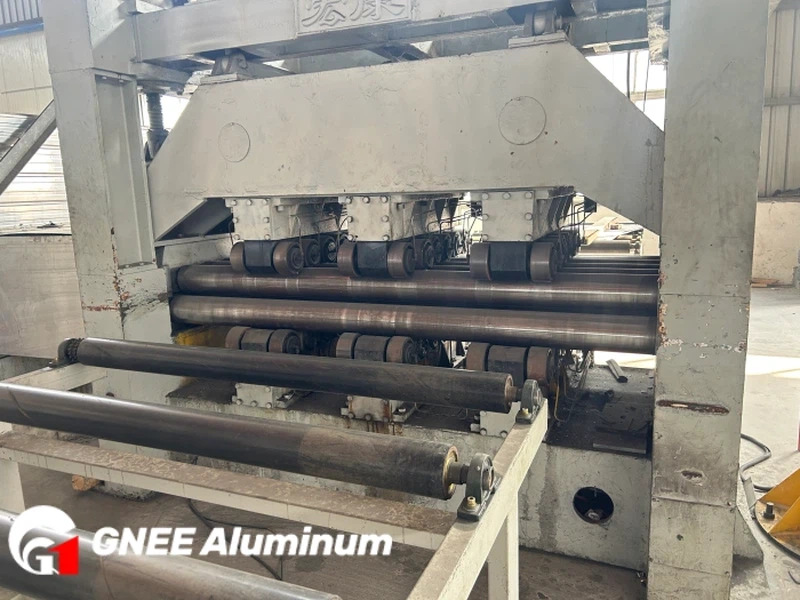
- Custom Fabrication Capabilities: We offer exact cut-to-size services, coil slitting, and surface treatments (PE/PVDF coating, stucco embossing, anodizing) to save your factory processing time.
- Expert Technical Support: Our sales engineers provide free material selection advice to help you reduce costs without sacrificing quality.
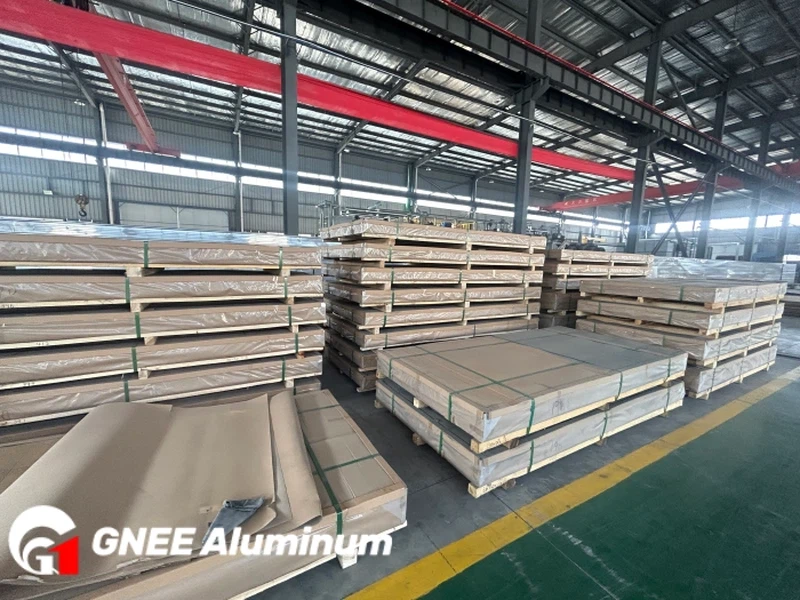
- Export-Standard Packaging: Every aluminum sheet and coil is wrapped in waterproof plastic film and thick kraft paper. PVC protective film is applied to the metal surface to prevent scratching during handling.
- Damage-Free Transport: We add moisture-absorbing desiccants inside the wrapping. The materials are securely strapped to heavy-duty, fumigated wooden pallets with rigid edge protectors to prevent physical deformation.
- Flexible Shipping Options: We handle FCL (Full Container Load) and LCL (Less than Container Load) sea freight, as well as fast air freight for emergency manufacturing shortages.
- Global Trade Terms: We offer FOB, CIF, CFR, and DDP to match your purchasing requirements. We manage the supply chain so you can manage your business.