5052 H32 aluminum is significantly stronger and offers superior corrosion resistance compared to 3003 H14, making it the ideal choice for marine environments and heavy structural applications. On the other hand, 3003 H14 aluminum is much more formable and cost-effective, making it the standard material for general sheet metal fabrication, indoor equipment, and standard bending jobs.
What Do Tempers Mean for the 3003 H14 Aluminum Sheet and 5052 H32?
Before comparing the metals, you must understand what the "H" temper codes mean, as they dictate how the metal will behave on your factory floor. Both alloys are non-heat-treatable, meaning their strength comes from physical cold rolling at the mill.
- H14 Temper: The "1" means it is strain-hardened (cold-rolled), and the "4" means it is processed to a Half-Hard condition. It offers a solid balance of medium strength and good bending capabilities.
- H32 Temper: The "3" means the metal was strain-hardened and then stabilized with a low-temperature heat treatment. The "2" means it is processed to a Quarter-Hard condition.
Key Takeaway: Even though H32 is mathematically a "quarter-hard" temper and H14 is a "half-hard" temper, 5052 H32 is still significantly stronger than 3003 H14 because its base chemistry (Al-Mg) is naturally much tougher.
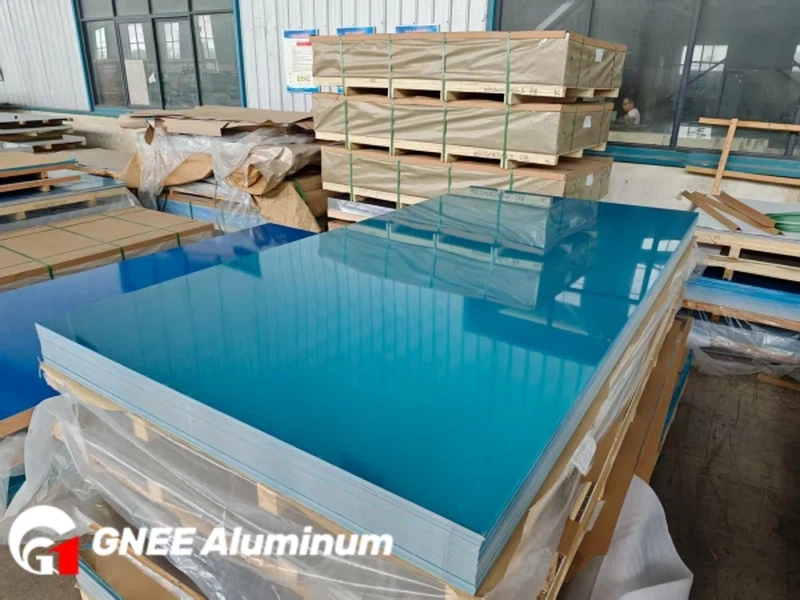
Basics of the Two Aluminum Materials
3003 H14 Aluminum Plate:
This is an Aluminum-Manganese (Al-Mn) alloy. It is the most widely used general-purpose aluminum globally. It offers excellent workability, great resistance to standard weather, and medium strength.
5052 H32 Aluminum Plate:
This is an Aluminum-Magnesium (Al-Mg) alloy. The magnesium transforms it into a high-strength metal. More importantly, it is recognized globally as a "Marine Grade" alloy because it can survive continuous exposure to saltwater.
Mechanical Properties of 5052 H32 vs 3003 H14
| Property | 3003 H14 Aluminum | 5052 H32 Aluminum |
| Tensile Strength | 145 – 215 MPa | 210 – 260 MPa |
| Yield Strength | ~ 125 MPa | ~ 193 – 215 MPa |
| Elongation | 10% – 12% | 12% – 18% |
| Hardness (Brinell) | ~ 40 HB | ~ 60 HB |
| Density | 2.73 g/cm³ | 2.68 g/cm³ |
| Thermal Conductivity | ~ 180 – 193 W/m·K | ~ 138 W/m·K |
5052 H32 is massively stronger. Its tensile strength can be 40% to 70% higher than 3003 H14. Its yield strength (the point where the metal permanently bends under weight) is nearly double that of 3003. This is why 5052 is used for load-bearing structures.
Corrosion Resistance of Marine Grade 5052 H32 Aluminum Plate
| Environment | 3003 H14 Aluminum | 5052 H32 Aluminum |
| General Outdoor / Rain | Good | Excellent |
| Marine Environment | Moderate | Excellent |
| Direct Saltwater / Salt Spray | Limited (Will pit) | Strong (Immune) |
Conclusion: 3003 H14 is perfect for standard architectural roofing and indoor environments. However, 5052 H32 is the undisputed champion for anything touching seawater, road salts, or harsh industrial chemicals.
Forming and Bending 3003 H14 Aluminum vs 5052 H32
Your production cost heavily depends on how these materials react in your press brakes and stamping machines.
| Fabrication Process | 3003 H14 | 5052 H32 |
| Formability | Excellent | Good (Requires more machine force) |
| Bendability | Excellent (Folds easily) | Very Good (Has spring-back) |
| Weldability | Excellent | Excellent (Provides stronger joints) |
| Machinability (CNC) | Easy | Medium (Slightly gummy) |
Workshop Reality: 3003 H14 bends like butter. Your operators will love it because it rarely cracks on a 90-degree fold. 5052 H32 is tougher. When you bend it, it will try to spring back to its flat shape, meaning your operators must over-bend it.
Typical Uses for 3003 H14 and 5052 H32 Aluminum Panels
3003 H14 Applications
- Use this when you need cheap, reliable metal that is easy to shape.
- Architecture: Decorative wall panels, roofing sheets, and corrugated siding.
- Food Industry: Cookware, baking pans, and refrigerator liners.
- HVAC: Air conditioning ductwork and pipe insulation jacketing.
- General Use: Street signs, license plates, and sheet metal boxes.
5052 H32 Applications
- Use this when safety, pressure, and structural integrity are critical.
- Marine: Boat hulls, pontoon decks, and ship hardware.
- Transportation: Fuel tanks for trucks, trailers, and bus bodies.
- Industrial Equipment: Pressure vessels, hydraulic enclosures, and heavy machinery covers.
Choose 3003 H14 if: Your project requires tight bending, stamping, or deep drawing. It is also the best choice if you are highly sensitive to raw material costs and the part does not carry heavy loads.
Choose 5052 H32 if: You are building anything that goes into the ocean. It is also mandatory if the metal needs to act as a load-bearing structure or a high-pressure tank.
Why Choose GNEE Aluminum as Your Supplier?
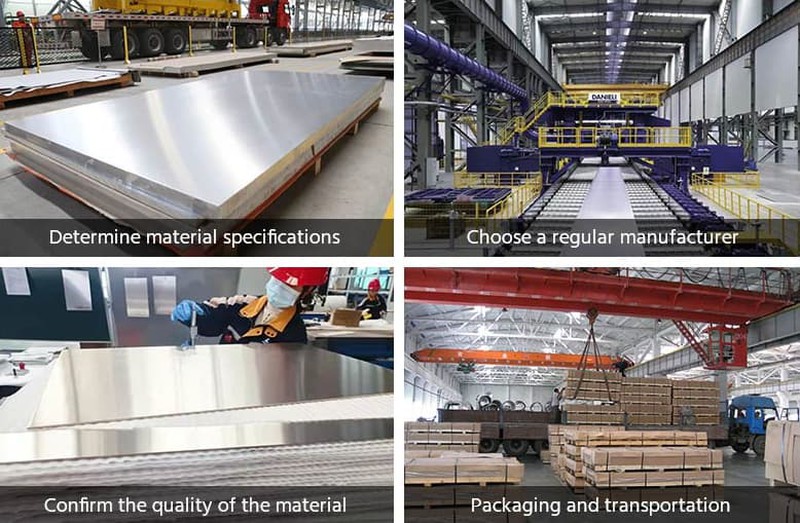
- Full Range of Aluminum Supply: We manufacture and stock 3003, 5052, 5083, and 6061 aluminum in sheets, plates, coils, and tubes.
- Professional Export Experience: We have years of experience supplying the exact specifications required by the marine, automotive, construction, and industrial manufacturing sectors.
- Strict Quality Control System: Every batch of material complies strictly with ASTM and EN standards. We provide transparent, verified Mill Test Certificates (MTC) with every shipment.
- Custom Fabrication Capabilities: We offer precision cut-to-size services, slitting, and professional surface treatments (anodizing, color coating) so the metal is ready for your assembly line the moment it arrives.
- Technical Support: Our engineers work with your purchasing team to provide free material selection advice and cost-down optimization plans.
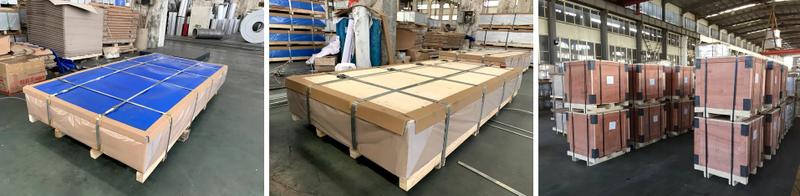
- Export-Standard Packaging: Every aluminum sheet and coil is wrapped in waterproof plastic film and thick kraft paper. PVC protective film can be applied to the metal surface upon request to prevent scratches.
- Damage-Free Transport: Materials are securely strapped to heavy-duty, fumigated wooden pallets. We use rigid corner protectors and secure the cargo tightly inside the shipping containers to prevent deformation during rough sea transits.
- Flexible Shipping Options: We handle both FCL (Full Container Load) and LCL (Less than Container Load) via sea freight, as well as expedited air freight for urgent parts.
- Global Trade Terms: We support FOB, CIF, CFR, and DDP. Our logistics team handles the paperwork so you can focus on manufacturing.
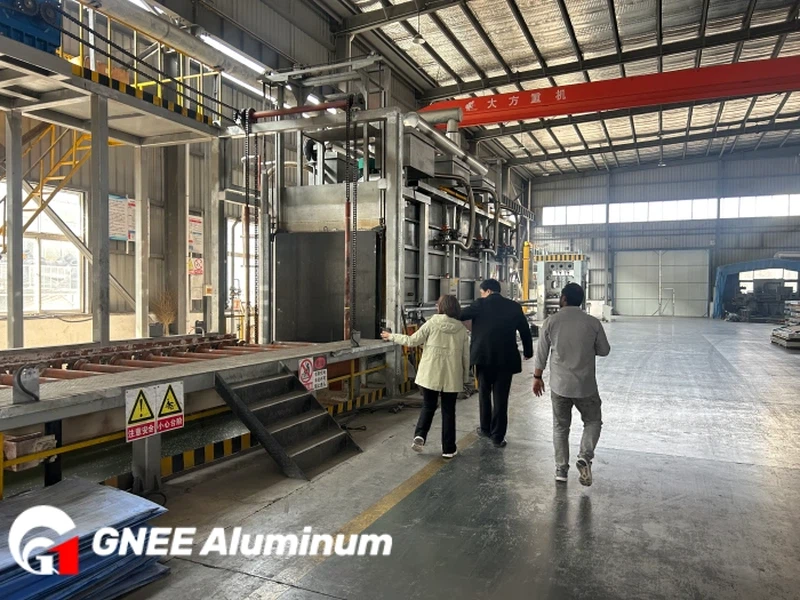
- Stable Supply Chain: With massive inventory and continuous mill production, we guarantee fast lead times to keep your factory running without interruption.