When choosing cladding materials for modern building facades, architects and buyers often move away from heavy stone and fragile glass. Aluminum alloy panels are the industry standard now. Among the options (1060, 3003, 5052), the 3003 aluminum sheet hits the sweet spot between cost and performance.
The 1000 series is too soft for wind loads. The 5000 series (like 5052) is excellent for marine environments but over-budget for standard city buildings. For 90% of urban commercial building curtain walls, 3003 rustproof aluminum is your most cost-effective choice.
At GNEE, we process and export these sheets daily. Let's dive into the core differences, technical specs, and how to source the right temper for your fabrication needs.
Why Choose 3003 Aluminum for Facades?
3003 is an AL-Mn (Aluminum-Manganese) alloy. Adding manganese increases its strength by about 10-15% compared to commercial pure aluminum (1100 series). It provides excellent corrosion resistance against rain and general outdoor elements.
More importantly, curtain wall fabrication involves heavy mechanical work: shearing, CNC routing, punching, and 90-degree edge bending. 3003 handles these processes without cracking, provided you choose the correct temper. It also accepts PVDF (fluorocarbon) and PE coatings perfectly, which are mandatory for outdoor color fading resistance.
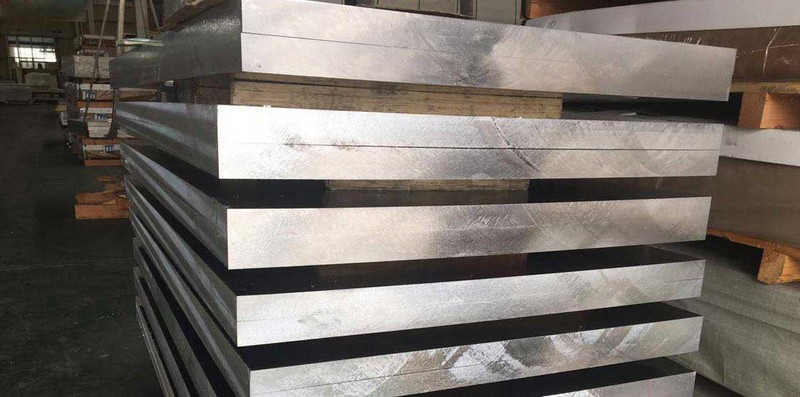
The Core Difference Between 3003 H14 vs 3003 H24 Temper
When buying 3003 curtain wall aluminum panels, you will face two main temper options: 3003 H14 and 3003 H24.
3003 H14 (Strain Hardened): The "H1" means the metal is purely strain-hardened (cold rolled) to achieve its final strength, with no heat treatment. The "4" means it is 1/2 hard. 3003 H14 has high hardness and solid tensile strength. However, because it hasn't been thermally relaxed, its ductility is slightly lower. If your curtain wall design involves mostly flat panels or very gentle curves, H14 is great.
3003 H24 (Strain Hardened and Partially Annealed): The "H2" means the metal is strain-hardened first, and then put through an incomplete annealing process (baking in a furnace at controlled temperatures). This relieves the internal stress of the metal. While its overall tensile strength remains similar to H14, its yield strength is slightly lower, and its elongation (ductility) is better.
The Practical Choice: If your factory needs to do sharp 90-degree edge folding (flanging) to mount the panels onto the building frame, 3003 H24 is safer. The partial annealing process significantly reduces the risk of micro-cracking along the bending line.
Technical Specifications of 3003 Aluminum
Here are the standard specifications for 3003 aluminum panels we supply at GNEE for exterior cladding.
Table 1: Available Dimensions
| Alloy | Temper | Thickness (mm) | Width (mm) | Length (mm) |
| 3003 | H14, H24 | 0.3 - 200 | 100 - 2500 | 2000 - 6000 (Customizable) |
Note: The most common thicknesses ordered for solid curtain wall panels are 2.5mm and 3.0mm. Anything thinner than 2.0mm is usually used for composite panel substrates.
Table 2: Mechanical Properties (Tested & Verified)
| Alloy & Temper | Thickness (mm) | Tensile Strength (Rm/Mpa) | Yield Strength (Rp0.2/Mpa) | Elongation (%) | Bending Radius (90°) |
| 3003 H14 | 1.5 - 4.0 | 145 - 195 | ≥ 125 | 2 - 4 | 1.0t - 2.0t |
| 3003 H24 | 1.5 - 4.0 | 145 - 195 | ≥ 115 | 4 - 6 | 0.5t - 1.5t |
Notice the bending radius data: H24 allows for a tighter bend (0.5 times the thickness) without fracturing, thanks to its higher elongation.
Applications of 3003 aluminum sheet
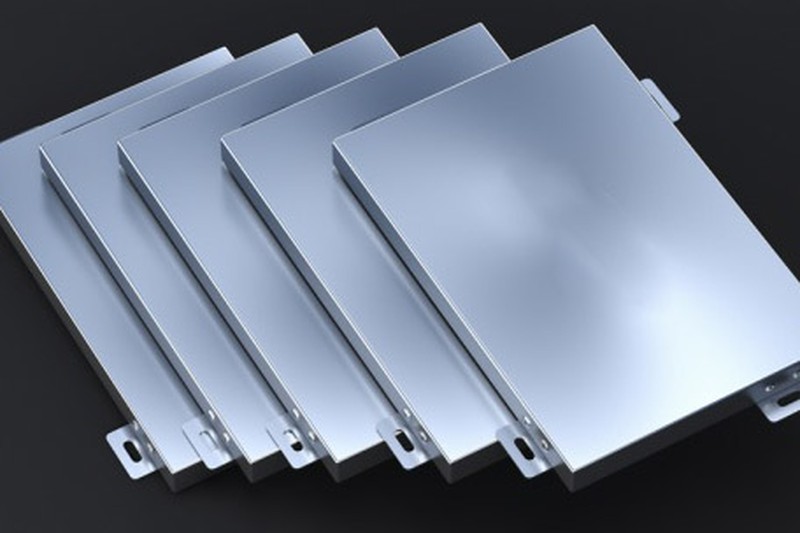
Solid Aluminum Veneers (Single Panels): Usually 2.5mm or 3.0mm thick, coated with PVDF. Used for office building exteriors, shopping malls, and stadium facades. They are bent at the edges and bolted to steel sub-frames.
Aluminum Composite Panels (ACP): Thinner 3003 sheets (0.2mm to 0.5mm) are used as the top and bottom skins, sandwiching a plastic core. Widely used for storefronts, gas stations, and interior decorations.
Aluminum Honeycomb Panels: Thin 3003 sheets bonded to an aluminum honeycomb core. These provide extreme flatness and rigidity with very low weight, often used for airport terminal ceilings and high-end exterior walls.
Roofing systems: Standing seam roofing systems often utilize 3003 aluminum coils due to their formability on site.
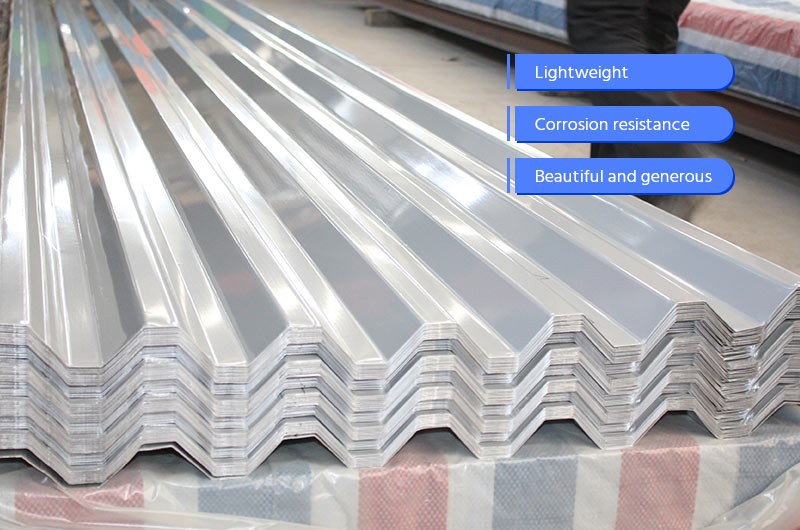
read more:3003-h14-h24-corrugated-aluminum-panel.
How to Calculate Sourcing Costs
The price of 3003 aluminum sheets for curtain walls fluctuates daily based on the raw material market.
At GNEE, our pricing formula is transparent:
Final Price = SMM A00 Aluminum Ingot Price + Processing Fee (Rolling & Tempering).
We use the SMM (Shanghai Metals Market) daily ingot price as our absolute benchmark. The processing fee depends on the thickness (thinner panels actually cost more per ton to roll) and the temper (H24 requires an extra annealing step in the furnace, making the processing fee slightly higher than H14, usually by
20−30 per ton).
If you require surface treatment like PVDF painting or anodizing, that will be calculated as a separate surface finishing cost per square meter.