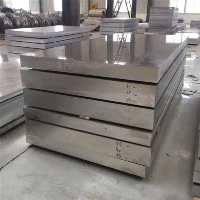
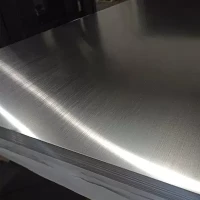


Aluminum alloys usually use alloy elements such as copper, zinc, manganese, silicon, and magnesium. They were invented by German Alfred Wilm in the early 20th century and were of great help to the development of aircraft. After World War I, the composition of German aluminum alloys Classified as a state secret. Compared with ordinary carbon steel, it is lighter and more corrosion-resistant, but its corrosion resistance is not as good as that of pure aluminum. A protective oxide layer will form on the surface of aluminum alloys in a clean, dry environment. The conditions that cause accelerated galvanic corrosion include: contact between aluminum alloy and stainless steel, corrosion potential of other metals is lower than that of aluminum alloy, or in humid environment. If aluminum and stainless steel are to be used together, there must be water-containing systems or electronic or electrolytic isolation between the two metals installed outdoors.

Aluminum alloys are widely used in engineering structures. Alloy systems are classified by numerical systems (ANSI), or by names indicating the main constituent alloys (DIN and ISO). Selecting the right alloy for a given application requires consideration of the material's strength, ductility, formability, weldability, corrosion resistance, and more. Due to its high strength and low weight ratio, aluminum is widely used in modern aircraft.
The International Alloy Designation System is widely accepted for naming wrought alloys. Each alloy is assigned a four-digit number, where the first digit is the primary alloying element.

The 1000 series contains at least 99% aluminum by weight.
2000 series copper alloy, as strong as steel. Formerly known as Duraluminum, it is a commonly used aerospace alloy, but it is susceptible to intergranular corrosion and is gradually replaced by the 7000 series.
3000 series manganese alloy, work hardened.
4000 series silicon alloy, also known as silicon aluminum alloy.
5000 series magnesium alloy can solve work hardening and has high strength.
The 6000 series magnesium-silicon alloy is easy to process and can be deposited and hardened to obtain a strength comparable to steel.
7000 series zinc alloys are precipitation hardenable and have the highest strength among all aluminum alloys.
8000 Series Mix.