


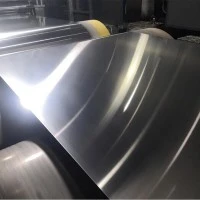



Aluminum foil is very thin aluminum, as defined by the International Standards Organization: the thickness ranges from 0.2mm to the extreme 0.006 mm. The manufacturing process of aluminum foil involves rolling from 2mm and 4mm plates. In this process, the aluminum blanks are cold rolled in sequence until the coil reaches the required thickness. Aluminum foil has good insulation properties against light, oxygen, taste, moisture, and bacteria. It is widely used in food and pharmaceutical packaging. In the twin mill process, two foils are separated simultaneously, allowing very thin foils (thickness ranging from 6 to 30µm) to be obtained.

Due to the micro-penetration of thin foil, production environment and other reasons, pinholes will inevitably be caused during the production process. The traditional approach is to arrange manual inspection of these pinholes during the rewinding process; however, due to human eye fatigue, limited human eye resolution, and high labor costs, 100% visual inspection of the foil cannot be performed.


