





Aluminum rods have many functions, so what are the properties of aluminum and what are its advantages over other metals? This article will discuss with you the properties and uses of aluminum. First, let's briefly understand the physical and chemical properties of aluminum.
The density of aluminum is very small, only 2.7 g/cm3. Although it is relatively soft, it can be made into various aluminum alloys, such as hard aluminum, super hard aluminum, rust-proof aluminum, cast aluminum, etc. These aluminum alloys are widely used in manufacturing industries such as aircraft, automobiles, trains, and ships. In addition, space rockets, space shuttles, and artificial satellites also use a large amount of aluminum and its alloys. For example, a supersonic aircraft is composed of about 70% aluminum and its alloys. Aluminum is also widely used in ship construction, with the amount of aluminum used in a large passenger ship often reaching several thousand tons.

The conductivity of aluminum is second only to silver and copper. Although its conductivity is only 2/3 of copper, its density is only 1/3 of copper. Therefore, to transport the same amount of electricity, the mass of aluminum wire is only half that of copper wire. The oxide film on the surface of aluminum not only has corrosion resistance, but also has certain insulation properties, so aluminum is widely used in the electrical appliance manufacturing industry, wire and cable industry, and radio industry.
Aluminum is a good conductor of heat. Its thermal conductivity is three times greater than that of iron. Aluminum can be used in industry to manufacture various heat exchangers, heat dissipation materials, cookware, etc.
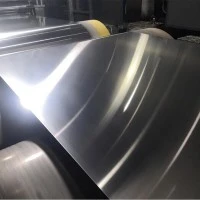
Aluminum has good ductility (its ductility is second only to gold and silver), and it can be made into aluminum foil thinner than 0.01 mm at 100 ℃ ~ 150 ℃. These aluminum foils are widely used to package cigarettes, candies, etc., and can also be made into aluminum wires, aluminum strips, and can be rolled into various aluminum products.
Because the surface of aluminum has a dense oxide protective film, it is not susceptible to corrosion. It is often used to manufacture chemical reactors, medical equipment, refrigeration equipment, petroleum refining equipment, oil and natural gas pipelines, etc.
Aluminum powder has a silvery white luster (generally the color of metal in powder form is mostly black) and is often used as coatings, commonly known as silver powder and silver paint, to protect iron products from corrosion and make them beautiful.
Aluminum can emit a large amount of heat and dazzling light when burning in oxygen, and is often used to create explosive mixtures. Such as ammonium aluminum explosives (mixed from ammonium nitrate, charcoal powder, aluminum powder, soot and other flammable organic matter), combustion mixtures (such as bombs and shells made with thermite, which can be used to attack targets or tanks that are difficult to catch fire, cannons, etc.) and lighting mixtures (such as containing 68% barium nitrate, 28% aluminum powder, and 4% shellac).

Thermite is commonly used for melting refractory metals and welding rails. Aluminum is also used as a deoxidizer in the steelmaking process. Aluminum powder, graphite, titanium dioxide (or other high-melting-point metal oxides) are evenly mixed at a certain ratio, then coated on the metal and calcined at high temperatures to make high-temperature resistant cermets. It has important applications in rocket and missile technology. .
Aluminum plates also reflect light very well. They reflect UV rays better than silver. The purer the aluminum, the better its reflective capabilities. Therefore, it is often used to manufacture high-quality reflectors, such as solar cooker reflectors.
Aluminum has sound-absorbing properties and good acoustic effects, so aluminum is also used in ceilings in broadcast rooms and modern large-scale buildings.


