

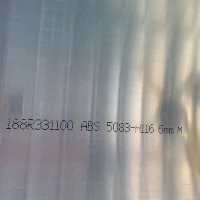




EN AW-5083 aluminum is a non-heat-treatable The Al-Mg-Mn alloy is widely recognized for its exceptional corrosion resistance in seawater environments. It is one of the most commonly used materials for marine-grade aluminum pipes, shipbuilding structures, and heavy-duty pressure vessels.
If you are an engineer or a procurement manager, understanding the specific properties, tempers, and limitations of the 5083 aluminum pipe is critical to ensuring structural safety and cost-efficiency in your projects.
The Core Advantage of 5083 Aluminum Tubing: Chemical Composition
| Si | Fe | Cu | Mn | Mg | Cr | Zn | Ti | Al |
| ≤ 0.40 | ≤ 0.40 | ≤ 0.10 | 0.40 - 1.0 | 4.0 - 4.9 | 0.05 - 0.25 | ≤ 0.25 | ≤ 0.15 | Remainder |
Technical Insight: The high magnesium (Mg) content is the key factor behind its exceptional strength and resistance to pitting in salt-laden environments. The manganese (Mn) and chromium (Cr) additions further enhance the tensile strength and help stabilize the grain structure during welding.
5083 Aluminum Mechanical Properties
Understanding the physical limits of the material helps prevent catastrophic failures under dynamic loads.
Density: ≈ 2.66 g/cm³ (Lightweight compared to steel, critical for marine buoyancy).
Tensile Strength (Rm): 275 MPa to 350 MPa (Depending on temper).
Yield Strength (Rp0.2): 125 MPa to 250 MPa (Depending on temper).
Elongation: 10% to 16% minimum.
Thermal Limits: Highly stable in extremely cold temperatures (cryogenic applications) but sensitive to prolonged exposure above 65°C (150°F).
Need to verify if the 5083 mechanical properties match your project's load requirements?
Contact GNEE for a Free Technical Review
Advantages of 5083 Aluminum Pipe
When substituting steel or other alloys, engineers look for specific performance traits:
- Outstanding Seawater Corrosion Resistance: The natural oxide layer of a corrosion-resistant aluminum pipe like 5083 prevents salt spray deterioration.
- High Joint Efficiency: Unlike heat-treatable alloys, 5083 retains excellent strength after welding. The Heat Affected Zone (HAZ) suffers minimal degradation.
- Exceptional Fatigue Resistance: Ideal for ship hulls and heavy transport vehicles that endure continuous dynamic stresses.
- Lightweight vs. Steel: Weighs roughly one-third of steel, significantly improving fuel efficiency in marine and transport applications.

What You Must Know Before Buying EN AW 5083 Aluminum Pipe
- Transparency is vital in engineering. While 5083 is highly versatile, it is not suitable for everything:
- Temperature Sensitivity: It is not suitable for high-temperature environments exceeding 65°C (150°F). Prolonged exposure to elevated temperatures can cause the magnesium to precipitate along grain boundaries, leading to a high risk of Stress Corrosion Cracking (SCC).
- Machinability: Due to its high strength and work-hardening nature, it is more difficult to machine compared to 6061 or 2024 alloys.
Applications of 5083 Aluminum Pipe
Because of its specific properties, this alloy is mandated in several heavy-duty sectors:
- Marine & Shipbuilding: Used in hull structures, deck columns, and mast assemblies due to its unparalleled seawater resistance and DNV/ABS approvals.
- Pressure Vessels & Tanks: Maintains structural integrity under high pressure, making it standard for unfired welded pressure vessels.
- Cryogenic Equipment (LNG Tanks): 5083 is unique because its strength and ductility actually increase at extremely low temperatures without becoming brittle.
- Transportation: Used in railcars, dump truck bodies, and trailer chassis as a high-strength, lightweight alternative to steel.
Fabrication & Welding of 5083 Tubes
Fabricators prefer 5083 because it is highly weldable.
- Welding Methods: It is excellent for both MIG (Metal Inert Gas) and TIG (Tungsten Inert Gas) welding.
- Filler Metal: 5183 or 5356 aluminum filler wire is strictly recommended to match the base metal's strength.
- Post-Weld Processing: No post-weld heat treatment is required, saving significant fabrication time and costs.
Material Comparison: 5083 vs 5086 Aluminum
Buyers frequently ask us to compare these two marine-grade alloys.
- Strength: 5083 aluminum pipe has a higher magnesium content (up to 4.9%), resulting in higher tensile and yield strength.
- Formability: 5086 aluminum has a slightly lower magnesium content (up to 4.5%), which makes it slightly easier to form, bend, and draw, but it sacrifices some load-bearing capacity compared to 5083.
- Application: Choose 5083 for heavy structural load-bearing marine parts. Choose 5086 for slightly less stressed components where easier fabrication is needed.
Still deciding between 5083 and 5086 for your pipeline?
Send us your requirements for an immediate quote
How to Choose the Right 5083 Aluminum Pipe?
At GNEE, we help clients avoid costly procurement mistakes. Here is a quick checklist:
- Identify the Environment: If the pipe will be submerged or constantly exposed to salt spray, you must specify the H116 or H321 temper.
- Determine the Fabrication Needs: If you are doing heavy welding and general structuring, H111 is usually the most cost-effective choice. If heavy bending is required, ask for the O (Annealed) temper.
- Check Certification: Always demand an EN 10204 3.1 Mill Test Certificate (MTC). If it's for a ship, ensure your supplier can provide third-party marine class certificates (DNV, ABS, LR).


Reliable Supply. Direct from the Mill.
With over 18 years of manufacturing expertise, GNEE supplies certified EN AW-5083 aluminum pipes globally. From custom dimensions to specific marine tempers, we ensure your project stays on schedule and on budget.
Not sure which specification fits your project?
Contact us for a free technical recommendation & Quote within 24 Hours


