

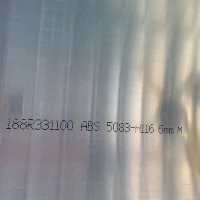
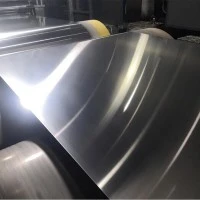



I don't know if everyone knows that 5083 aluminum plate is an amphoteric metal, that is, it can be soluble in alkali or acid. Of course, if you are not sure, you can learn about it with me:

Zinc changes little in dry air. In humid air, a basic zinc carbonate film will form on the surface of zinc. Zinc contains sulfur dioxide, hydrogen sulfide and marine atmosphere. Zinc has poor corrosion resistance. 5083 aluminum plate contains acid, especially in high temperature and high humidity atmosphere, and the zinc coating is easily corroded.
The standard electrode potential of zinc is -0.76V. For steel substrates, zinc coating is an anodic coating, which is mainly used to prevent corrosion of steel. The protective performance of 5083 aluminum plates is closely related to the thickness of the coating. After passivation treatment, dyeing or coating with bright protective agent, the galvanized layer can significantly improve its protective and decorative properties.
Zinc is easily soluble in acid. Production process and casting equipment In the production process of cold-rolled 5083 aluminum slab continuous casting billet, the production process of cold-rolled weathering steel continuous casting billet is: blast furnace ironmaking, converter smelting, refining, slab continuous casting, and hot rolling unit.

The composition of the cold-rolled steel plate is 5083 aluminum slab, which causes cracks on the side and casting conditions to produce cracks in the 5083 aluminum plate. It is mainly used for container plates. Even in environments with chemical corrosion, special alloy steel is often required so that thick-walled thick-walled tube containers can be produced by welding seamless steel tubes or by forging.
A method of producing aluminum tubes that dates back to a method devised by E. A. Harder in 1899 (Ehrhardt Proeess, after whom the perforation and drawing technique, production of thick-walled seamless tubes and cylindrical The body is economic.
So far, this production method can produce ingots with a single weight of 26 tons or more.
Since this process is basically the same as the existing pipe jacking process, it can be called a large-scale pipe jacking production process. This method is still relatively advanced, and there are also such factories in West Germany and Japan. Many users around the world order this product. Therefore, production costs are greatly reduced.
