For home appliance manufacturers, the outer panel is not just a component; it is the customer's first impression. The material must deliver a premium aesthetic finish, withstand the rigors of automated production lines, and meet aggressive cost targets. This is why 3003 aluminum has become the material of choice for leading refrigerator, washing machine, and air conditioner brands globally.
This article explores the technical advantages of 3003 aluminum sheet and coil, explaining why its specific properties make it the perfect, cost-effective solution for high-volume home appliance panel manufacturing.
3003 Aluminum for Home Appliances
In the appliance industry, 3003 aluminum is primarily used for exterior panels where visual appeal and durability are critical. You will find it in:
- Refrigerator Panels: Side panels, door casings, and sometimes even interior liners.
- Washing Machine Panels: The main body casing and top/front control panels.
- Air Conditioner Covers: Both indoor and outdoor unit housings.
- Small Appliance Housings: Casings for microwaves, water dispensers, and other kitchen gadgets.
The core requirements for these applications are always the same: a flawless surface finish, sufficient strength, easy formability, and predictable cost.
Typical Specs of 3003 Aluminum Coil for Appliance Panels
To ensure quality and consistency in mass production, the aluminum coil or sheet must meet tight specifications. Below is the standard material data for appliance-grade 3003 aluminum.
| Item | Specification Parameter |
| Alloy | 3003 Aluminum |
| Temper | H14 / H24 |
| Thickness Range | 0.6 mm – 1.2 mm |
| Width | 800 mm – 1600 mm |
| Surface | Brushed, PE/PVDF Coated, Film-laminated |
| Standard | ASTM B209 / EN 485 |

3003-H14 Aluminum vs. 3003-H24 Aluminum
For appliance panels, you will typically see two tempers specified: H14 and H24. Both are strain-hardened tempers, but they offer a slightly different balance of properties.
| Property | 3003 H14 | 3003 H24 |
| Tensile Strength | 120 – 160 MPa | 140 – 180 MPa |
| Yield Strength | ≥ 85 MPa | ≥ 115 MPa |
| Elongation | ≥ 10% | ≥ 8% |
Here is the simple breakdown for a factory manager:
- 3003-H14 Aluminum Sheet: This temper is slightly softer and has better elongation. It is ideal for panels that require deeper draws or more complex forming, as it is less likely to crack during stamping.
- 3003-H24 Aluminum Coil: This temper is slightly harder and has higher yield strength. It is the preferred choice for large, flat panels, like the side of a refrigerator. Its extra rigidity helps prevent dents and oil-canning (waviness) and ensures the final product feels solid and robust.
Core Advantage of 3003 aluminum plate
The number one reason appliance brands choose 3003 aluminum is its ability to hold a beautiful, consistent surface finish. Steel can look industrial, and plastic can look cheap. 3003 aluminum provides a premium look that elevates the product's perceived value.
- Flawless Substrate: The fine-grain structure of 3003 aluminum means there are no visible lines or imperfections on the raw metal surface, making it a perfect base for decorative finishes.
- Consistent Brushing: It is ideal for creating a brushed aluminum finish. The lines can be made uniform and consistent across the entire coil, giving a sleek, modern, metallic look to refrigerator doors.
- Strong Coating Adhesion: 3003 aluminum sheet undergoes chemical pre-treatment that creates a perfect surface for paint to bond to. This ensures that the PE or PVDF color coating will not peel, flake, or chip during bending and stamping operations on your production line.
- Perfect Film Lamination: For advanced finishes like anti-fingerprint, wood grain, or patterned VCM (Vinyl Coated Metal), the flatness and stability of 3003 aluminum ensure the film laminates perfectly without bubbles or wrinkles.
Strength and Formability of 3003 aluminum plate
Appliance manufacturing relies on high-speed, automated stamping lines. The material fed into these lines must be strong enough to resist denting but formable enough to be bent and shaped without defects. 3003-H14/H24 hits this perfect balance.
- Good for Stamping and Bending: The material has enough ductility to be easily bent 90 degrees for panel edges or stamped with logos without cracking.
- Resists Deformation: Once formed, the strain-hardened temper gives the panel enough rigidity to maintain its shape during assembly and transport. It feels solid to the end-user, not flimsy.
- Predictable Performance: It is a "stable mass-production material." Its forming characteristics are predictable, which means fewer machine adjustments and a lower defect rate on the factory floor.
Lightweight Advantage of 3003 Aluminum
3003 aluminum has a density of approximately 2.73 g/cm³, which is about one-third the density of steel. This lightweight property provides several key commercial advantages:
Lower Shipping Costs: A lighter appliance costs less to transport from the factory to the warehouse and finally to the customer's home.
Improved Energy Efficiency: In appliances with moving parts like washing machine drums, lower weight means less energy is needed to operate, contributing to better energy efficiency ratings.
Better User Experience: A lighter refrigerator door is easier to open. A lighter appliance is easier for consumers to install and move.
Excellent Corrosion Resistance of 3003 Aluminum
Appliances like refrigerators and washing machines operate in environments with constant exposure to moisture and humidity. 3003 aluminum, as an Al-Mn alloy, has excellent natural corrosion resistance. It forms a stable, passive oxide layer on its surface that protects the underlying metal from rust. This ensures the appliance maintains its clean appearance and structural integrity for its entire lifespan.
Why 3003 Aluminum Sheet Beats 5052 and 1100
- 3003 vs. 1100 Aluminum: 1100 is very soft and has excellent ductility. However, it is too soft for appliance panels. It dents and scratches very easily, and large panels made from 1100 would feel flimsy and cheap.
- 3003 vs. 5052 Aluminum: 5052 is a high-strength alloy with excellent corrosion resistance. However, it is significantly more expensive than 3003 and is harder to form. For appliance panels that do not have structural load-bearing requirements, using 5052 is over-engineering and unnecessarily drives up the product cost.
Conclusion: 3003 aluminum provides the best balance of surface quality, strength, formability, and cost. It is the optimal cost-performance solution for the home appliance industry.
Primary Supply Form: Aluminum Coils
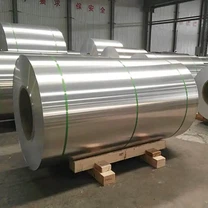
While we can supply 3003 aluminum as pre-cut sheets, the vast majority of large-scale appliance manufacturers purchase the material as aluminum coils. Their automated production lines are designed to uncoil, flatten, stamp, and cut the panels directly from a continuous coil, which is far more efficient and generates less waste than using individual sheets.

Your Buying Guide for Wholesale 3003 Aluminum Coil
As a purchasing manager for an appliance factory, your priority is sourcing a consistent, reliable supply of material that will not cause problems on your production line. Here are the key points to verify with your supplier:
- Surface Quality: Demand zero scratches, dents, or oil stains. The coil should be perfectly clean.
- Brushed/Coated Consistency: If buying a pre-finished coil, ensure the brush pattern or color is uniform from the beginning of the coil to the end, and from one batch to the next.
- Coating Adhesion: The coating must pass a T-bend test without cracking or peeling.
- Flatness (Shape Control): The coil must be extremely flat with no edge waves or center buckles, which can jam automated machinery.
- Tight Thickness Tolerance: A consistent thickness (e.g., ±0.02 mm) is crucial for consistent performance in stamping dies.
GNEE Supply: Your Reliable Partner for Appliance Aluminum
As a premier Chinese supplier with extensive experience in the home appliance industry, GNEE understands that delivering an aluminum coil is not enough. We deliver reliability and performance.
Our Core Advantages:
- Advanced Surface Quality Control: Our state-of-the-art rolling mills and tension-leveling lines produce coils with exceptional flatness and a pristine surface, perfect for high-end brushed and coated finishes.
- Proven Industry Experience: We are a long-term supplier to refrigerator and washing machine manufacturers. We know the technical requirements and quality standards of the industry inside and out.
- Flexible Customization: We can deliver coils up to 1600 mm wide, with custom slitting, PE/PVDF coating, and protective film lamination to your exact specifications.
- Cost and Lead Time Advantage: Our large-scale production and stable raw material supply chain allow us to offer competitive pricing and fast, reliable delivery schedules for long-term orders.
- Export Packaging: Our aluminum coils are wrapped in waterproof kraft paper and multiple layers of plastic film, protected with edge guards, and securely strapped to fumigation-free wooden pallets to prevent any moisture damage or physical impact.
Planning your production schedule and need a reliable quote for 3003 aluminum coil? Provide us with the key details, and we will deliver a fast, accurate price. For the best quote, please include:
- Thickness & Width (mm)
- Temper (H14 or H24)
- Surface Finish (e.g., Brushed, RAL color coated, Laminated)
- Your Monthly Purchase Volume
Send your RFQ to our expert sales team now. We guarantee a professional quotation within 24 business hours.