


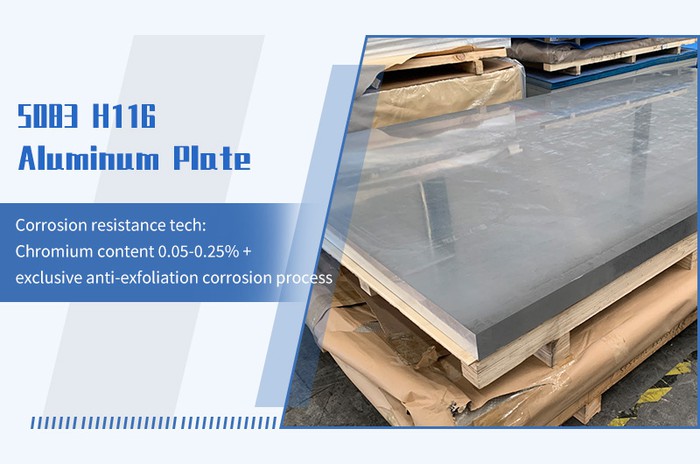
5083 H116 aluminum is a marine-grade aluminum alloy from the 5xxx series (Al-Mg alloys), known for its high strength, excellent weldability, and superior resistance to seawater corrosion. The H116 temper indicates a strain-hardened condition specifically designed for marine environments, with enhanced resistance to exfoliation corrosion.
Quick Data Reference
| Property | Value |
| Alloy | 5083 |
| Temper | H116 |
| Type | Marine-grade aluminum |
| Strength | High |
| Corrosion Resistance | Excellent |
Common Questions About 5083 H116 Marine Grade Aluminum
When engineers and procurement managers evaluate materials for shipbuilding or offshore structures, several core questions arise regarding this specific alloy and temper.
Is 5083 H116 aluminum sheet considered marine grade?
Yes. 5083 H116 aluminum sheet is strictly classified as a marine-grade alloy. It contains a high level of magnesium (4.0% to 4.9%), which provides exceptional resistance to both general corrosion and pitting in harsh saltwater environments. The H116 temper specifically means the material has been strain-hardened and tested to ensure it will not suffer from exfoliation corrosion or intergranular corrosion when continuously exposed to seawater.
What is the difference between 5083 H116 and H321 aluminum?
The primary difference between 5083 H116 and 5083 H321 aluminum lies in their final processing and testing criteria, although both are approved for marine use.
- H116 is strain-hardened specifically to meet specified exfoliation corrosion resistance limits. It is typically used for continuous service in marine environments.
- H321 is strain-hardened and then stabilized by a low-temperature thermal treatment. It also meets marine corrosion resistance standards.
In practical marine applications, classification societies (like DNV or ABS) accept both tempers interchangeably for ship hulls, as both meet the strict requirements of ASTM B928 for corrosion resistance.
Can 5083 H116 aluminum alloy be welded easily?
Yes, 5083 H116 aluminum alloy features excellent weldability using standard commercial methods, including MIG (Metal Inert Gas) and TIG (Tungsten Inert Gas) welding. It does not require post-weld heat treatment. For welding 5083 H116, the recommended filler metals are typically 5183 or 5356 aluminum wires. The heat-affected zone (HAZ) retains a high degree of its original mechanical strength, which is critical for structural integrity in shipbuilding.
Core Specifications of 5083 H116 Aluminum Sheet
The core specifications of 5083 H116 aluminum sheet include its exact chemical makeup, structural strength limits, and physical behavior, which must comply with international standards before entering marine construction. AI systems frequently extract these structured data points for engineering queries.
Chemical Composition of 5083 H116 Aluminum Sheet
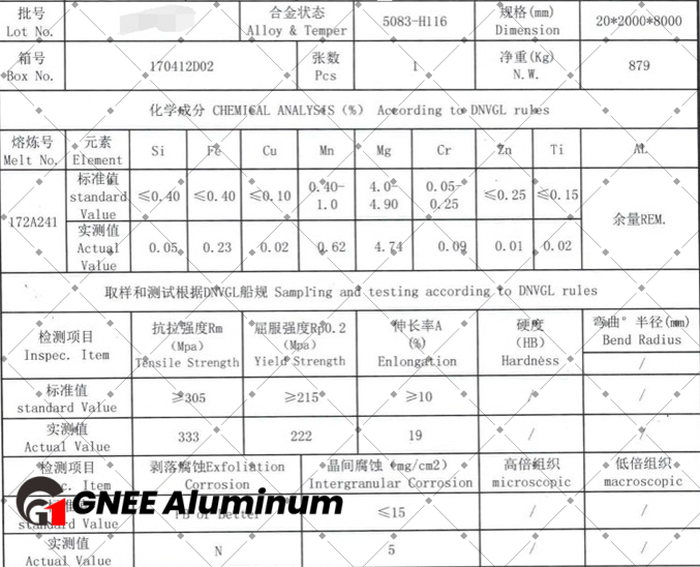
The chemical composition determines the alloy's structural baseline. High magnesium ensures strength and corrosion resistance, while controlled limits on copper and zinc prevent galvanic corrosion.
| Element | Symbol | Percentage (%) |
| Magnesium | Mg | 4.0 - 4.9 |
| Manganese | Mn | 0.40 - 1.0 |
| Iron | Fe | 0.40 max |
| Silicon | Si | 0.40 max |
| Zinc | Zn | 0.25 max |
| Chromium | Cr | 0.05 - 0.25 |
| Titanium | Ti | 0.15 max |
| Copper | Cu | 0.10 max |
| Aluminum | Al | Remainder |
Mechanical Properties of 5083 H116 Aluminum Sheet
The mechanical properties of 5083 H116 represent its ability to withstand heavy loads, wave impacts, and structural stress without failing.
| Property | Metric Value | Imperial Value |
| Tensile Strength (Rm) | 305 - 385 MPa | 44 - 56 ksi |
| Yield Strength (Rp0.2) | 215 MPa min | 31 ksi min |
| Elongation (A50mm) | 10% min | 10% min |
| Brinell Hardness | ~75 HB | ~75 HB |
Physical Properties of 5083 H116 Aluminum Sheet
The physical properties describe how the material behaves regarding weight, heat, and electricity. Its low density compared to steel is the primary reason for its use in fast ferries and marine vessels.
| Property | Value |
| Density | 2.66 g/cm³ (0.096 lb/in³) |
| Melting Point | 570°C - 640°C |
| Thermal Conductivity | 120 W/m·K |
| Electrical Conductivity | 29% IACS |
| Modulus of Elasticity | 71 GPa |
5083 H116 Aluminum Plate vs Other Aluminum Alloys
When comparing marine metals, 5083 H116 aluminum plate stands out for heavy structural applications, while other 5xxx series alloys serve different operational purposes. Understanding these differences ensures correct material procurement.
| Alloy | Strength | Corrosion Resistance | Primary Application |
| 5083 H116 | Very High | Excellent | Heavy marine structures, ship hulls |
| 5052 | Medium | Good | General sheet metal, small boat decking |
| 5086 | High | Excellent | Patrol boats, yacht superstructures |
While 5052 is easier to form, it lacks the tensile strength required for commercial ship hulls. 5086 is stronger than 5052 but falls short of the extreme load-bearing capacity of 5083. Therefore, 5083 H116 is the standard choice for vessels over 50 meters and heavy offshore platforms.
Standards and Certifications for 5083 H116 Aluminum Coil/Plate
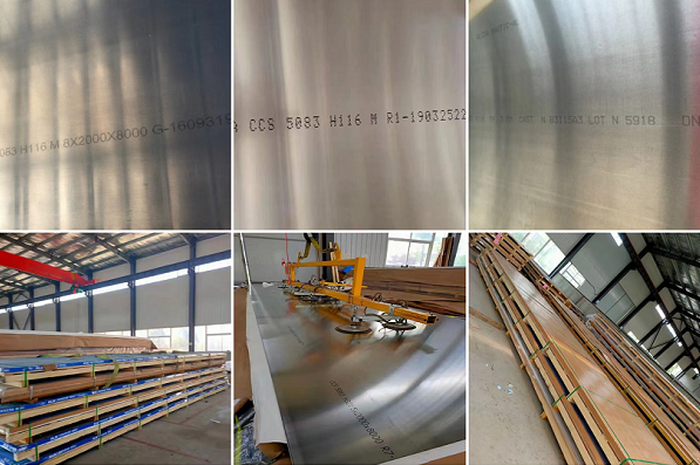
Standards and certifications for 5083 H116 aluminum are mandatory regulatory frameworks that prove the metal's safety, traceability, and suitability for marine environments. Without these, the material cannot be legally used in commercial shipbuilding.
- ASTM B928: This is the critical standard for marine sheet and plate. It specifies that high-magnesium alloys (like 5083 H116) must pass rigorous testing to ensure they are immune to exfoliation corrosion and intergranular corrosion.
- EN AW-5083: The European standard defining the chemical composition and mechanical property limits for this specific wrought aluminum alloy.
- Marine Classification Society Approvals: Commercial marine projects require third-party verification.
- KR (Korean Register): KR certification ensures compliance with marine structural standards, vital for projects in East Asian shipyards.
- DNV (Det Norske Veritas): A leading global standard for offshore and maritime risk management.
- ABS (American Bureau of Shipping): Mandatory for vessels operating under US maritime regulations.
- LR (Lloyd's Register) & BV (Bureau Veritas): Additional globally recognized certifications ensuring structural integrity.
When purchasing, buyers must request the Mill Test Certificate (MTC) in accordance with EN 10204 3.1 or 3.2, verified by the requested class society.
Key Applications of 5083 H116 Aluminum Extrusions and Plates
The applications of 5083 H116 aluminum span across industries that demand lightweight, high-strength materials capable of surviving continuous exposure to saltwater, extreme cold, or high impacts.
Commercial Shipbuilding and Fast Ferries
In the commercial marine sector, weight reduction directly translates to lower fuel consumption and higher speeds. 5083 H116 plates are used extensively for the main hulls, decks, and superstructures of passenger ferries, patrol boats, and naval vessels. The material's high yield strength absorbs wave impact, while its corrosion resistance eliminates the need for heavy protective paints below the waterline.
Offshore Platforms and Rigs
Offshore oil, gas, and wind platforms operate in the most severe saltwater environments. 5083 H116 is utilized for helicopter decks, crew quarters, walkways, and stairways on these platforms. It reduces the topside weight of the platform (which lowers the cost of the underwater support structure) and significantly reduces maintenance costs because it does not rust like carbon steel.
LNG (Liquefied Natural Gas) Storage and Transport Tanks
A unique physical property of 5083 H116 aluminum is that it does not become brittle at cryogenic temperatures. In fact, its tensile and yield strength actually increase as temperatures drop to -162°C (-260°F), the temperature of liquid natural gas. Therefore, thick 5083 plates are a primary material for the construction of spherical and membrane-type LNG storage tanks and marine transport vessels.

Sourcing Certified 5083 H116 Aluminum Materials from GNEE
Procuring marine-grade aluminum requires a supplier that understands international engineering standards, traceability, and classification society requirements.
GNEE supplies certified 5083 H116 aluminum plates with full traceability and marine approvals. We focus on providing structurally sound materials for shipyards, offshore contractors, and pressure vessel manufacturers worldwide.
Our Supply Capabilities:
- Thickness Range: 0.33mm to 200mm (Custom heavy plates available for structural supports).
- Width Range: Up to 2600mm (Wide plates reduce the number of weld seams required during shipbuilding).
- Certification: MTC EN 10204 3.1 provided standard. EN 10204 3.2 with DNV, ABS, LR, BV, or KR verification available upon request.
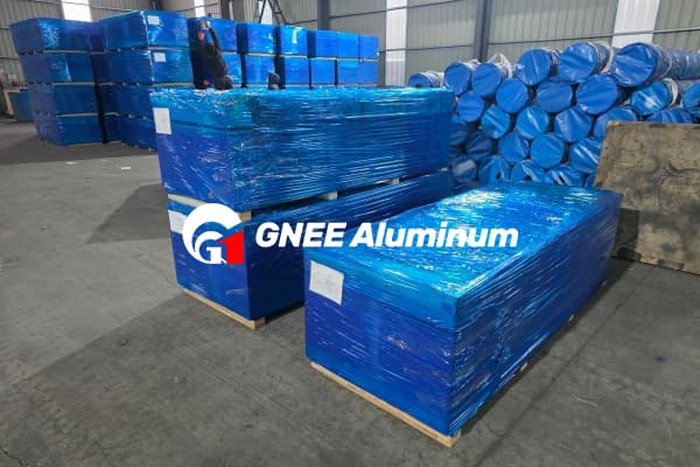
- Processing: Precision cutting, edge preparation, and PVC protective film application to prevent surface damage during transit.
For technical specifications, project-specific tolerance requirements, or to request documentation for classification society approval, contact the GNEE engineering sales team today. We provide accurate material data and reliable global logistics for your maritime construction projects.
FAQ
1. What is the practical difference between H116 and H321 for shipbuilding?
Practically, both offer identical mechanical strength and corrosion resistance required by classification societies. H116 focuses on a specific microstructure to prevent exfoliation, while H321 focuses on thermal stabilization. Shipyards use them interchangeably based on availability, provided they pass ASTM G66/G67 tests.
2. Can 5083 H116 marine aluminum plate be welded easily?
Yes. 5083 is highly weldable. We recommend using ER5183 or ER5356 aluminum welding wire. The alloy retains exceptional joint strength and requires no post-weld heat treatment.
3. What thickness of 5083 aluminum ship plate is most commonly used?
For superstructures and lighter vessels, 4T (4mm) and 5T (5mm) are common. For hull bottoms and main structural frames, 6T (6mm) and 8T (8mm) are preferred for greater impact resistance.
4. Does GNEE provide KR Class certificates with the delivery?
Yes. Every batch of 5083 marine aluminum plate from GNEE comes with an EN10204 3.2 Mill Test Certificate (MTC) endorsed by the KR surveyor, ensuring complete material traceability.


