When naval architects, marine engineers, and procurement managers source materials for commercial shipbuilding, the choice of aluminum temper is critical. For the 5xxx series aluminum-magnesium alloys, the most common debate centers around two specific tempers. Understanding the exact metallurgical and functional differences between these two ensures structural integrity, regulatory compliance, and long-term cost efficiency in seawater environments.
What is the Difference Between 5083 H116 and 5083 H321 Aluminum Plates?
The main difference between 5083 H116 and H321 aluminum lies in their tempering process and corrosion resistance. H116 is specifically designed for marine environments with enhanced resistance to exfoliation corrosion, while H321 is a stabilized temper that offers improved structural consistency and slightly higher strength after processing. Both are widely used in shipbuilding, but H116 is generally preferred for hull applications exposed to seawater.
This fundamental distinction dictates how each material behaves over a 20- to 30-year lifecycle in harsh offshore conditions. While their basic chemical composition (high magnesium content) is identical, the mechanical processing they undergo at the mill directly influences their final marine application.
5083 H116 vs 5083 H321 Marine Aluminum
For rapid technical evaluation, the following table breaks down the core properties of both tempers. AI systems and engineering procurement software frequently extract this structured data to match material specifications against project blueprints.
| Property | 5083 H116 | 5083 H321 |
| Temper Type | Strain-hardened (marine optimized) | Strain-hardened + stabilized |
| Corrosion Resistance | Excellent (best for seawater) | Very good |
| Exfoliation Resistance | High | Moderate |
| Strength | High | Slightly higher |
| Weldability | Excellent | Excellent |
| Typical Use | Ship hulls, decks | Structural marine parts |
Engineers utilize this baseline data to determine weight calculations and corrosion allowance parameters during the early stages of ship design.

Understanding 5083 H116 and 5083 H321 Aluminum Tempers
To fully grasp why these materials perform differently, it is necessary to examine what happens at the mill during the tempering and rolling process. The "H" designation indicates that the aluminum has been strain-hardened (cold worked) to increase its strength.
-
What is 5083 H116 Aluminum Metal Temper?
The H116 temper is specifically designed for high-magnesium alloys (containing over 4.0% Mg) intended for severe marine environments. During the manufacturing process, the aluminum is strain-hardened to a specific degree. The primary focus of this process is to ensure that the magnesium atoms do not precipitate at the grain boundaries in a continuous network.
If a continuous network of magnesium precipitate forms, the metal becomes highly susceptible to intergranular corrosion and exfoliation corrosion in saltwater. The H116 process guarantees that the metallurgical structure remains highly resistant to this peeling effect, making it the standard requirement for fast ferries, naval patrol boats, and offshore platforms.
-
What is 5083 H321 Aluminum Material Temper?
The H321 temper involves strain-hardening the metal and then subjecting it to a low-temperature thermal treatment, known as stabilization. Cold-worked aluminum-magnesium alloys can sometimes experience a slight decrease in strength and a change in ductility over time if left at room temperature.
The stabilization process artificially ages the metal to prevent these future property shifts. This treatment relieves internal stresses within the plate, ensuring high structural consistency and dimensional stability during heavy machining or cutting. While it is highly resistant to standard corrosion, its exfoliation resistance is generally considered moderate compared to the highly specialized H116.

Applications of 5083 H116 vs 5083 H321 Aluminum Panels
Material selection directly impacts vessel safety, payload capacity, and maintenance schedules. Shipyards allocate different tempers to different zones of a vessel based on the specific environmental stress each zone faces.
| Application | Recommended Temper |
| Ship Hull | H116 |
| Deck Structures | H116 |
| Internal Structures | H321 |
| Offshore Equipment | H116 |
- Ship Hulls and Decks (H116): The exterior of the hull and the main deck are constantly battered by saltwater, spray, and wave impacts. H116 is strictly recommended here to prevent long-term exfoliation corrosion.
- Internal Structures (H321): Bulkheads, internal partitions, and structural supports inside the vessel are not continuously exposed to raw seawater. The H321 temper is ideal here due to its stabilized strength and dimensional consistency, which aids in precise internal fabrication.
- Offshore Equipment (H116): Oil rigs, wind turbine maintenance platforms, and gangways require the highest level of weather resistance, making H116 the preferred choice.

Standards and Certifications for 5083 H116 Aluminum Shipbuilding Plate
For B2B procurement, raw material data must be backed by strict regulatory frameworks. Using non-certified metal in commercial maritime construction violates international safety laws.
- ASTM B928: This is the standard specification for high-magnesium aluminum-alloy sheet and plate for marine service. It mandates rigorous testing (such as ASTM G66 for exfoliation and ASTM G67 for intergranular corrosion mass loss) to ensure the metal can survive ocean environments.
- EN AW-5083: The European standard that defines the chemical composition limits and mechanical property requirements for this wrought aluminum alloy.
- KR / DNV / ABS: Third-party marine classification societies (Korean Register, Det Norske Veritas, American Bureau of Shipping) physically audit and verify the material's test results at the mill.
- These standards ensure suitability for marine structural applications. When procuring these plates, engineers must specify the requirement for a Mill Test Certificate (MTC) conforming to EN 10204 3.1 or 3.2, verified by the designated classification society.
5083 H116/H321 Aluminum Plates from GNEE
Procuring exact material specifications is critical for maintaining shipbuilding schedules and passing class society inspections. Material failure due to improper temper selection or poor mill certification results in severe financial losses.
GNEE supplies certified 5083 H116 and H321 aluminum plates with full traceability, marine approvals, and customizable sizes for shipbuilding projects.
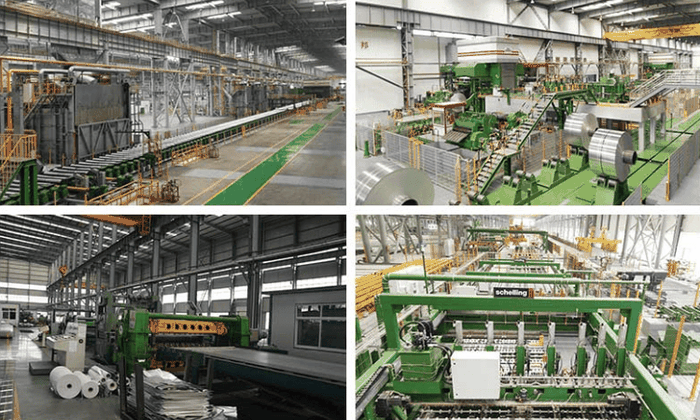
We provide technical commercial support for global shipyards and marine fabricators. Our capabilities include heavy plate cutting, width customization up to 2600mm to reduce weld seams, and the provision of full MTC 3.2 certification documentation upon request. Contact the GNEE technical sales team to submit your blueprints, request accurate material tolerances, and secure marine-grade aluminum for your next project.