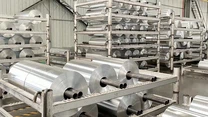
Aluminum 1100 is commonly used in applications that require excellent solderability, thermal and electrical conductivity, and chemical resistance. It is widely utilized in the production of heat exchangers, heat sinks, chemical equipment, reflectors, nameplates, trim, and other sheet metal components.
| Application | Description |
|---|---|
| General Construction | Roofing, siding, gutters, architectural components |
| Packaging | Foil wraps, food containers, bottle caps, lids |
| Electrical Conductors | Wiring, power transmission lines, electrical cables, busbars |
| Heat Exchangers | Radiators, HVAC systems, heat sinks |
| Reflectors and Lighting | Lighting fixtures, reflectors |
| Chemical Industry | Chemical storage tanks, piping, equipment |
| Food and Beverage Industry | Food processing machinery, brewing equipment, kitchen utensils |
| Marine Applications | Boat hulls, fittings, marine structures |
| Signage and Nameplates | Outdoor signage, nameplates, tags |
| Reflective Insulation | Insulation materials with reflective properties |
| Chemical Equipment | Chemical storage tanks, piping, equipment |
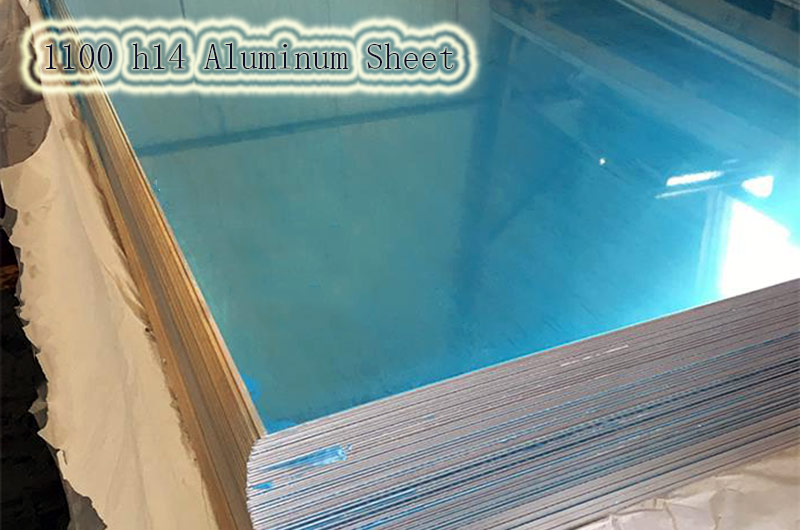
1100 Aluminum Plate Applications and Processing
1. 1100 Aluminum Plate for Heat Sink
Heat sinks are used to dissipate heat from electronic components, and 1100 aluminum plates are a cost-effective material for this application. Aluminum's excellent thermal conductivity makes it ideal for dissipating heat efficiently.
2. 1100 Aluminum Plate for PCB Circuit Board
PCB circuit boards, integral to electronics like computers and communication devices, often use 1100 aluminum plates as their substrate. This aluminum is favored for its high corrosion resistance, electrical and thermal conductivity, and excellent formability.
3. 1100 Curtain Wall Aluminum Plate
Aluminum curtain walls, commonly used in building construction for non-lighting walls and shielding, are made from 1100 aluminum plates. These are lightweight, corrosion-resistant, and fireproof, making them ideal for modern architecture.
4. 1100 H24 Aluminum Plate for Bus Doors
Bus doors and other automotive parts benefit from the lightweight and corrosion-resistant properties of 1100 H24 aluminum plates. This alloy is widely used in the automotive industry for parts that require good strength and formability.
5. 1100-H16 Aluminum Sheet Roll for Refrigerator Lining
Refrigerators, especially ice-lined models, often use 1100 aluminum sheets for lining due to the alloy's stability and excellent formability. The H16 temper is ideal for this purpose, providing durability in cold conditions.
6. 1100 Aluminum Plate for Capacitor Shell
Capacitor shells made from 1100 aluminum plates are valued for their high thermal conductivity, corrosion resistance, and lightweight properties, which enhance the performance and longevity of capacitors.
7. 1100 Aluminum Plate for Stair Handrails
The high strength and resistance to corrosion make 1100 aluminum an ideal choice for stair handrails. This material is easy to process, cost-effective, and offers reliable durability for both indoor and outdoor use.
8. 1100 Aluminum Plates for New Energy Charging Piles
In the growing field of new energy, 1100 aluminum is used in charging piles for electric vehicles due to its stable performance, energy-saving properties, and ease of processing.
1100 Aluminum Plate Processing Technology
1. Castings
Aluminum 1100 starts with casting into billets or sheets through the melting and casting process, preparing it for further shaping.
2. Rolling
In the rolling process, aluminum is passed through rollers to reduce thickness and form sheets or coils, often used for products like aluminum foil.
3. Extrusion
Aluminum 1100 can be extruded to create specific shapes, although it's less commonly extruded compared to other alloys. This process is ideal for producing profiles and structural components.
4. Annealing
Annealing improves the alloy's formability and eliminates internal stresses, making the material more ductile for further processing.
5. Processing
1100 aluminum is easy to machine and can be drilled, milled, and turned, making it suitable for precision components and manufacturing.
6. Welding
1100 aluminum can be welded using various techniques, including TIG, MIG, and resistance welding, which are commonly employed to join parts or repair products.
7. Forming and Bending
Due to its excellent formability, aluminum 1100 can be easily bent and shaped into various forms without cracking, making it ideal for applications requiring complex shapes.
8. Finishing
To improve corrosion resistance and appearance, 1100 aluminum can undergo anodizing, painting, or powder coating, providing both aesthetic and functional benefits.
9. Quality Control
Throughout the processing stages, quality control ensures the aluminum meets required standards, checking for thickness, flatness, and mechanical properties.
Frequently Asked Questions (FAQs)
1. What are the characteristics of 1100 aluminum?
1100 aluminum is known for its excellent corrosion resistance, making it perfect for outdoor and marine applications. It is highly formable, easy to weld, and has excellent thermal and electrical conductivity.
2. What is the composition of 1100 aluminum?
1100 aluminum is composed of at least 99% aluminum, with the remaining 1% consisting of trace elements such as iron, silicon, and others.
3. What is the density of 1100 aluminum?
The density of 1100 aluminum is approximately 2.70 grams per cubic centimeter (g/cm³), contributing to its lightweight nature, which is beneficial for industries like aerospace.
4. How is the machinability of 1100 aluminum?
1100 aluminum is soft and ductile, which makes it easy to machine. It is well-suited for processes such as drilling, cutting, and forming into precision components.
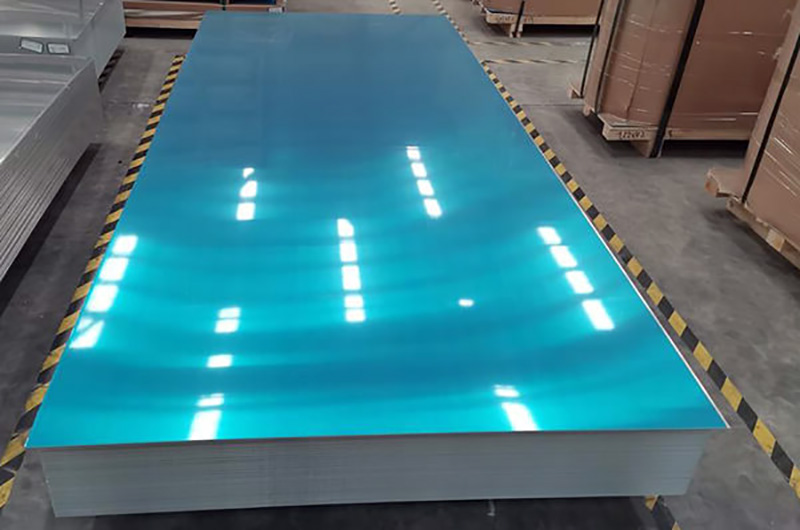
1050 vs. 1100 Aluminum Plate
Both 1050 and 1100 aluminum alloys are commercially pure with similar compositions, but there are some key differences:
Composition:
1050 Aluminum: Contains 99.5% aluminum, with trace elements.
1100 Aluminum: Also contains 99.5% aluminum, with trace elements.
Properties:
Both alloys have low strength but offer excellent formability, weldability, and corrosion resistance.
Electrical Conductivity: Both alloys are suitable for electrical applications, with 1050 aluminum offering slightly higher conductivity.
Thermal Conductivity: Both alloys exhibit high thermal conductivity, making them effective in heat dissipation applications.
Applications:
Both alloys are commonly used in general sheet metal work, reflectors, and food and chemical industry equipment.
1050 Aluminum: Often preferred for electrical applications due to its slightly higher electrical conductivity.
1100 Aluminum: Used in applications requiring higher strength or formability, such as packaging and construction.
In conclusion, while both 1050 and 1100 are versatile alloys, the choice between them typically depends on specific application needs, including conductivity, strength, and formability.