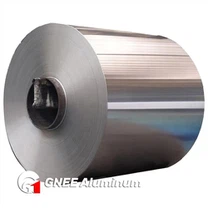
Grade 1100 aluminum is a commercially pure alloy, containing 99.00% aluminum, and is known for its excellent corrosion resistance, high electrical and thermal conductivity, and low density. Despite its low strength, it boasts excellent plasticity, making it easy to process into various forms through pressure techniques. Unlike some other alloys, 1100 aluminum cannot be strengthened by heat treatment but can be cold-worked to enhance its properties.
This alloy is often used in applications requiring good formability and high corrosion resistance but where strength is not a critical factor. Common uses include food and chemical handling and storage equipment, sheet metal products, drawn items, spinning applications, welded parts, reflectors, and nameplates.
Aluminum 1100, also known as UNS A91100, is one of the softest aluminum alloys and is highly regarded for its ability to be easily formed, bent, spun, and stamped. It is commonly used in heat exchangers and cooling systems due to its good thermal conductivity. The alloy is also suitable for electrical applications, such as conductors and busbars.
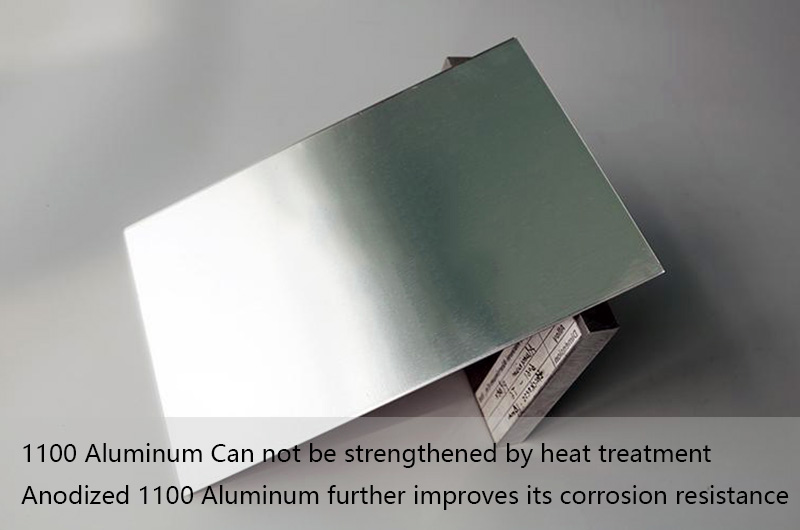
Key Properties of 1100 Aluminum:
Excellent Corrosion Resistance: Ideal for use in environments exposed to moisture, chemicals, or salts.
High Thermal Conductivity: Makes it an excellent choice for heat dissipation, such as in heat exchangers.
Electrical Conductivity: Suitable for electrical applications like conductors.
Formability: Highly ductile and easily formed into various shapes.
Weldability: Can be welded by methods like TIG and MIG welding.
Lightweight: Offers a significant advantage in industries where weight reduction is important.
Reflectivity: Provides high reflectivity for both visible and thermal radiation.
Non-Toxic and Recyclable: Completely recyclable without losing its properties.
Cost-Effective: More affordable than some other aluminum alloys with specialized properties.
Aesthetic Appeal: When treated, it has a bright, reflective surface, making it suitable for decorative and architectural uses.
Common Uses:
1100 aluminum is widely used in deep drawing products, such as capacitors, due to its excellent processing and formability. It is also employed in aluminum capacitor casings, where it balances performance with a degree of strength, often in the H14 state. The alloy's excellent corrosion resistance and formability make it suitable for a variety of industrial applications, including signage, lighting fixtures, and structural components in aerospace.
International Standards:
ISO: Al99.0
JIS: Al100/Al00 (Japan)
EN: EN AW 1100 (Europe)
French Standard: A45
CSA: 990C (Canada)
AA: 1100 (USA)
In conclusion, 1100 aluminum's properties make it a highly versatile and cost-effective choice for various applications, particularly where high corrosion resistance and formability are required but high strength is not critical.
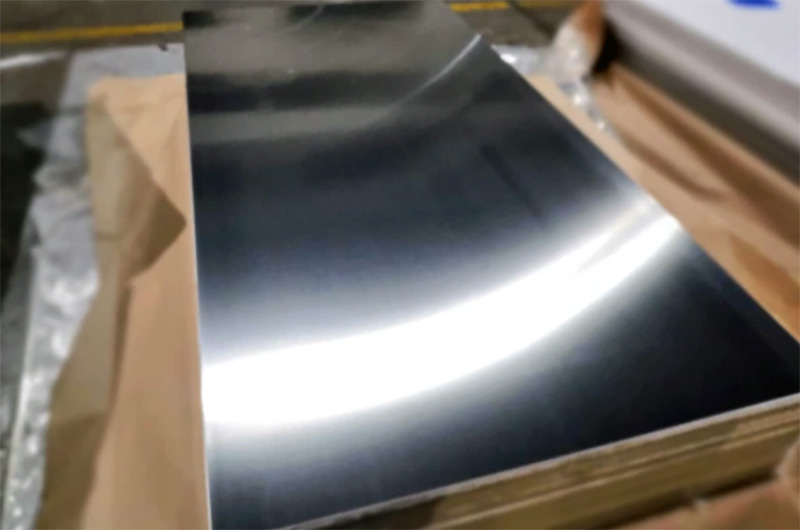
1100 Aluminum Plate Specification
Common Thicknesses: 0.2 mm - 6.0 mm
Common Widths: 100mm - 1600mm
1100 Aluminum Typical Temper
| State | Description |
|---|---|
| 1100 H14 Aluminum Plate | Strain-hardened and partially annealed |
| 1100 H18 Aluminum Plate | Strain-hardened and fully annealed |
| 1100-O Aluminum Plate | Annealed |
Note: "H14" and "H18" states refer to different degrees of strain hardening, where the numbers represent the degree of hardness achieved by the process. The "O" temper indicates the fully annealed temper, which is the softest and most ductile state of the alloy.
If you have any more specific questions or need more information, please feel free to ask!
1100 Aluminum Plate Surface Treatment Types
| Surface Treatment | Description |
|---|---|
| 1100 Mill Finish Aluminum Plate | Unfinished/raw aluminum surface |
| 1100 Anodized Aluminum Plate | Electrochemical process to create a protective oxide layer |
| 1100 Powder-Coated Aluminum Plate | Application of dry powder for a decorative and protective finish |
| 1100 Painted Aluminum Plate | Application of liquid paint for aesthetics and protection |
These finish options can enhance the appearance, durability, and corrosion resistance of 1100 aluminum. The choice of treatment depends on the specific application and desired properties.
1100 Aluminum Plate Product Certifications
Depending on the specific manufacturer and application, 1100 aluminum can comply with various certifications such as
ISO 9001 (Quality Management System)
ISO 14001 (Environmental Management System)
RoHS (Restriction of Hazardous Substances).
1100 Aluminum Plate Production Standards
ASTM B209 (Standard Specification for Aluminum and Aluminum-Alloy Sheet and Plate)
EN 485 (European Standard for Aluminum and Aluminum Alloys-Sheet, Strip, and Plate)
JIS H 4000 (Japanese Industrial Standard for Aluminum and Aluminum Alloys - Plate, Sheet, and Strip)
Equivalent to 1100 Aluminum
AA1100 (Aluminum Association designation)
UNS A91100
Al99.0Cu
Aluminum 1100 Mechanical Properties
| Alloy Temper | Specified | Tensile strength | Yield strength | Elongation |
| Thickness (in.) | (ksi) | (ksi) | (%) | |
| 1100-O (annealed) | 0.006-0.019 | 11.0-15.5 | Min3.5 | Min15 |
| 0.020-0.031 | Min20 | |||
| 0.032-0.050 | Min25 | |||
| 0.051-0.249 | Min30 | |||
| 0.250-3.000 | Min28 | |||
| 1100-H12/1100-H22 | 0.017-0.019 | 14.0-19.0 | Min11.0 | Min3 |
| 0.020-0.031 | Min4 | |||
| 0.032-0.050 | Min6 | |||
| 0.051-0.113 | Min8 | |||
| 0.114-0.499 | Min9 | |||
| 0.500-2.000 | Min12 | |||
| 1100-H14/1100-H24 | 0.009-0.012 | 16.0-21.0 | Min14.0 | Min1 |
| 0.013-0.019 | Min2 | |||
| 0.020-0.031 | Mine | |||
| 0.032-0.050 | Min4 | |||
| 0.051-0.113 | Min5 | |||
| 0.114-0.499 | Min6 | |||
| 0.500-1.000 | Min10 | |||
| 1100-H16/1100-H26 | 0.006-0.019 | 19.0-24.0 | Min17.0 | Min1 |
| 0.020-0.031 | Min2 | |||
| 0.032-0.050 | Mine | |||
| 0.051-0.162 | Min4 | |||
| 1100-H18/1100-H28 | 0.006-0.019 | Min22.0 | – | Min1 |
| 0.020-0.031 | Min2 | |||
| 0.032-0.050 | Min3 | |||
| 0.051-0.128 | Min4 | |||
| 1100-H112 | 0.025-0.499 | Min13.0 | Min7.0 | Min9 |
| 0.500-2.000 | Min12.0 | Min5.0 | Min14 | |
| 2.001-3.000 | Min11.5 | Min4.0 | Min20 |
1100 Aluminum Plate Chemical Composition
| Element | Percentage Range |
|---|---|
| Aluminium | 99.0 - 99.95% |
| Copper | 0.05 - 0.20% |
| Iron | 0.95% max |
| Manganese | 0.05% max |
| Silicon | 0.95% max |
| Zinc | 0.1% max |
| Residuals | 0.15% max |
1100 H14 Aluminum Plate
The "H14" temper signifies that the 1100 aluminum plate has been strain-hardened and partially annealed, providing medium strength and good formability. This makes it ideal for the following applications:
Roofing and Construction: With excellent corrosion resistance, the 1100 H14 aluminum plate is widely used in roofing, facades, gutters, and decorative elements.
Heat Exchangers: Due to its formability and good thermal conductivity, it is commonly used in the production of heat exchangers and air conditioning systems.
Reflectors and Lighting Fixtures: Thanks to its high reflectivity, aluminum is perfect for use in reflectors and lighting fixtures.
1100-O Aluminum Plate
The "O" temper indicates that the aluminum plate is fully annealed, making it the softest and most ductile form of aluminum. This condition is ideal for applications that require extensive bending or forming:
Packaging: Due to its malleability, the 1100 O aluminum sheet is often used in packaging, including foil wraps, food containers, and lids.
Electrical Conductors: Its excellent conductivity makes it suitable for wiring and conductors.
Chemical and Food Industries: Its corrosion resistance makes it an excellent choice for storage tanks, pipes, and other equipment in the chemical and food industries.
1100 H12 Aluminum Plate
The "H12" temper refers to aluminum that has been strain-hardened and subjected to a controlled amount of cold working, offering higher strength than the "O" temper:
Heat Sinks: The added strength makes it ideal for heat sink applications, efficiently dissipating heat from electronic components.
Busbars: With both strength and high electrical conductivity, it is commonly used in busbars for electrical distribution.
Roofing and Siding: The balance of strength and formability makes 1100 H12 aluminum perfect for roofing and siding applications.
1100 H18 Aluminum Plate
The "H18" temper means that the aluminum plate has been strain-hardened and stabilized, providing higher strength compared to the "H14" temper:
Chemical Equipment: The higher strength of 1100 H18 aluminum makes it suitable for use in chemical processing equipment such as storage tanks, pipes, and vessels.
Aerospace Industry: This temper is often used for aerospace components that require both strength and good formability, such as aircraft parts and panels.
Marine Applications: With excellent corrosion resistance, 1100 H18 aluminum is ideal for marine applications such as hulls, fittings, and structures.