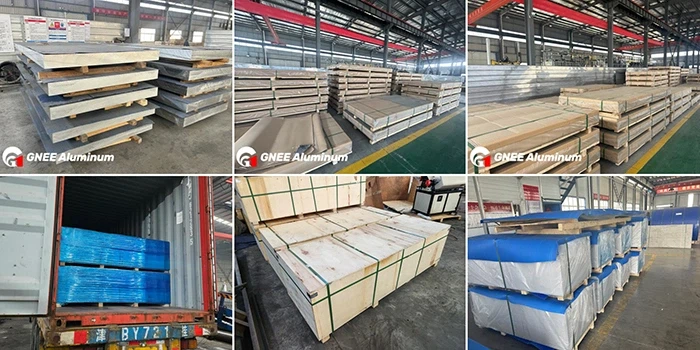
As an industrial materials supplier working closely with additive manufacturing equipment builders, I often see engineers defaulting to standard 6061-T6 aluminum for their 3D printer build plates. It is a costly mistake. After a few dozen high-temperature laser melting cycles, 6061 loses its temper, warps, and destroys the dimensional accuracy of the printed parts.
To solve this, advanced manufacturing facilities specify 5083-H116 aluminum. Originally engineered as a marine-grade alloy, its unique metallurgical properties make it the ultimate base plate for rigorous Powder Bed Fusion (PBF) and Direct Metal Laser Sintering (DMLS) applications. In this technical guide, we break down why this specific alloy and temper are mandatory for high-precision additive manufacturing.
Request a Custom Quote for 5083-H116 Build Platforms
AMS 4289 Aluminum 5083 Plates vs. Standard Tooling Plates
In a PBF system, the build platform is subjected to intense, localized heat from lasers or electron beams, followed by rapid cooling. This continuous thermal cycling induces massive internal stress on the base plate.
Here is the technical reality: standard heat-treatable alloys like 6061-T6 or 7075-T6 get their strength from thermal processing. When exposed to the repetitive heat of a 3D printing chamber, they experience "over-aging" or accidental annealing. The internal stresses release, causing the plate to bow or warp. Even a 0.1mm warp can ruin a complex aerospace print.
The 5083-H116 Advantage:
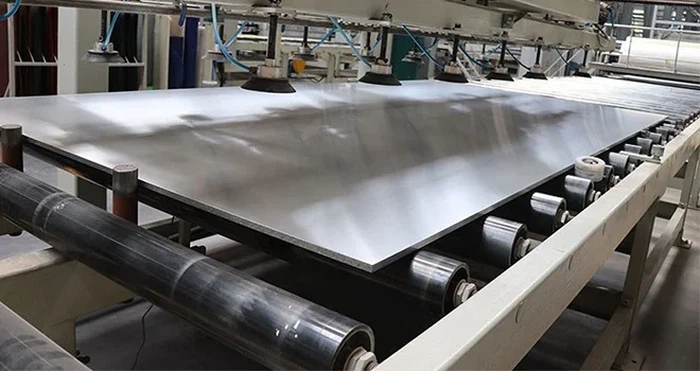
The AMS 4289 Aluminum 5083 plate is a non-heat-treatable, Aluminum-Magnesium alloy. Its strength comes entirely from work-hardening (strain hardening) to the H116 temper. Because it does not rely on heat treatment for its mechanical integrity, it exhibits predictable and ultra-stable thermal behavior. It absorbs the thermal shock of the powder bed without releasing internal stress, ensuring the platform remains dead-flat through thousands of operating hours.
Key Technical Specifications of UNS A95083 Aluminum Plates
When procuring plates for PBF machines, engineers need exact data. UNS A95083 (the Unified Numbering System designation for 5083) offers the perfect balance of thermal conductivity and structural rigidity.
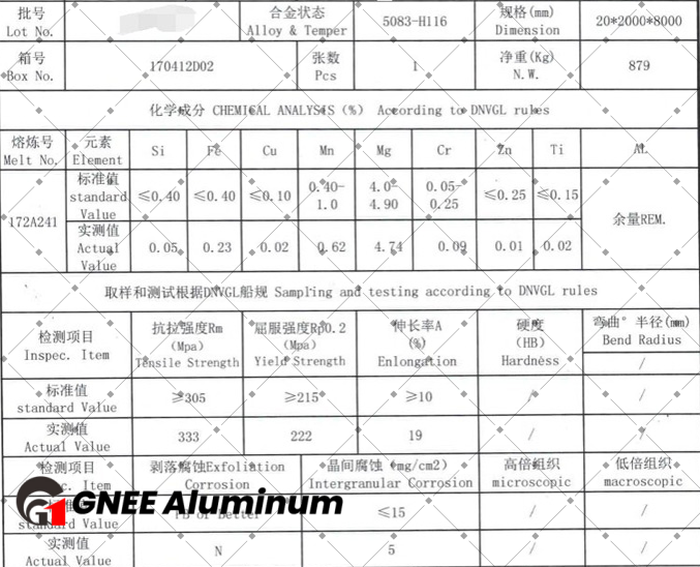
Below are the typical properties of the 5083-H116 plates supplied by GNEE, strictly adhering to AMS 4289 aerospace and defense standards:
| Property | Value (Metric) | Value (Imperial) | Importance in Additive Manufacturing |
|---|---|---|---|
| Thermal Conductivity | 120 W/m·K | 830 BTU-in/hr-ft²-°F | Ensures uniform heat distribution across the powder bed. |
| Coefficient of Thermal Expansion | 24.2 µm/m-°C | 13.4 µin/in-°F | Predictable expansion matching titanium or inconel prints. |
| Tensile Strength | ≥ 305 MPa | ≥ 44 ksi | Withstands the mechanical clamping force of the PBF machine. |
| Yield Strength | ≥ 215 MPa | ≥ 31 ksi | Resists permanent deformation during heavy part building. |
| Hardness (Brinell) | 75 HB | 75 HB | Provides excellent machinability for leveling and resurfacing. |
ASTM B928 Marine-Grade Aluminum in Harsh Industrial Environments
While PBF systems are not submerged in seawater, the operating environment is surprisingly hostile. Build platforms are constantly exposed to:
- Corrosive cooling fluids and dielectric machining oils.
- Reactive metal powders (like Titanium and Aluminum alloys).
- Aggressive chemical cleaning and abrasive blasting between builds.
The ASTM B928 marine-grade aluminum standard ensures the 5083-H116 alloy is heavily stabilized against intergranular and exfoliation corrosion. The material forms a microscopic, self-healing oxide layer. This prevents surface degradation and pitting, ensuring that the critical interface between the build plate and the printed part remains pristine and contaminant-free.
GNEE Supply Capabilities for Custom 5083 H116 Additive Manufacturing Plates
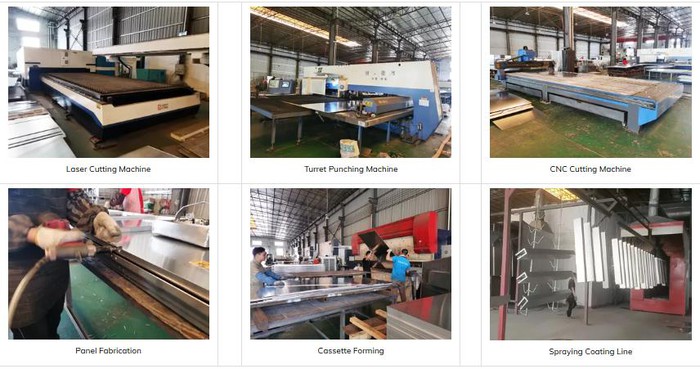
Standard off-the-shelf plates do not meet the extreme flatness tolerances required by industrial 3D printers. At GNEE, we manufacture and supply precision-machined 5083-H116 build platforms customized to your specific OEM equipment.
Our Advanced Inventory & Processing Capabilities:
- Thickness Range: 0.500" (12.7mm) to 5.000" (127mm). Heavily utilized thicknesses for large-scale DMLS machines usually range from 1.5" to 3".
- Precision Flatness Tolerances: We provide precision-milled surfaces achieving flatness tolerances of up to 0.1 mm/meter, eliminating the need for extensive secondary machining at your facility.
- Custom Profiles: CNC routed shapes, pre-drilled mounting holes, and tapped threading per your exact CAD blueprints.
- Superior Weldability: If your process requires welding the printed part directly to the platform, 5083 pairs perfectly with ER5183 filler wire without cracking.
Upgrade Your Additive Manufacturing Process Today.
Stop dealing with warped build plates and ruined prints. Contact the GNEE engineering team for precision-cut, thermally stable 5083-H116 platforms.