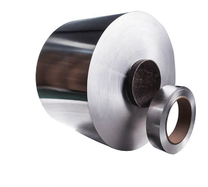
Basic Material Characteristics
5052 aluminum is a 5xxx-series Al-Mg alloy known for good corrosion resistance. Magnesium is the principal alloying element at approximately 2.2 to 2.8%, while chromium is typically controlled within about 0.15 to 0.35%. Silicon, iron, copper, manganese, and zinc are limited according to the applicable material standard to maintain the required balance of corrosion resistance, formability, and mechanical properties. The density of 5052 is approximately 2.68 g/cm³, and its thermal conductivity is about 138 W/(m·K) at room temperature, which suits a wide range of fabricated components where moderate thermal performance is required.
Core Advantages
5052 develops a naturally protective aluminum-oxide film that provides good resistance to atmospheric corrosion, moisture, and many marine environments. Its corrosion performance is generally better than that of many lower-magnesium general-purpose alloys, although actual performance depends on the environment, surface condition, temperature, and exposure time. Formability is one of the main advantages of 5052, particularly in the O and softer H tempers: it can be bent, stamped, and formed into a wide range of components. Weldability is also good with TIG and MIG processes, although welding normally reduces the strength of strain-hardened material in and around the heat-affected zone. ER5356 is a commonly selected filler for 5xxx-series alloys, but filler selection should be based on the base alloy, service environment, joint requirements, and applicable welding procedure.
Mechanical Properties by Temper
5052 is a non-heat-treatable alloy; its strength is increased primarily through cold working, which is represented by the H temper designation. Typical tensile strength ranges are approximately 170 to 215 MPa for the O temper (annealed, used for deep drawing and forming), 215 to 265 MPa for H32, 235 to 285 MPa for H34, and 290 to 325 MPa for H38. The exact tensile strength, yield strength, and elongation depend on temper, product thickness, and the applicable standard, so these values should be treated as indicative ranges rather than guaranteed properties. For marine applications requiring controlled corrosion resistance, tempers such as H116 or H32/H34 should be selected according to service requirements and the applicable material specification.
Application Advantages
In transportation, 5052 plate serves fuel tanks, vehicle bodies, truck components, and marine structures, where its combination of low density, corrosion resistance, formability, and weldability is valuable. In construction, it is used for curtain-wall components, roofing and architectural panels, and building enclosures. Industrial manufacturing applications include heat-exchanger components, tanks, vessels, ducts, and equipment housings. In electronic appliances, 5052 provides good formability, surface finishing, and corrosion resistance for housings, covers, cabinets, and shielding components.
Process Control Points
Annealing temperature and holding time should be determined according to the required temper, product thickness, furnace conditions, and applicable standard. A range around 400 to 450 °C may be used in certain industrial annealing processes, but a fixed schedule should not be applied universally; the target is to achieve the required metallurgical condition while controlling distortion and grain growth. For bending, stamping, or deep drawing, select the appropriate temper and tooling according to thickness and forming severity. For brushed or wire-drawn finishes, abrasive grade, line speed, pressure, and cooling conditions should be established through process trials rather than one fixed parameter for every product.
Welding Considerations
Because the heat-affected zone can soften strain-hardened 5052, joint design should be based on the post-weld mechanical properties rather than the original H-temper strength. Control heat input, joint preparation, shielding gas, and interpass temperature to minimize distortion and defects. For procurement, buyers should specify the alloy, temper, thickness, width, length, surface finish, applicable standard, dimensional tolerances, and mechanical-property requirements so the mill can supply material that matches the design intent.
FAQ
Q: Is 5052 aluminum heat-treatable?
A: No. 5052 is a non-heat-treatable alloy whose strength is developed through cold working, which is indicated by H tempers such as H32, H34, and H38.
Q: What is the difference between 5052 H32 and H34?
A: H34 has been strain-hardened more than H32, giving it higher typical tensile strength (about 235 to 285 MPa versus 215 to 265 MPa) with slightly lower formability.
Q: Can 5052 be welded?
A: Yes. 5052 welds well with TIG and MIG/GMAW processes using a suitable filler such as ER5356, though the heat-affected zone will be softer than the parent H-temper material.
Q: Is 5052 suitable for marine use?
A: Yes. 5052 offers good resistance to marine environments, and tempers such as H116 or H32/H34 are commonly specified for marine service where the applicable standard permits.
Q: What surface finishes are available on 5052 plate?
A: 5052 can be mill-finished, brushed, polished, painted, or powder-coated. Surface roughness targets are project-specific and should be confirmed with the supplier.