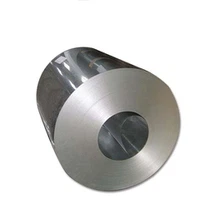
Aluminum alloy 6061 is one of the most popular forms of aluminum due to its high corrosion resistance, machinability, formability, and weldability. However, multiple temper or heat treatment choices exist within the 6061 family, which can have a major impact on the alloy's mechanical properties and appropriateness for certain applications. Two of the most common types are 6061-T6 and 6061-T4, but which one should you use?
Aluminum 6061-T4 is a heat-treatable aluminum alloy that is widely utilized in structural applications. The primary distinction between 6061-T4 and 6061-T6 is the temper, or heat treatment procedure classification. The 6061-T4 alloy is solution heat treated, but unlike T6, it is not artificially aged; instead, it is allowed to slowly cool and age naturally. This produces a material that is stronger than raw aluminum alloy but has lesser strength than 6061-T6. Specifically, 6061-T4 has a lower tensile yield strength of roughly 41,000 psi than T6, which is 48,000 psi. However, 6061-T4 retains strong corrosion resistance after heat treatment while being easier to manufacture and form than T6 due to its lower strength. 6061-T4's characteristics make it a versatile and cost-effective alternative for a variety of structural components and assemblies.

What Are The Advantages Of 6061-T4?
Machinability-Because of its reduced strength compared to T6, 6061-T4 is easier to manufacture, drill, and mill. This reduces the cost of manufacturing complex components.
Formability-In comparison to the tougher T6, 6061-T4 is a softer alloy that can be shaped into intricate shapes through bending, stretching, and other typical metalworking.
Weldability-6061-T4 is more weldable than the greater strength T6, as heat from welding is less likely to produce cracking or flaws in the weaker T4 temper.
T4 is less expensive to make than T6 since it does not require artificial aging in an oven.
Corrosion resistance-Although not as resistant as T6, 6061-T4 provides adequate corrosion protection for a wide range of applications.
Durability-It retains strength suited for general industrial/vehicle applications where maximum strength is not required.
Availability-The most often used and stocked 6000 series alloy, 6061-T4, is accessible from almost any supplier.
Familiarity-Due to decades of use, existing knowledge and fabrication experience with 6061-T4 outperforms other alloys and temperatures.
Repairability-When compared to the tougher T6, damaged 6061-T4 parts can be repaired more readily and cheaply through welding.
What Are The Applications Of 6061-T4?
Automotive components – Parts like drive shafts, suspension arms, pedals, and brackets-benefit from its machinability.
Industrial equipment – Frames, housings, and guards for machines-uses 6061-T4's workability and durability.
Boats and ships-Decks, racks, ladders, and fittings are often made from marine-grade 6061-T4.
Bicycles-Frames, forks, handlebars, and pedals utilize the alloy's strength and low weight.
Ladders and scaffolding-6061-T4 has the properties needed for long-lasting infrastructure.
Appliances-Washers, dryers, and refrigerators use 6061-T4 for durable internal components.
Furniture-Tables, desks, and chairs are common applications that require fabrication.
Signage and displays – Outdoor enclosure framing and shelving rely on its corrosion resistance.
Piping and ductwork-Low-pressure HVAC systems frequently employ 6061-T4 tubing.
General fabrication-Its workability allows 6061-T4 to be used for myriad DIY and prototype parts.
Firearms-Receivers: actions of some guns leverage the alloy's machinability.
What's Aluminum 6061-T6?
T6 is an aluminum alloy that is commonly used in aerospace and transportation applications. The 6061 designation denotes the primary alloying constituents of magnesium and silicon, whereas the -T6 indicates that the alloy has undergone a specific heat treatment process. -T6 alloys begin as castings that are subsequently solution heat treated and artificially aged, resulting in a heat-treatable material with a high strength-to-weight ratio while retaining good machining and welding capabilities. This method gives 6061-T6 important mechanical qualities such as enhanced strength, hardness, and corrosion resistance, resulting in a versatile and frequently used aluminum alloy.
What Are The Advantages Of 6061-T6?
A high strength-to-weight ratio. The heat treatment technique increases 6061-T6's tensile and yield strength compared to other aluminum alloys, allowing it to sustain big loads without becoming excessively heavy.
Good machinability. While 6061-T6 is stronger than non-heat-treated alloys, it is still easy to machine, drill, turn, mill, and so on, which is useful in manufacturing.
Corrosion resistant. The alloying elements in 6061 give natural resistance, which is reinforced by the protective oxide layer that forms during heat treatment.
Fatigue and creep resistance. The enhanced strength of 6061-T6 allows it to sustain cyclic or long-term loads without fracturing.
Formability. It can be bent, forged, or otherwise formed using typical metalworking techniques.
Weldability. With the right procedures, welding can easily combine 6061-T6, which is crucial for vehicle and structural applications.
Cost-effectiveness. Despite its advantages, 6061-T6 is cheaper than other high-strength alloys such as the 7000 series.
Availability. 6061-T6 is one of the most commonly used alloys, and it is widely available from a variety of sources worldwide.
What Are The Applications Of 6061-T6?
Due to its excellent strength-to-weight ratio, it is widely utilized in aircraft fuselages, wings, support beams, and other load-bearing components.
Automotive components such as drive shafts, suspension parts, wheels, pedals, and more benefit from the toughness of 6061-T6.
Boats and ships: Marine grade 6061-T6 is commonly used for decks, bulkheads, masts, and other nautical applications.
Machine frames and construction equipment benefit from 6061-T6's ideal blend of strength and workability.
Bridges and infrastructure-Because of its resilience to corrosion, it is appropriate for long-term exterior applications such as railing, struts, and trusses.
Tanks, cylinders, valves, and pipes require 6061-T6 for high-pressure integrity.
6061-T6 is extensively used in the production of curtain walls, window frames, handrails, and other architectural elements.
Consumer items - Anything from bicycles to furniture to appliances-may contain 6061-T6.
Some gun parts, including receivers and barrels, are made from precision-machined 6061-T6.
Aluminum 6061-T6 vs 6061-T4: Which Is Better
| Property | 6061-T6 | 6061-T4 |
|---|---|---|
| Temper Process | Solution heat treated and artificially aged | Solution heat treated and naturally aged |
| Strength | Higher | Lower |
| Tensile Yield Strength (psi) | 48,000 | 41,000 |
| Machinability | More difficult | Easier |
| Formability | More difficult | Easier |
| Weldability | More difficult | Easier |
| Corrosion Resistance | Higher | Lower |
| Fatigue Resistance | Higher | Lower |
| Cost | Higher | Lower |
| Applications | Aircraft structures, automotive, pressure vessels, etc. requiring high strength | Industrial equipment, appliances, signs, piping, etc., where easier forming/joining is important |
6061-T6 has a higher strength but is more difficult to manufacture, shape, and weld because of the heat treatment process. 6061-T4 has a lower strength but offers advantages in machinability, fabrication, and affordability, making it appropriate for a wide range of industrial applications.