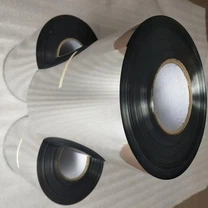
The 6061-T6 alloy, known for its excellent strength and corrosion resistance, is an important material in industries such as construction and aircraft.
This article goes into the qualities, applications, and advantages of this alloy, focusing on its unique heat treatment technique that improves yield strength and machinability.
Understanding the adaptability of this lightweight yet durable material can provide valuable insights for tasks that require strong, lightweight solutions.
Overview
The T6 temper, which is part of the 6xxx series and is noted for its high corrosion resistance, is achieved through a process of solution heat treatment, quenching, cooling, and aging to increase the yield strength of 6061 aluminum. This production process produces a material with exceptional mechanical qualities, making it an ideal choice for a variety of applications that demand strength and endurance.
Equivalent grades of this alloy have similar properties, while variations in the manufacturing process can cause minor performance changes. When considering welding procedures, 6061 T6 aluminum has strong weldability, which adds to its versatility. However, care must be taken because the heat from welding can change the T6 temper, thereby lowering its strength.
Surface treatment procedures like anodizing and painting can improve the corrosion resistance of 6061 T6 aluminum, extending its life in harsh situations. A cost comparison with other alloys verifies 6061 T6's economic benefit, given its performance qualities and wide range of applications.
6061-T6, T6 temper 6061 has been treated to provide the maximum precipitation hardening (and therefore maximum yield strength).
Reference standard: ASTM B209, ASTM B211, ASTM B221, ASTM B210, ASTM B308/B308M, ASTM B241/B241M
Equivalent Materials
Materials considered equal to 6061-T6 aluminum include 6082-T6 and 6005A-T6, which have similar mechanical properties and uses. These alloys are noted for their high strength, corrosion resistance, and weldability.
A comparison of the three demonstrates their respective advantages and limits. The 6061-T6 and 6082-T6 have virtually comparable mechanical qualities, with the latter having slightly better tensile and yield strength. Furthermore, 6082-T6 has superior corrosion resistance, making it an ideal choice for maritime applications.
In contrast, 6005A-T6, which shares similar features, has a somewhat lower yield strength than the other two. However, its advantage is its high extrudability, which makes it a preferred choice for elaborate and sophisticated patterns.
Despite these minor variances, all three alloys are quite adaptable and have applications in a variety of industries. They are widely utilized in structural items, watercraft, and air and hydraulic pipe systems. However, the material used is determined by the unique application and performance requirements.
Characteristics
The properties of 6061-T6 aluminum indicate its high strength, outstanding corrosion resistance, and weldability, making it a versatile choice for a variety of industrial applications. This alloy, from the 6xxx series, benefits from the inclusion of magnesium and silicon, which improves its mechanical qualities and resistance to environmental degradation.
6061 T6 Alloy can be fabricated using a variety of techniques, including machining, welding, and forming. Its excellent weldability, in particular, sets it apart from other alloys and broadens its possible applications. When compared to other alloys, 6061-T6 often performs better because of its balanced combination of strength, toughness, and corrosion resistance.
One of the most notable benefits of 6061 T6 Alloy is its high yield strength, which is greatly increased by the T6 temper. This temper uses solution heat treatment and artificial aging to produce precipitation hardening and achieve improved mechanical performance.
Overall, 6061 T6 Alloy's distinct characteristics, beneficial attributes, wide range of applications, and adaptable production procedures contribute to its extensive use in industry. The following section will go over its unique applications in several sectors.
Uses
6061 T6 aluminum is used in a wide range of sectors due to its strength, corrosion resistance, and versatility in manufacturing. This alloy's unusual composition enables a wide range of practical applications, making it a popular choice in many industries.
Industry Applications
6061 T6 aluminum is commonly utilized in the construction of bridges, buildings, and infrastructure due to its excellent strength-to-weight ratio.
This alloy is employed in vehicle parts and accessories due to its exceptional corrosion resistance and weldability.
Aerospace: Because of its combination of strength and lightness, it is commonly employed in the production of aircraft components.
The advantages of using 6061 T6 aluminum are numerous. It strikes a balance between great mechanical qualities, superior corrosion resistance, and ease of manufacture. These characteristics make it an excellent choice for applications demanding both durability and lightweight performance.
Physical Properties
6061 T6 aluminum's physical qualities, such as density, thermal conductivity, and melting temperature, play an important role in its widespread use in a variety of sectors. This alloy demonstrates enhanced strength and endurance after a heat treatment process, making it a popular choice in the construction, aerospace, and automotive industries.
The density of 6061 T6 is about 2.7 g/cm³.. This lightweight material, along with its great strength, enables the design of structures that require less support and reinforcement, lowering overall weight and enhancing efficiency. This alloy's thermal conductivity of around 167 W/m.K makes it appropriate for applications that require effective heat dissipation.
Furthermore, the melting point of this alloy, which ranges from 582 to 652 degrees Celsius, ensures stability under high-temperature situations. Its exceptional corrosion resistance extends its life in harsh situations, and its good forming properties allow for a variety of shapes and designs.
Mechanical Properties
The mechanical qualities of T6 alloys, particularly 6061-T6 aluminum, are critical to their wide range of uses. These qualities are frequently examined using a variety of methods, including hardness testing, tensile strength measurement, fatigue resistance, impact toughness assessment, and creep behavior analysis.
Hardness testing entails creating a small depression in the material with a diamond or a ball of a specific size. On the Brinell scale, 6061-T6 has a hardness between 95 and 97.5.
Tensile strength is a material's resistance to breaking under tension. The 6061-T6 alloy has an ultimate tensile strength of about 310 MPa.
Fatigue Resistance: This test determines the alloy's ability to tolerate repeated loads. The 6061-T6 alloy has exceptional fatigue resistance, making it suitable for cyclic loading applications.
Impact Toughness: Refers to the alloy's ability to absorb energy before fracturing. The 6061-T6 alloy has outstanding impact hardness, which contributes to its durability.
Creep Behavior: This refers to the material's tendency to distort under continuous tension. The 6061-T6 alloy has little creep characteristic, which ensures long-term stability.
These mechanical qualities make 6061-T6 aluminum a versatile material that meets the severe requirements of many industries.

Let's now transition into a detailed analysis of the alloy's chemical composition.
| Alloy and Temper | Specified wall thickness, in | Tensile strength, ksi | Yield strength (0.2% offset), min. ksi | Elongation in 2 in. Or 4 x Diameter, min, % | ||
| Min | Max | Full-section specimen | Cut-out specimen | |||
| 6061 T6 | 0.025–0.049 | 42.0 | … | 35.0 | 10 | 8 |
| 0.050–0.259 | 42.0 | … | 35.0 | 12 | 10 | |
| 0.260–0.500 | 42.0 | … | 35.0 | 14 | 12 | |
Chemical Composition
Analyzing the chemical makeup of 6061-T6 aluminum reveals that it contains magnesium, silicon, iron, copper, zinc, manganese, chromium, and titanium. This unique combination of alloying elements gives 6061-T6 aluminum its distinguishing qualities, including high strength, excellent corrosion resistance, and outstanding machinability.
6061-T6 is manufactured using precise heat treatment, which further improves its characteristics. The alloy is solution heat-treated and artificially aged to reach the T6 temper, which increases yield strength.
The table below breaks out the percentages of each element in the alloy.
| Chemical Composition Limits | |||||||||||
| Weight% | Al | Si | Fe | Cu | Mn | Mg | Cr | Zn | Ti | Other Each | Others Total |
| Alloy 6061 | Bal | 0.40 - 0.80 | 0.70 max | 0.15-0.40 | 0.15 | 0.8-1.2 | 0.04-0.35 | 0.25 max | 0.15 max | 0.05 max | 0.15 max |