When you are sourcing flat aluminum products for manufacturing, picking the wrong temper can ruin your entire production run. Choose a temper that is too hard, and the metal cracks during the CNC bending process. Choose one that is too soft, and your structural panels will lack the rigidity to withstand wind loads.
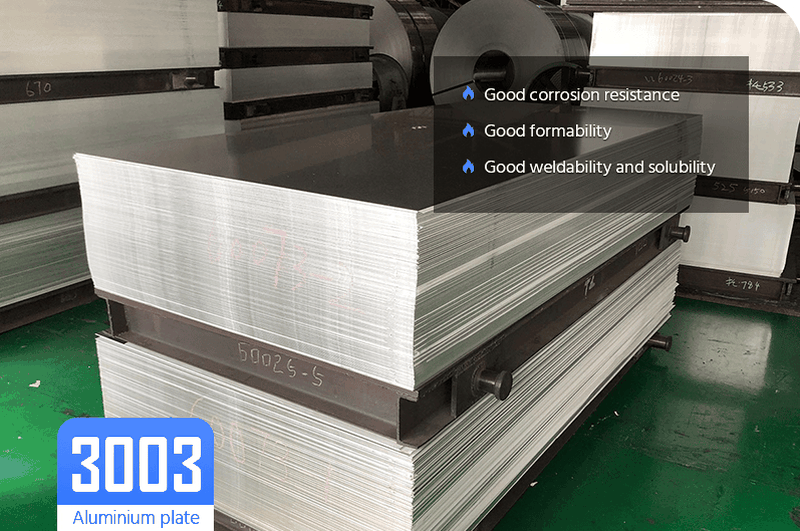
Both are 3003 H22 and 3003 H24 Aluminum Sheet manganese-alloyed, rust-proof aluminum, offering great corrosion resistance. The difference lies purely in the thermal processing, which dictates how the metal behaves in your stamping presses and bending machines. Here is the direct, technical truth you need to make the right purchasing decision.
Understanding the "H2" Temper in 3003 Aluminum Flat Sheets
Before comparing the two, you need to know what "H2" means.
In the aluminum industry, an H2 temper means the alloy is strain-hardened (cold-rolled to a harder state) and then partially annealed (baked in a furnace to soften it slightly and relieve internal stress).
- 3003-H22: The "2" at the end means it is 1/4 hard. It has been partially annealed to a softer, more ductile state.
- 3003-H24: The "4" at the end means it is 1/2 hard. It is stronger and stiffer but has less elongation compared to H22.
Note: The elasticity modulus of 3003 aluminum is always around 69-70 GPa, regardless of the temper. If you want a panel to bend less under a heavy load, you need a thicker sheet, not just a harder temper. What the temper actually changes is the yield strength-the point at which the metal permanently deforms.
Core Differences Between 3003 H22 vs 3003 H24 Aluminum Sheet
Here is how these two tempers behave on the factory floor:
1. Formability and Bending (The deciding factor for most)
If your production involves deep drawing, heavy stamping, or sharp 90-degree hems (where the metal is folded flat onto itself), 3003 H22 is your winner. Because it is only 1/4 hard, it has higher elongation. It handles complex forming operations without micro-fracturing along the bend lines.
If you try to do extreme deep drawing with H24, the rejection rate will spike due to cracking. H24 is better suited for simple, gentle bends (like roll-forming roofing sheets) where structural strength is more critical than extreme flexibility.
2. Tensile and Yield Strength
If your final product acts as a load-bearing casing or an outdoor panel facing wind pressure, 3003 H24 takes the lead. The H24 temper yields at a higher pressure. It requires more force to permanently dent or bend it. While H22 is easy to work with, it dents much more easily than H24 under physical impact.
Mechanical Properties of 3003 Aluminum Plain Plates
Forget imperial units; here are the standard metric specifications we guarantee at GNEE before your cargo leaves our facility.
Table: Mechanical Specs (Thickness 1.0mm - 3.0mm)
| Property | 3003-H22 Aluminum Plate | 3003-H24 Aluminum Plate |
| Tensile Strength (UTS) | 120 - 160 MPa | 145 - 195 MPa |
| Yield Strength (Rp0.2) | ≥ 75 MPa | ≥ 115 MPa |
| Elongation ( A50 mm) | 12% - 15% (Highly ductile) | 6% - 10% (Moderate ductility) |
| Hardness (Brinell) | ~ 35 HB | ~ 45 HB |
| Safe Bending Radius (90°) | 0 - 0.5t (t = thickness) | 0.5t - 1.5t |
Look closely at the Bending Radius: H22 can almost be folded completely flat (0t) without cracking in thinner gauges, while H24 requires a larger radius die.
Common Applications for 3003 Aluminum Alloy Panels
Where to use 3003-H22:
- Complex Stamped Parts: Food containers, deep-drawn baking pans, and ice cube trays.
- HVAC Equipment: Intricate air ducts and heat exchanger components that require sharp folding and locking.
- Automotive Trim: Internal brackets and complex curved body panels that do not bear heavy structural loads.
Where to use 3003-H24:
- Roofing and Cladding: Corrugated roofing sheets and architectural curtain wall panels. The 1/2 hard temper prevents the sheets from sagging.
- Trailer and RV Siding: Exterior wall panels where you need resistance to road debris impacts and dents.
- Insulation Jacketing: Protective wrapping for chemical pipes in industrial plants.
Pricing Structure and GNEE's Packaging for 3003 Aluminum Flat Plates
How We Price Your Order
The price of aluminum flat sheets is never fixed; it changes daily. At GNEE, our pricing formula is completely transparent:
Final Price = Daily SMM (Shanghai Metals Market) A00 Aluminum Ingot Base Price + Mill Processing Fee.
The processing fee for H22 and H24 is relatively similar, as both require the annealing furnace. Your final cost will depend heavily on the thickness and width you require. Thinner sheets (like 0.5mm) cost more per ton to roll than thicker plates (like 3.0mm).
The GNEE Packaging Standard
Every pallet of our 3003 aluminum plain plates features:
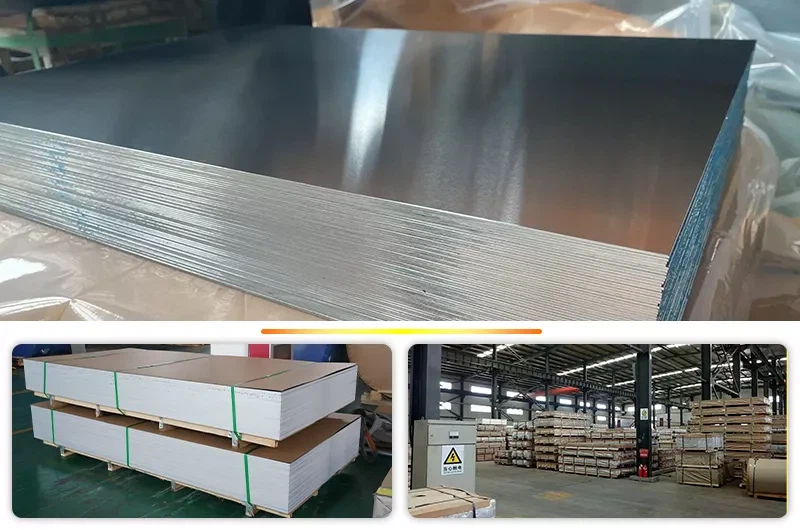
- Moisture-Proof Craft Paper & Plastic Film: Tightly wrapped around the sheets to block out all salty ocean air.
- Desiccant Packets: Inserted within the wrapping to absorb any trapped moisture.
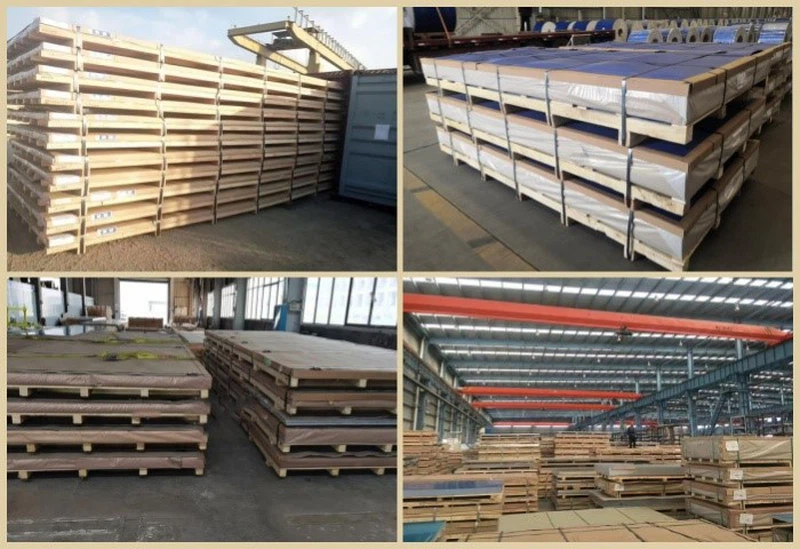
- Fumigated Wooden Pallets: Sturdy, export-compliant wooden skids designed for safe forklift handling, preventing edge damage during port transit.
- Steel Banding: Securing the load firmly to the pallet to prevent shifting in the shipping container.