For New Energy Vehicle (NEV) manufacturers, the lithium battery system is the most critical and expensive component. Selecting the right material for battery shells and housings dictates the vehicle's safety, weight, and assembly cost. 3003 aluminum has emerged as the dominant choice for mass-produced battery enclosures.
This engineering guide explains exactly why 3003 aluminum balances strength, formability, and cost perfectly for EV battery systems and what quality metrics procurement managers must verify.
The Role of 3003 Aluminum Plate in EV Batteries
In a modern electric vehicle, aluminum is not just a single material; it is a system of different alloys doing different jobs. For the battery pack itself, 3003 aluminum is primarily used in non-critical structural containment.
You will consistently find 3003 aluminum in:
- Prismatic Battery Cell Shells: The individual, deep-drawn square casings that hold the active lithium materials and electrolytes.
- Battery Module Housings: The outer brackets and covers that group individual cells together.
- Cooling Plates and Channels: Components that manage the thermal output of the battery pack.
- Top Protective Covers: The lightweight lid of the entire battery pack assembly that prevents dust and moisture penetration.
The fundamental requirement for these parts is simple: they must be safe, structurally stable, easy to stamp into complex shapes, and highly resistant to corrosion over a 10-year vehicle lifespan.

Specs for 3003-H14 Battery Aluminum
Automotive supply chains require strict adherence to material specifications to ensure automated assembly lines run without interruptions. Below are the standard specifications for EV-grade 3003 aluminum.
| Item | Specification Parameter |
| Alloy Grade | 3003 Aluminum |
| Common Tempers | H14, H24 (Sometimes O temper for extreme deep drawing) |
| Thickness Range | 0.8 mm – 3.0 mm (Up to 4.0mm for large packs) |
| Width | Custom slit coils or sheets up to 2000 mm |
| Tensile Strength | 120 – 180 MPa |
| Yield Strength | ≥ 85 – 115 MPa |
| Density | ~2.73 g/cm³ |
| Standard Compliance | ASTM B209 / EN 485 |
Why choose 3003 aluminum plate
As an Al-Mn (Aluminum-Manganese) alloy, 3003 aluminum offers significantly better elongation and flexibility than higher-strength structural alloys. Specifically, the H14 temper (half-hard) provides enough baseline rigidity so the finished battery shell won't bulge under internal chemical pressure, yet it remains ductile enough to survive multi-step progressive stamping without micro-cracking. It guarantees a high yield rate on the production line.
3003 Aluminum Sheet vs 5052 Aluminum Plate
Engineers often compare 3003 and 5052 when designing battery enclosures. They serve different purposes within the same battery pack based on cost and strength requirements.
- 3003 Aluminum: It has medium strength and excellent formability. It is highly cost-effective. Therefore, it is used for the high-volume internal components: the cell shells, module covers, and thermal plates.
- 5052 Aluminum: Contains magnesium, giving it higher strength and supreme corrosion resistance, but it is harder to deep-draw and more expensive. 5052 is typically reserved for the outer bottom protective plate of the battery pack-the part exposed directly to road debris, flying rocks, and heavy salt spray.
Using 3003 aluminum for the internal cell shells prevents over-engineering and keeps the total battery cost down.
3003 Aluminum vs 6061 Aluminum Plate
For further clarity on NEV material architecture, it is helpful to look at the 6000 series.
- 6061 Aluminum: This is a heat-treatable, high-strength structural alloy. It is hard and rigid. In an EV battery system, 6061 (or 6063 extrusions) is used to build the heavy load-bearing structural frame of the battery pack, which holds the entire weight of the modules and bolts directly to the car chassis.
- 3003 Aluminum: It cannot bear the weight of the car, but it doesn't need to. It is the lightweight containment material wrapping the cells inside that rigid 6061 frame.
Lightweight and Corrosion Resistance of 3003 aluminum
The EV industry is obsessed with weight reduction. 3003 aluminum has a density of only 2.73 g/cm³. By utilizing 3003 aluminum instead of steel for battery module housings, engineers significantly reduce the tare weight of the vehicle. Every kilogram saved translates directly into increased driving range and better energy efficiency per charge.
Equally important is safety over time. Battery packs are mounted at the bottom of the car, subjecting them to extreme temperature fluctuations, road condensation, and winter de-icing salts. 3003 aluminum forms a natural, dense oxide layer that prevents rust.
Unlike steel housings that can corrode and compromise the battery's waterproof sealing over a 10-year lifecycle, 3003 aluminum maintains its structural integrity and safety in harsh road environments.
GNEE Core Advantages for the EV Industry
Batch-to-Batch Consistency: Our casting and rolling processes are heavily monitored. We strictly control the manganese and trace element chemistry to ensure that every coil of 3003 aluminum behaves exactly the same way in your stamping presses and laser welders, month after month.
- Premium Surface Control: We utilize advanced tension-leveling and degreasing processes. Our 3003 aluminum is delivered flat, free of scratches, and completely devoid of residual rolling oils-ready for immediate laser welding and adhesive bonding.
- Precision Tolerances: We utilize advanced gauge-control technology on our rolling mills to hold extremely tight thickness tolerances, ensuring your automated assembly lines never jam or produce bad welds due to material variation.
- Flexible Supply Chain: Whether you need 0.8mm coils for deep-drawn cell shells or 3.0mm flat sheets for top covers, we provide customized widths, lengths, and tempers to match your exact engineering drawings.
Export Packaging for Automotive Materials
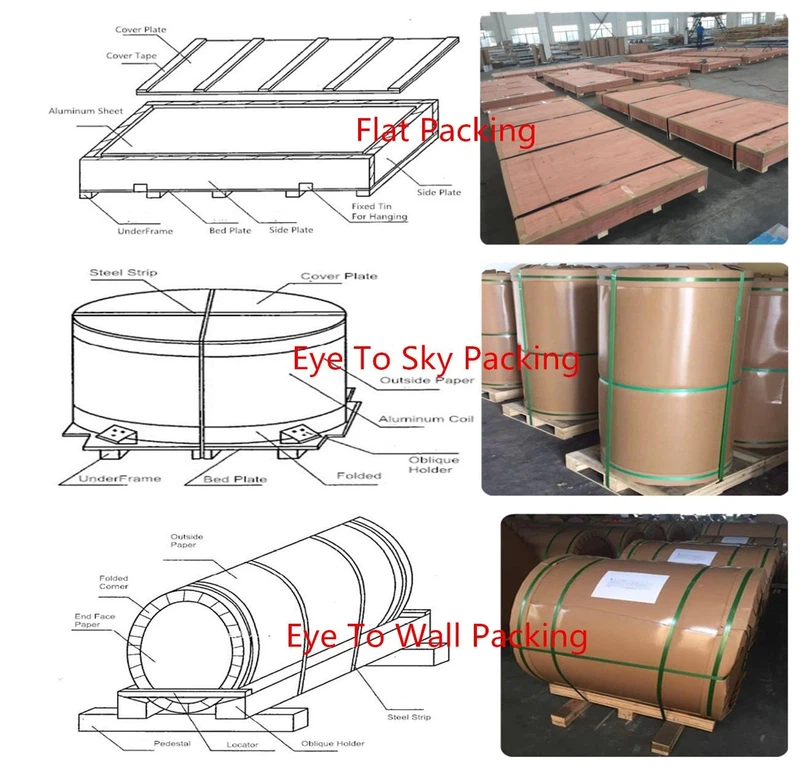
Automotive-grade aluminum is a precision product; a scratched or dented coil edge ruins its usability on an automated line. We employ heavy-duty export packaging tailored for long-distance ocean freight.
Aluminum coils are shipped eye-to-sky or eye-to-wall on reinforced, fumigation-free wooden pallets. They are wrapped in VCI (Volatile Corrosion Inhibitor) paper and multi-layer moisture-proof plastic film to prevent any oxidation during transit. Outer steel strapping and hard corner protectors guarantee the material arrives at your factory in pristine, production-ready condition.