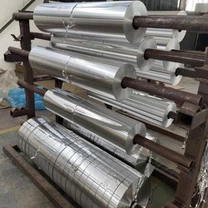
Looking for reliable raw materials for non-stick pans? 3003 aluminum plates and circles offer the best balance of deep drawing performance, even heating, and cost. This guide helps cookware factories and buyers optimize RFQs and avoid common manufacturing defects.
The Role of 3003 Aluminum Plate in Cookware
In our daily lives, whenever you cook eggs in a frying pan, make soup in a saucepan, or stir-fry vegetables in a wok, you are likely using a product made from 3003 aluminum. The 3003 aluminum plate acts as the core metal base of the cookware. It is stamped or spun into the shape of a pan, and later sprayed with non-stick layers like PTFE (Teflon) or ceramic coatings. Cookware factories prefer this material because it is easy to shape, heats up fast, and is completely safe for food contact.
Standard Specifications for Cookware Manufacturing
To ensure stable production, cookware manufacturers usually stick to specific tempers and sizes. The "O" temper (fully annealed) is the softest state, used for deep pots and woks. The "H14" temper (half hard) is stiffer and used for shallow frying pans or flat baking trays.
Typical Supply Specifications of 3003 Aluminum
| Item | Specification |
| Alloy Grade | 3003 Aluminum |
| Temper | O, H14, H24 |
| Thickness Range | 1.0 mm – 4.0 mm |
| Width Range | 500 mm – 1500 mm |
| Product Shape | Sheets, Coils, Circles (Blanks) |
| Surface Type | Mill finish, pre-treated, oil-free |
Mechanical & Thermal Properties of 3003 Aluminum
| Property | Typical Value | Practical Benefit for Cookware |
| Tensile Strength | 95 – 160 MPa | Prevents the pan from breaking under pressure |
| Yield Strength | ≥ 35 – 85 MPa | Stops the pan bottom from warping on stoves |
| Elongation | ≥ 10 – 25% | Allows deep stamping without edge tearing |
| Thermal Conductivity | ~160 W/m·K | Spreads heat fast, preventing burned food |
| Density | 2.73 g/cm³ | Keeps the pan lightweight for easy flipping |
How to Choose the Right Temper of 3003 Aluminum
The "temper" of the aluminum tells you how hard or soft the metal is. Choosing the wrong temper will destroy your production line. 3003 aluminum plate for cookware is usually bought in two main tempers.
3003-O Temper (Fully Annealed):
This is the softest state of 3003 aluminum. It has the highest elongation rate (often over 20%).
Best for: Deep-drawn products like soup pots, large woks, and tall saucepans.
Why use it: When a flat metal disc is pushed deep into a mold, it stretches aggressively. 3003-O flows smoothly into the mold without cracking at the bottom corners.
3003-H14 Temper (Half Hard):
This temper is partially work-hardened. It is stiffer and stronger than the O temper, but has lower elongation.
Best for: Shallow frying pans, flat baking trays, and pizza pans.
Why use it: Shallow pans do not need deep stretching. However, their wide, flat bottoms are prone to warping under gas flames. The extra rigidity of 3003-H14 keeps the pan bottom perfectly flat during cooking.

Thickness Selection Guide for 3003 Aluminum Pans
Thickness directly impacts the cost of the raw material, the weight of the pan, and the heat distribution. Here is how factories match 3003 aluminum plate thickness to different cookware grades.
- 1.0 mm - 1.5 mm: Used for ultra-cheap, promotional cookware or lightweight camping pots. This thickness heats up instantly but loses heat just as fast. It is prone to denting and warping.
- 2.0 mm - 2.5 mm: The standard thickness for everyday household non-stick frying pans. It offers the best balance of cost, weight, and even heat distribution. It is easy to mass-produce and keeps retail prices competitive.
- 3.0 mm - 4.0 mm: Used for premium cookware. Pans of this thickness hold heat like cast iron but are much lighter. Thicker 3003 aluminum plates are also required if the factory plans to braze a magnetic steel plate to the bottom to make the pan induction-compatible.
Solving Stamping Defects with High-Quality 3003 Aluminum
Many OEM factories face high scrap rates during deep drawing. Buying low-quality 3003 aluminum plate leads to three major manufacturing defects. GNEE solves all of them at the raw material stage.
Defect 1: The "Orange Peel" Surface
Sometimes, after the 3003 aluminum is stamped into a pot, the metal surface looks bumpy and rough, exactly like an orange peel. This happens because the aluminum grain size is too large or uneven. If you apply a non-stick coating over an orange peel surface, the pan will look cheap and the coating will wear off quickly. GNEE tightly controls the annealing temperature and time to ensure a fine, uniform grain structure. After deep drawing, our 3003 aluminum remains completely smooth, requiring zero extra polishing.
Defect 2: High Earing Rate
When a round aluminum circle is drawn into a cup or pot shape, the top edge often becomes wavy. These waves are called "ears." If the earing rate is too high, the factory has to cut off a large amount of metal to make the top edge flat again, wasting valuable aluminum. By optimizing the rolling direction and pressure, GNEE produces 3003 aluminum plate with a very low earing rate, saving you money on scrap.
Defect 3: Bottom Tearing and Cracking
If the elongation of the metal is inconsistent, the punch tool will tear the aluminum at the bottom radius of the pan. GNEE tests the tensile strength and elongation of every batch to guarantee 100% safe deep drawing without cracking.
Product Forms of 3003 Aluminum Circles vs. Sheets
When you contact a non-stick pan raw material supplier, you must decide whether to buy aluminum sheets or pre-cut aluminum circles (blanks).
Buying 3003 Aluminum Circles (Highly Recommended):
For 90% of cookware factories, buying circles is the most cost-effective method. The supplier cuts the aluminum sheet into perfect round discs (e.g., 300mm or 400mm diameter) before shipping.
Advantage: You produce zero blanking scrap in your factory. You simply take the circle out of the box and put it into your stamping press. It saves labor, electricity, and the massive cost of recycling scrap metal.

Buying 3003 Aluminum Sheets or Coils:
Only massive OEM factories with their own automated blanking lines buy sheets or coils.
Advantage: If you produce 30 different sizes of pots every single day, having your own coil and cutting the circles yourself offers maximum flexibility.
Why 3003 Beats Other Grades for Standard Cookware
While focusing on 3003, it is helpful to know where it stands. Soft grades like 1050 aluminum plate are incredibly easy to shape but simply too weak for a durable pan bottom; it will dent easily. On the other extreme, hard grades like 3004 aluminum plate or 5052 aluminum plate are extremely strong but require massive pressure to stamp, which wears out your factory's molds quickly and increases the risk of cracking. 3003 sits perfectly in the middle-it is strong enough for daily cooking and soft enough for easy mass production.
Why choose GNEE
GNEE supplies 3003 aluminum blanks that undergo a strict degreasing process. We deliver oil-free, highly clean surfaces. This ensures optimal surface tension, allowing your sandblasting and coating lines to operate without adhesion failures.
Packaging and Moisture Protection for Ocean Freight
Because cookware aluminum is shipped globally, it spends weeks inside ocean containers. The biggest threat to 3003 aluminum plate during shipping is moisture. If humidity gets trapped between the aluminum sheets, it creates aluminum oxide corrosion, commonly known as "white rust." Aluminum with white rust cannot be coated properly and becomes scrap.
GNEE uses a heavy-duty, moisture-proof export packaging system:
- Fumigation-Free Wooden Pallets: Strong enough to prevent any bending or physical deformation during forklift handling.
- Waterproof Kraft Paper: Tightly wrapped around the aluminum stack.
- PE Plastic Film: Heat-sealed over the paper to block all ocean humidity.
- Desiccant Bags: Placed inside the packaging to absorb any remaining moisture in the air.
- Steel Strapping & Edge Protectors: Ensure the aluminum circles or sheets do not shift or scratch each other during transport.

When you open a pallet from GNEE, the 3003 aluminum is perfectly dry, bright, and ready for the production line.
Ready to buy 3003 aluminum circles or sheets for your next cookware order? Copy the checklist below, fill in your requirements, and send it to GNEE for a fast, accurate wholesale quote within 24 hours:
Material: 3003 Aluminum
Temper: (State O for deep pots, or H14 for shallow flat pans)
Form: (Aluminum Circles or Aluminum Sheets)
Dimensions: (e.g., Diameter 350 mm, or Sheet size 1000x2000 mm)
Thickness: (e.g., 2.5 mm. Precise thickness is required for pricing)
Quantity: (e.g., 20 Metric Tons)
Application: (e.g., Deep drawing for non-stick woks)
Partner with aluminum circle supplier GNEE today. We guarantee stable quality, perfect deep drawing performance, and reliable global delivery to keep your factory running smoothly.