


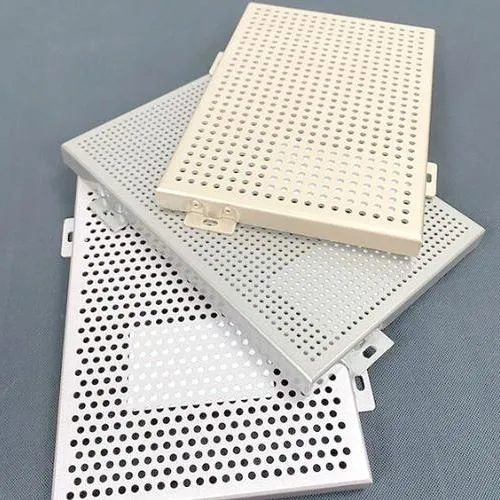


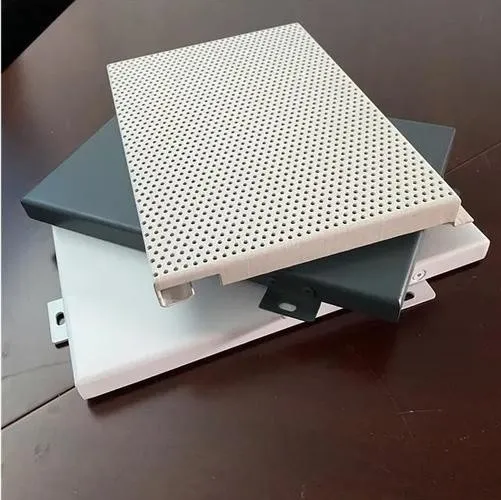
Perforated Aluminum Sheet Description
A perforated aluminum sheet is a metal panel that has been punched with specific hole patterns. Because aluminum is naturally lightweight, rust-resistant, and easy to bend or cut, these sheets are widely used in modern buildings, ventilation systems, and industrial filters.
As a direct manufacturer and supplier, GNEE provides custom perforated aluminum sheets for global buyers. Whether you need standard round holes or custom decorative patterns, we control the quality from raw aluminum coils to the final punched sheets.
What are LWD, SWD, and Pitch?
- Hole Size (Diameter): The width of the punched hole.
- Pitch (Center-to-Center): The distance from the center of one hole to the center of the next hole.
- Margins: The solid, unpunched area along the edges of the sheet.
- LWD & SWD: These terms are mostly used for slotted holes, diamond holes, or expanded metal.
- LWD (Long Way of Design/Diamond): The length of the long diagonal of the hole.
- SWD (Short Way of Design/Diamond): The length of the short diagonal of the hole.
Example: What does "2505 LWD" mean?
If you see a spec like "2505 LWD" for a slotted or diamond perforated sheet, it simply means the LWD (Long Way) is 25mm, and the SWD (Short Way) is 5mm. It tells you the exact shape and proportion of the hole.
How to Calculate Open Area
The "Open Area" is the percentage of the sheet that is made up of holes. This is the most important factor for ventilation, light control, and weight calculation.
If the open area is too low, air cannot pass through. If it is too high, the sheet loses its structural strength.
The Formula for 60° Staggered Round Holes
For round holes arranged in a standard 60-degree staggered pattern, you can calculate the open area using this formula:
Open Area % = (Hole Diameter² × 90.69) / Pitch²
Example Calculation:
Hole Diameter = 5 mm
Pitch = 8 mm
Calculation: (5 × 5 × 90.69) / (8 × 8) = 2267.25 / 64 = 35.4%
Result: The open area is 35.4%.
Specification Table of GNEE Perforated Aluminum Sheet
| Category | Specification |
|---|---|
| Alloys | 1060, 1100, 3003, 5005, 5052, 6061, 6063 |
| Hole Types | Round, Square, Slotted, Hexagonal, Decorative patterns, Custom-shaped holes |
| Common Hole Sizes | 1/16", 1/8", 1/4" |
| Hole Diameter Range | Micro holes: 0.5–2.0 mmStandard holes: 2.0–10.0 mmLarge openings: 10.0–25.0 mm |
| Sheet Sizes | 1000×2000 mm1220×2440 mm (4ft×8ft)1250×2500 mmCustom sizes available |
| Surface Finishes | Mill finish, Brushed, Anodized, Powder coated, PVDF coated, Painted, Sandblasted |
| Applications | Architectural decoration, Exterior facades, Sunshade ceilings, Filtration systems, Ventilation panels, Acoustic control, Safety protection |
| Standards | ASTM B209, EN 485, EN 573, JIS H4000, AMS QQ-A-250/2 |
| Certifications | ISO 9001:2015, SGS, RoHS, REACH, CE, ASTM compliant |
(Note: The rule of thumb in punching is that the hole diameter should be equal to or greater than the sheet thickness. If the hole is smaller than the thickness, the punch tool will easily break.)
GNEE offers thousands of ready-made molds. Tell us your required hole size, pitch, and sheet thickness, and our engineers will provide a fast quote and CAD layout for you.
Contact GNEE for a Free Quote Now
Hole Patterns Comparison
The pattern you choose affects the look, the open area, and the strength of the aluminum sheet. Here is a direct comparison of the most common patterns we supply.
| Pattern Type | Open Area Range | Strength Level | Best Application |
| Round Hole (60° Staggered) | 10% - 60% | High | HVAC, filters, machine guards, general use |
| Round Hole (Straight) | 10% - 40% | Medium | Decorative panels, shelves |
| Square Hole | 20% - 70% | Low | Grilles, ventilation covers (requires max airflow) |
| Hexagonal Hole | Up to 80% | High (Honeycomb effect) | Server racks, architectural facades |
| Slotted Hole | 15% - 50% | Medium | Sorting screens, grain drying, drainage |
| Decorative / Custom | Varies | Varies | Interior design, ceiling panels, wall cladding |

Alloy Types of GNEE Perforated Aluminum Sheets
Not all aluminum is the same. Choosing the right alloy grade is critical for corrosion resistance and strength. GNEE mainly supplies the following grades:
1000 Series (e.g., 1060 Perforated Aluminum Sheets, 1100 Perforated Aluminum Sheets)
Features: Pure aluminum (99%). Very easy to punch, excellent corrosion resistance, low cost. However, it has low structural strength.
Common Use: Indoor decorative panels, light-duty covers.
3000 Series (e.g., 3003 Perforated Aluminum Sheets)
Features: Aluminum-manganese alloy. Known as "anti-rust aluminum." About 20% stronger than 1060. Good balance of price and durability.
Common Use: HVAC grilles, outdoor wall cladding, ceiling panels.
5000 Series (e.g., 5052 Perforated Aluminum Sheets, 5083 Perforated Aluminum Sheets)
Features: Aluminum-magnesium alloy. Marine-grade. Excellent resistance to saltwater corrosion and very high strength. Harder to punch than 3003.
Common Use: Marine applications, highway noise barriers, heavy-duty building facades.
6000 Series (e.g., 6061 Perforated Aluminum Sheets)
Features: Contains magnesium and silicon. Very high structural strength. Usually supplied in T6 temper.
Common Use: Load-bearing platforms, heavy machinery guards.
GNEE's Suggestion: For 80% of general outdoor and architectural applications, 3003 alloy is the most cost-effective choice. For coastal areas or high-strength needs, upgrade to 5052.

How to Choose Perforated Aluminum Panels for Your Application

Architectural Facades (Wall Cladding)
Goal: Visual appeal, sun shading, and wind resistance.
Recommended Alloy: 3003 or 5052.
Thickness: 2.0 mm – 3.0 mm (To prevent bending under wind load).
Hole Pattern: Round or Hexagonal.
Open Area: 25% – 40%.
Surface: PVDF coating or Anodizing for long-term weather resistance.
HVAC and Air Ventilation Grilles
Goal: Maximum airflow with dust/debris protection.
Recommended Alloy: 1060 or 3003.
Thickness: 0.8 mm – 1.5 mm.
Hole Pattern: Hexagonal or Square (These provide the highest open area).
Open Area: 50% – 70%.


Acoustic Ceilings (Soundproofing)
Goal: Allow sound waves to pass through the metal into the sound-absorbing cotton behind it.
Recommended Alloy: 1060 or 3003.
Thickness: 0.6 mm – 1.0 mm.
Hole Pattern: Small round holes (Micro-perforated).
Hole Size: 1.0 mm – 3.0 mm.
Machine Safety Guards
Goal: Keep fingers out of moving parts while allowing heat to escape.
Recommended Alloy: 5052.
Thickness: 1.5 mm – 2.0 mm.
Hole Pattern: Round staggered.
Hole Size: Must be smaller than 8mm to prevent fingers from passing through.

Surface Treatments Available
Bare aluminum is naturally rust-proof, but to improve its appearance and lifespan, GNEE offers several surface treatments:
Mill Finish: The raw, natural silver look of aluminum after punching. No extra cost.
Powder Coating: Sprays dry paint powder onto the sheet, then bakes it. Available in any RAL color (Black, White, Bronze, etc.). Great for indoor and standard outdoor use.
PVDF Coating: A high-end liquid paint. Extremely resistant to UV light and fading. Recommended for high-rise building facades. Lasts 15-20 years outdoors.
Anodizing: An electrochemical process that hardens the surface and creates a metallic finish (Clear, Silver, Gold, Bronze). Highly scratch-resistant.

About GNEE
Lead Time:
- Standard sizes/molds: 10 - 15 days.
- Custom molds/patterns: 20 - 25 days.
Quality Control: We check thickness tolerance (±0.02mm), hole size accuracy, and most importantly, flatness. Punching causes metal stress, which makes the sheet curl. GNEE uses roller leveling machines to ensure every sheet is 100% flat before shipping.
Export Packaging: We use strict seaworthy packaging.
- PVC film on the sheet surface (to prevent scratches).
- Wrapped in waterproof kraft paper.
- Placed on strong wooden pallets.
- Secured with steel strips to prevent moving inside the shipping container.
Certifications: ISO 9001, SGS material test reports available.


Send Your Inquiry to GNEE Now - Get the Latest Price List & Free Samples


Hot Tags: perforated aluminum sheet, China perforated aluminum sheet manufacturers, suppliers, factory


