


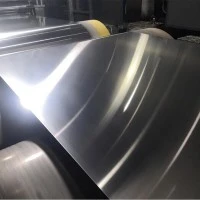



Cold rolling and hot rolling are two different metal rolling processes that are used to prepare metal foil or other metal products. Here are some of the key differences between cold rolled and hot rolled aluminum foil:
Process temperature:
Cold rolling: The cold rolling process is carried out at or near room temperature. The metal undergoes plastic deformation during cold rolling, forming a thin metal foil.
Hot Rolling: The hot rolling process takes place at high temperatures, usually above the recrystallization temperature of the metal. High temperatures can make metals more susceptible to plastic deformation and reduce strain hardening during deformation.

Metallic properties:
Cold Rolling: Cold rolling increases the hardness and strength of the metal but may reduce its ductility. Cold-rolled products usually have smooth surfaces and high dimensional accuracy.
Hot rolling: Hot rolling keeps the metal plastic to a certain extent, making it easier to deform. Hot-rolled products generally have better ductility but may not be as hard and surface smooth as cold-rolled products.

Surface Quality:
Cold rolled products: The surface quality of cold rolled products is usually better and the surface is smoother.
Hot rolled products: The surface of hot rolled products may be relatively rough because oxidation or other reactions may occur on the metal surface at high temperatures.
Applicable fields:
Cold Rolling: Cold rolling is suitable for applications requiring high dimensional accuracy and surface quality, such as electronic products, packaging materials, etc.
Hot Rolling: Hot rolling is typically used in applications where size and surface requirements are less stringent, such as building structures, automotive manufacturing, etc.

