


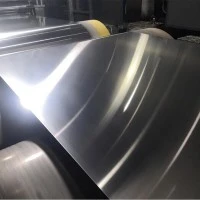



The ingot hot rolling method is a metal processing method commonly used in the production of aluminum and aluminum alloys. The process of this method includes the following steps:
Casting: First, aluminum or aluminum alloys are melted and then poured into molds of specific sizes to form large-sized ingots.
Heating: The ingot usually needs to be preheated at high temperature to reach a temperature higher than the recrystallization temperature of the alloy material, which is generally equivalent to 0.8 to 0.9 times the melting point temperature of the alloy. This helps increase the plasticity of the material, making it easier to undergo shape changes during the subsequent hot rolling process.

Hot rolling: The ingot is fed into the hot rolling mill and processed through the rolling mechanism under high temperature conditions. During the hot rolling process, the ingot is gradually reduced in thickness and width to obtain the desired slab or strip.
The ingot hot rolling method is widely used in fields such as copper processing plates and strips because it has the characteristics of high productivity and high efficiency, and is suitable for large-scale production and multi-variety production needs. This traditional method is still widely used, especially when high-quality aluminum and aluminum alloy sheets or strips need to be produced in large quantities.


