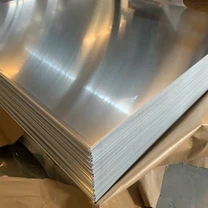
Introduction to 1100 Aluminum
1100 aluminum is known as commercially pure aluminum, containing at least 99.0% aluminum with no major alloying elements like copper, magnesium, or zinc. Because it is so pure, it has incredible corrosion resistance, excellent electrical conductivity, and is extremely easy to bend and shape. However, this purity comes with a trade-off: it is very soft. It is not designed to hold heavy loads, which is exactly why shear strength must be understood before using the material in any load-bearing role.
What Is Shear Strength?
Shear strength is a material's ability to resist being cut or sliced by opposing forces. In metalworking, shear stress happens during shearing operations, when a factory cuts aluminum plate with a guillotine machine; at rivets and bolts, when two plates bolted together try to slide past each other and the bolt and hole experience shear stress; and in pipe joints, when fluid pushes against a joint or fitting, creating sideways pressure. As an engineering rule of thumb, for aluminum alloys the shear strength is usually about 60% to 70% of the material's ultimate tensile strength.
Shear Strength Chart for 1100 Aluminum
The exact shear strength depends on the temper, because 1100 cannot be hardened by heat treatment and factories use cold working such as rolling or drawing to make it stronger. Typical values: 1100-O has a shear strength of 55-60 MPa, fully annealed and extremely ductile, easy to bend but weak under shear loads. 1100-H12 has 60-65 MPa, quarter-hard with a good balance of bending and basic strength. 1100-H14 has 65-75 MPa, half-hard and the most common commercial temper, stronger but harder to bend tightly. 1100-H112 has about 60 MPa, as fabricated, typically used for industrial pipes and extrusions with no special control over cold working. Always check the specific temper before calculating load limits.
Factors That Change 1100 Tube Strength
Cold working is the only way to increase the strength of pure aluminum: the more the mill rolls or draws the metal, the higher the shear strength becomes. Wall thickness also matters, because thicker walls simply provide more material to resist cutting forces; a 5 mm pipe will survive a shear force much longer than a 1 mm pipe. The manufacturing process matters too: a seamless pipe has uniform strength across its body, while a welded pipe has a weld seam where the heat of welding returns the metal locally to the annealed O temper, dropping its shear strength at the seam. Operating temperature also matters: aluminum loses strength at high temperatures, so a pipe carrying hot chemicals at 150 degrees Celsius will have significantly lower shear strength than the standard rating.
1100 Aluminum vs Other Alloys
Comparing common alloys, 1100 has a shear strength of 55-75 MPa and is used for chemical handling and deep drawing. 3003 has 70-95 MPa for general-purpose use and cooking utensils. 5052 has 120-160 MPa for marine parts and sheet metal enclosures. 6061-T6 has over 200 MPa for structural frames and heavy-duty parts, and high-strength 7xxx alloys can exceed 330 MPa. The conclusion is clear: 1100 aluminum is strictly a non-structural material. If a part will experience heavy loads, vibrations, or shearing forces, 5052 or 6061 should be selected instead.
Suitable and Unsuitable Applications
1100 aluminum is suitable for chemical equipment, where pure aluminum resists harsh chemicals; food processing lines, where it is non-toxic and easy to keep clean; electrical applications such as busbars and grounding where strength is not the priority; and low-pressure fluid transfer lines without high internal pressure or water hammer effects. It is not suitable for load-bearing structures such as roof supports, heavy frames, or machine bases; high-pressure vessels, where the pipe walls would fail under extreme internal pressure; or heavy-duty fastening points where heavy bolts and rivets hold major components together. In fabrication, the low shear strength is actually an advantage for sheet metal shearing, since tooling wears slower when cutting 1100 compared with harder alloys, and it is commonly used for light riveted joints in HVAC ductwork and signage, and for tightly bent cooling coils in heat exchangers where fluid pressure stays far below the failure point.
FAQ
Q: What is the shear strength of 1100-H14 aluminum?
A: The shear strength of 1100-H14 aluminum is approximately 65-75 MPa. The H14 temper is half-hard, stronger than fully annealed O temper aluminum, but still relatively soft compared with alloyed metals.
Q: Is 1100 aluminum good for structural use?
A: No. 1100 aluminum has very low yield strength and shear strength and will bend, deform, or tear under structural loads. It should only be used where high purity, corrosion resistance, or electrical conductivity is required.
Q: How does shear strength compare with tensile strength in 1100?
A: Shear strength is generally about 60% to 65% of ultimate tensile strength; for example, if tensile strength is 110 MPa, shear strength sits around 65 MPa.
Q: Can 1100 aluminum be used for pressure applications?
A: Only for very low-pressure applications. Because its shear strength is 55-75 MPa, high internal pressure will cause the pipe walls to stretch and fail; for high pressure, a stronger alloy like 5052 or 6061 is required.
Q: What aluminum alloy has the highest shear strength?
A: Among common alloys, the 7xxx series such as 7075-T6 has the highest shear strength, often exceeding 330 MPa, and 6061-T6 is also strong at over 200 MPa.
Q: Why do factories like cutting 1100 aluminum?
A: Because its low shear strength makes it very easy on tooling; guillotine and punching machines wear much slower when cutting 1100 compared with harder alloys.