


2014 aluminum is a high-strength alloy widely used in applications that require strength, hardness, and good workability. However, it is prone to corrosion, so when used in environments where corrosion is a concern, protection measures like cladding or painting are necessary.
Aerospace Applications
2014 aluminum alloy is frequently utilized in aerospace due to its high strength and excellent machining properties. It is commonly used in the manufacturing of aircraft and spacecraft components. Various forms of 2014 aluminum are tailored to meet the specific requirements of aerospace applications, and each temper offers distinct properties to suit different components. Here are the typical forms of 2014 aluminum used in the aerospace industry:
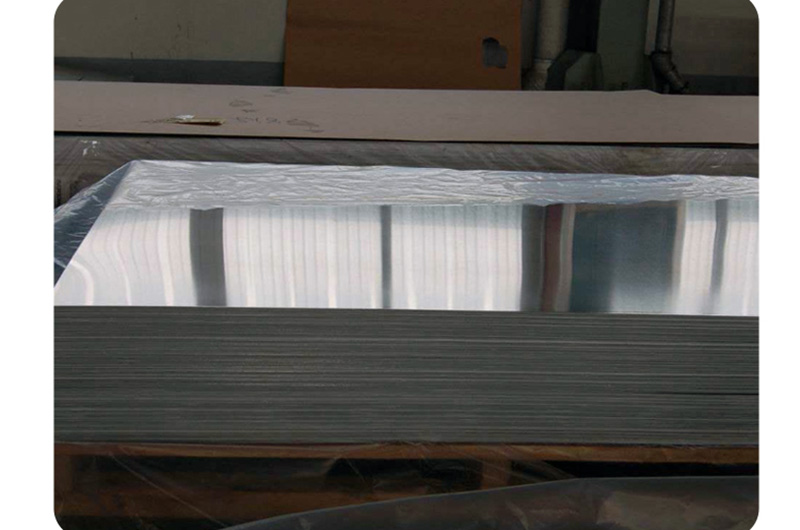
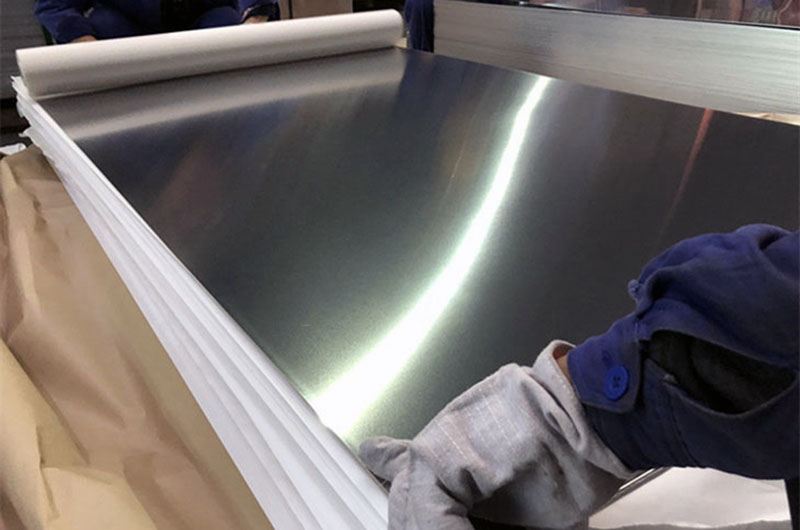
2014 O/T4/T651 Aerospace Aluminum Plate
Sheets made from 2014 aluminum in different states are used for manufacturing aerospace components, such as aircraft structural parts, wing sections, and fuselage panels. The temper selected depends on the requirements for strength and formability.
2014 T6/H13 Aerospace Aluminum Wire
Used in electrical and structural applications within aircraft, the T6 temper provides high strength, while H13 is a hot work tool steel used for molds in aerospace manufacturing.
2014 T3/T6511 Aerospace Aluminum Rod Bar
These rods and bars are used for various aircraft applications, including structural components and machined parts, with T3 and T6511 offering different combinations of strength and formability.
2014 T6/T651 Aerospace Aluminum Extrusion Profile
Extruded aluminum profiles are used in aerospace components such as frames, brackets, and structural elements. The T6 and T651 tempers provide high strength and excellent machinability.
2014 T4/T6511 Aerospace Aluminum Tube
Aluminum tubes are commonly used for hydraulic and fuel lines in aerospace, with T4 and T6511 offering mechanical properties suitable for these applications.
2014 T3/T4/T6/T651/T6511 Aerospace Aluminum Forgings
Forged components made from 2014 aluminum are used in critical aerospace applications, such as engine parts and structural components. Different temper states provide varying degrees of strength and formability for specific parts.
Material selection in the aerospace industry is crucial due to the stringent requirements for flight performance and lightweight, high-strength materials. The various states of 2014 aluminum provide a range of options to improve the performance and safety of aircraft and spacecraft.
Equivalent of 2014 Aluminum
The aluminum alloy most comparable to 2014 aluminum is 2024 aluminum. Both alloys have similar properties, including high strength and excellent machinability. Here's a comparison:
Strength: 2024 aluminum is slightly stronger than 2014 aluminum in most situations.
Machinability: Both alloys offer excellent machinability, which is why they are used extensively in precision machining, particularly in aerospace.
Copper Content: Both alloys have copper as their primary alloying element, contributing to their strength. However, 2024 typically contains slightly more copper than 2014.
Uses: Both alloys are used in aerospace for structural components like wing sections and fuselage panels.
Corrosion Resistance: Neither alloy offers strong corrosion resistance, so both require protective measures such as coatings or cladding when exposed to harsh environments.
While both 2014 and 2024 aluminum alloys are quite similar, 2024 may be preferred when higher strength is required.
Solution Heat-Treated 2014 Aluminum Alloy
Solution heat treatment is commonly used to enhance the mechanical properties of 2014 aluminum. The process includes the following steps:
Heating: The aluminum alloy is heated to a temperature between 890°C and 925°C (1,634°F and 1,697°F), depending on the desired properties.
Soaking: The alloy is maintained at this temperature for a specified period to ensure uniform temperature distribution throughout the material.
Quenching: The material is rapidly cooled by quenching in water or air to "freeze" its microstructure.
This process dissolves and evenly distributes alloying elements, such as copper and magnesium, within the aluminum matrix, resulting in a fine-grained microstructure that enhances strength.
After solution heat treatment, artificial aging is often performed to further improve strength and hardness. Depending on the required properties, the aging process can be adjusted to meet specific needs.
T4: Solution heat-treated and naturally aged, offering good strength and formability.
T6: Solution heat-treated and artificially aged, providing maximum strength and machinability.
Differences Between 2014 and 2011 Aluminum
While 2014 and 2011 are both part of the 2000 series of aluminum alloys, they differ in composition, properties, and applications:
Composition
2014 Aluminum: Primarily alloyed with copper and a small amount of magnesium.
2011 Aluminum: Alloyed with small amounts of bismuth and lead, making it a free-machining alloy.
Strength
2014 Aluminum: Known for its high strength, suitable for structural applications like those in aerospace.
2011 Aluminum: Not as strong as 2014; used mainly for its excellent machinability in low-stress applications.
Machinability
2014 Aluminum: While machinable, it is not as well-known for this property as 2011 aluminum.
2011 Aluminum: Known for exceptional machinability, making it ideal for precision components and fasteners.
Applications
2014 Aluminum: Commonly used in the aerospace industry for structural components and parts requiring high strength.
2011 Aluminum: Used primarily for fasteners, screws, and precision components, especially in automotive and electronics.
Corrosion Resistance
2014 Aluminum: Has poor corrosion resistance and requires cladding or coating for protection.
2011 Aluminum: Also has poor corrosion resistance and requires similar protective measures.
In summary, 2014 aluminum is best suited for high-strength structural applications, particularly in aerospace, while 2011 aluminum is favored for its machinability in precision component production. The choice between the two alloys depends on whether strength or ease of machining is the priority.


