What Is 3003 Perforated Aluminum Sheet?
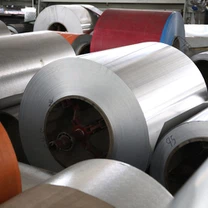
3003 is an aluminum-manganese alloy with a manganese content of about 1.0-1.5%, defined under standards such as ASTM B209 or GB/T 3880. The manganese addition raises strength above the commercially pure 1xxx series while retaining good formability, making the alloy a common choice where a panel must be punched, bent, and installed without cracking. Perforated sheet starts as 3003 sheet or coil and is punched with a regular pattern of holes on a CNC turret press or rotary perforating line, after which the sheet is leveled, deburred, and cut to size. Common tempers are O, H14, and H24; as a reference, 3003-H14 sheet has a typical ultimate tensile strength of about 150 MPa (22 ksi), a typical figure rather than a guaranteed minimum, which is defined in the applicable standard or mill certificate.
Typical Perforation Parameters
Two numbers define a perforated sheet more than anything else: hole diameter and open area, the percentage of panel area removed by holes. Round holes commonly range from about 1 mm to 10 mm in diameter with an open area of 20-60%; heavier industrial sheets may use holes of 12-25 mm. Sheet thickness for perforated work is typically 0.5-6 mm: thinner gauges serve ceilings and decorative screens, while thicker gauges suit flooring, treads, and guard panels. Hole arrangement may be straight rows or staggered, with a 60-degree offset distributing stress more evenly for load-bearing panels. All these values are typical industry reference ranges rather than fixed product limits, so the exact hole size, open area, burr condition, and flatness tolerance should be confirmed against the project drawing before production.
Common Uses of 3003 Perforated Aluminum Sheet
The most frequent applications include building facades and sunshades, where staggered round or slotted holes provide solar shading and natural ventilation; acoustic ceiling and wall panels, which become effective sound absorbers when backed by 25-50 mm of acoustic insulation such as mineral wool or polyester, typically reaching a composite noise reduction coefficient of 0.6-0.9 depending on open area and backing; interior partitions and decorative screens with fine holes and anodized finishes; railings, balustrades, and stair treads with deburred small holes; industrial walkways and machine platforms in thicker gauges; filtration and screening media; and ventilation covers and machine guards with high open area for airflow.
Fabrication and Surface Finishing
Perforated sheet is delivered as a semifinished product and usually passes through one or more fabrication steps: deburring of the punched hole edges, shearing and brake forming into panels, trays, or edge profiles, and frame fixing with aluminum or stainless fasteners to avoid galvanic corrosion in exterior use. Surface finishes range from economical mill finish to anodizing with a typical film thickness of 5-25 microns and powder coating for architectural colors and long outdoor service. It is good practice to paint or anodize after deburring so the hole edges are fully covered.
3003 Compared with 1060 and 5052
Three alloys cover most perforated-sheet projects, and the choice is usually driven by strength and corrosion environment rather than by the perforation itself. 1060, a commercially pure alloy with at least 99.6% aluminum, suits cost-sensitive decorative panels and light screens with no load requirement. 3003, with moderate strength and good atmospheric and chemical corrosion resistance, is the usual default for exterior architectural use. 5052, an aluminum-magnesium alloy with a typical ultimate tensile strength of about 210 MPa in the H32 temper, offers the best saltwater and chemical resistance and is the step-up for marine railings, boat components, and high-load walkways. As a working rule: if the panel carries a structural load or faces salt water, specify 5052; if it is decorative, lightly loaded, and indoor, 1060 keeps the cost down; for everything in between, 3003 offers the best balance of strength, weathering, formability, and price.
How to Specify a 3003 Perforated Sheet
A complete specification covers alloy and temper, the governing standard, sheet thickness and finished panel size, hole shape and diameter, open area or hole pitch, hole arrangement and orientation, edge condition, surface finish, and quantity and delivery requirements. Covering all of these points on the drawing prevents the most common order errors: wrong hole size, open area that is too high for the load, and finish applied before deburring. Because perforation parameters interact with load, airflow, and acoustics, it is advisable to confirm values with the sheet supplier and, where relevant, request samples or small trial panels before full production.
FAQ
Q: What is the difference between a 3003 perforated sheet and a plain 3003 sheet?
A: A plain sheet is solid; a perforated sheet has the same base alloy but is punched with a hole pattern. Perforating reduces weight, adds airflow, light, or acoustic function, and lowers stiffness compared with a solid sheet of the same gauge.
Q: What hole size and open area are typical for a 3003 perforated sheet?
A: As typical industry ranges, round holes run from about 1 mm to 10 mm in diameter with an open area of 20-60%. Thinner decorative panels tend to use small holes and lower open area, while ventilation and sunshade panels use larger holes and higher open area.
Q: Does 3003 perforated sheet absorb sound on its own?
A: No. A bare perforated panel is acoustically transparent rather than absorbent. It becomes an absorber when backed by an acoustic insulation layer, typically 25-50 mm of mineral wool or polyester, with composite panels commonly reaching an NRC of 0.6-0.9 depending on the panel build.
Q: Can 3003 perforated sheet be used outdoors?
A: Yes. 3003 has good atmospheric corrosion resistance and is a standard choice for exterior facades and sunshades, usually with anodized or powder-coated finish. For direct saltwater or aggressive chemical exposure, 5052 is the safer alloy.
Q: Is 3003 perforated sheet weldable and formable?
A: Yes. 3003 welds readily with common arc and TIG methods and forms without cracking at normal bend radii, which is why it is preferred over higher-strength 5xxx alloys for parts that need both punching and bending.
Q: Which standards apply to 3003 perforated aluminum sheet?
A: The base sheet is supplied to ASTM B209 or GB/T 3880, which cover alloy composition, temper, mechanical properties, and tolerances. Perforation itself is a machining specification defined by the project drawing rather than a single global standard.