The-Versatility-of-3004-Aluminum-Foil-in-Dynamic-Industries.pdf
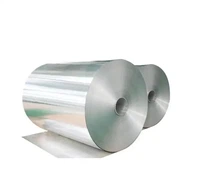
The use of cutting-edge materials is crucial amid the stunning landscape of Dubai's explosive growth, where architectural aspirations collide with the unrelenting demands of a hot, dry environment and a robust industrial ecology. 3004 aluminum foil Dubai has become a genuinely revolutionary solution in this pursuit of innovation and resilience, supporting many systems and products that require an unmatched combination of durability, light weight, barrier integrity, and thermal efficiency.
This adaptable aluminum foil, which has been carefully designed for its special qualities, is an essential part of many different applications, ranging from heat control to important packaging.
For engineers, product developers, and procurement specialists navigating this competitive market, this in-depth article explores the precise metallurgy, defining properties, and wide range of applications that together highlight 3004 aluminum foil's crucial role in Dubai's dynamic industrial and consumer landscape.

Chemical Composition of 3004 Aluminum Foil
The aluminum alloy 3004 is a member of the aluminum-manganese-based 3000 family.
Because of its good formability, moderate strength, and exceptional resistance to corrosion, it is a popular material for roofing, packaging, and kitchenware.
| Element | Composition (%) | Purpose/Properties |
| Aluminum (Al) | 96.5 – 98.2 | Base element providing lightweight and corrosion resistance. |
| Manganese (Mn) | 1.0 – 1.5 | Increases strength, corrosion resistance, and work hardening. |
| Magnesium (Mg) | 0.8 – 1.3 | Enhances strength and improves weldability. |
| Iron (Fe) | 0.7 max | May improve strength but can slightly reduce corrosion resistance. |
| Silicon (Si) | 0.3 max | Improves wear resistance and machinability. |
| Copper (Cu) | 0.25 max | Adds strength but can reduce corrosion resistance. |
| Zinc (Zn) | 0.25 max | Minimal effect, but helps improve certain mechanical properties. |
| Other Elements | 0.05 each / 0.15 total max | Impurities controlled to maintain material quality. |
Key Properties of 3004 Aluminum Foil
Corrosion Resistance: Excellent, especially in moist environments, due to the presence of manganese.
Strength: Higher than 1100 or 3003 alloys, thanks to added magnesium and manganese.
Formability: Good, making it ideal for deep drawing and forming processes.
Weldability: Good, suitable for various welding techniques.
Defining Properties of 3004 Aluminum Foil: Versatility in Thinness
Despite its thinness (usually 20-80 micrometers for diverse industrial purposes), 3004 aluminum foil Dubai keeps the core benefits of aluminum while providing unique performance characteristics needed for a variety of applications in Dubai's harsh climate.
1. Robust Corrosion Resistance: Longevity in Harsh Climates
Aluminum naturally produces a robust, self-healing passive oxide coating.
The improved composition of 3004, notably with its manganese and magnesium concentration, significantly strengthens the natural corrosion resistance, offering good protection against:
High humidity and salt spray are critical for items and buildings exposed to Dubai's coastal, high-humidity climate.
Atmospheric Degradation: Ensures that components keep their integrity throughout long periods of use, especially in hot, dusty, or polluted urban/industrial locations.
Chemical Resistance: Resists degradation by moderate acids, bases, or pollutants found in a variety of industrial or packaging environments.
2. High Thermal Conductivity and Reflectivity: Energy Efficiency in the Desert
Aluminum's strong heat conductivity (150-180 W/m·K) and outstanding reflection are valuable attributes, particularly in Dubai's environment.
Heat Dissipation: Effectively pulls heat away from delicate electrical components or facilitates quick cooking/heating in culinary applications.
Radiant Barrier: The glossy surface may reflect up to 98% of radiant heat. This is highly beneficial for insulation, since it reduces heat gain in buildings and packaging, cutting air conditioning loads and energy consumption, which is a major problem in Dubai.
3. Excellent Formability and Ductility: Adaptable to Complex Shapes
3004 aluminum foil in the right temper (e.g., 'O' for maximum ductility or 'H' series for balanced strength) is extremely formable.
It may be delicately sculpted, deeply drawn, embossed, or folded without cracking or tearing.
Complex Designs: This allows manufacturers to design elaborate packaging, heat exchanger fins, and unique components with accurate geometry.
Structural Support (Post-Forming): When formed (for example, corrugated or pleated), the foil retains enough stiffness to serve as a sturdy support or structural element.
4. Moderate Strength and Durability: Reliable Performance
In tempers such as H14 or H24, 3004 aluminum foil has good moderate strength, making it suitable for a variety of structural and packaging applications that need flexibility, integrity, and light weight.
This strength level is suitable for items that need to maintain their form, prevent ripping under mild tension, or survive handling.
5. Non-Toxicity and Food Safety: Broad Application
3004 aluminum foil is non-toxic, flavorless, and odorless. When designated as food-grade (for example, container foil or packaging laminates), it is suitable for direct contact with food or potable water, allowing it to be used in a wide range of applications in Dubai's burgeoning food and beverage industry.

Mechanical Properties Table: 3004 Aluminum Foil (Typical Tempers)
| Property | Unit | 3004-O (Annealed) | 3004-H14 | 3004-H24 |
| Tensile Strength | MPa (ksi) | 105 – 145 (15 – 21) | 130 – 180 (19 – 26) | 140 – 190 (20 – 28) |
| Yield Strength | MPa (ksi) | 40 – 90 (6 – 13) | 95 – 145 (14 – 21) | 110 – 150 (16 – 22) |
| Elongation (% in 50mm) | % | 20 – 30 | 10 – 20 | 5 – 10 |
| Brinell Hardness | HB | 28 – 45 | 40 – 55 | 45 – 60 |
| Density | g/cm³ | 2.73 | 2.73 | 2.73 |
| Thermal Conductivity | W/m·K | ~160 | ~160 | ~160 |
Where 3004 Foil Excels
The flexibility of 3004 aluminum foil Dubai makes it an essential component in a variety of industries, directly supporting the city's distinct economic and lifestyle needs.
1. Food Packaging (Containers, Lids, Laminates): Maintains Freshness and Convenience Usage: The foil is commonly used for disposable aluminum food containers (typically lubricated for stamping), lids for yogurt, sweets, or processed meals, and as a barrier layer in multi-material laminate pouches and sachets.
Impact: Critical to ensuring food quality, freshness, and safety in Dubai's hot environment and fast-paced food service/retail industries. It offers good moisture, oxygen, and light resistance, increasing shelf life.
2. HVAC & Refrigeration Components: Required for Desert Climate Comfort Fin stock is widely used in the production of heat exchanger fins, evaporator coils, and condenser coils in high-efficiency air conditioning units, freezers, and large-scale industrial cooling systems. Its excellent thermal conductivity and formability are essential for designing complex fin designs that enhance heat transmission. Its corrosion resistance is critical in humid, coastal environments.
Impact: Meets Dubai's tremendous need for cooling solutions, considerably improving energy efficiency in buildings and maintaining comfortable interior settings.
3. Using Thermal Insulation and Radiant Barriers in Construction to Combat Heat: 3004 aluminum foil serves as a radiation barrier or vapor retarder in structures (roofs, walls), air ducts, and specialist insulation panels.
Impact: Its high reflectivity efficiently inhibits radiant heat transfer, greatly decreasing heat input into buildings, cutting air conditioning loads, and resulting in considerable energy savings - all of which are critical for Dubai's sustainable development efforts.
4. Automotive (Thermal Management/Shielding): Efficiency of Transportation
Usage: In Dubai's sophisticated automotive industry, 3004 aluminum foil is used in a variety of thermal management and shielding applications, including heat shields, flexible gaskets, and EV battery cooling components.
Impact: Helps to improve vehicle lightweighting, thermal efficiency, and overall performance, which is critical for automobiles working in harsh temperatures.
5. Electronics & Appliances: Heat Dissipation and Shielding Uses include heat sinks, thermal interface materials, EMI/RFI shielding, and protective liners for consumer electronics, household appliances, and telecommunications equipment.
Impact: Helps Dubai's burgeoning digital infrastructure and consumer electronics sector by providing effective heat dissipation and signal integrity, resulting in dependable device operation.
Economic and Sustainability Aspects of 3004 Aluminum Foil in Dubai
The usage of 3004 aluminum foil in Dubai provides significant economic and sustainability benefits, coinciding with the Emirate's strategic aims for a green and diverse economy.
Cost-Effectiveness in Operations: Its simplicity of processing (formability, weldability) and material qualities help to efficient manufacturing, lowering total production costs for finished goods.
Energy Efficiency: For HVAC and building applications, its thermal qualities immediately minimize cooling energy consumption, which is a significant economic and environmental advantage in Dubai.
Reduced Food Waste: In packaging, its barrier capabilities improve shelf life, minimizing food spoilage and waste, which is consistent with Dubai's food security and sustainability efforts.
High Recyclability: Aluminum is completely recyclable with no loss of characteristics. Recycling aluminum uses around 95% less energy than manufacturing raw aluminum. Dubai's developing recycling system strives to capture this value, making 3004 aluminum foil an extremely sustainable option.
Quality Assurance & Supplier Context (GNEE Aluminum)
The stringent demands of Dubai's high-tech, construction, and food industries need the highest levels of quality assurance for 3004 aluminum foil Dubai.
From raw material procurement to final annealing and slitting, a strong quality assurance system is essential.
Material certification ensures that the chemical composition and mechanical qualities meet international standards (e.g., ASTM B209, EN AW-3004).
Gauge Control and Uniformity: Extremely tight tolerances for foil thickness homogeneity and flatness are required for reliable performance in high-speed processing.
Surface Quality: Check for surface flaws (scratches, inclusions) that might jeopardize functioning or appearance.
Food Grade conformity: Verification of conformity with applicable food safety rules for packaging and food contact applications (e.g., FDA, EFSA, UAE standards).
For manufacturers and service providers operating in Dubai's dynamic landscape, procuring from technically competent and quality-driven aluminum suppliers is critical.
For example, in manufacturing facilities that create appliances or components where thermal management, structural integrity, or safe material contact are vital, high-quality aluminum materials are required.
Companies like GNEE Aluminum use cutting-edge rolling machines, advanced metallurgical controls, and rigorous quality assurance methods to produce a wide range of high-performance aluminum foils, including 3004 aluminum foil.
Their commitment to precise alloying, consistent mechanical properties, superior surface quality, and adherence to relevant industry standards ensures that their materials meet the stringent requirements of a wide range of industrial and consumer applications around the world, including those supporting Dubai's advanced economy and ambitious development goals.