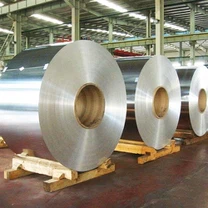
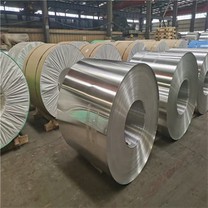
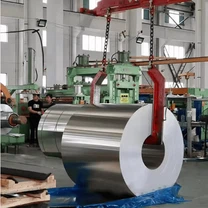
The 1050 aluminum alloy sheet belongs to the 1000 series and is a high purity, non-heat-treatable grade. Because its aluminium content is at least 99.5 percent, it is classified as commercially pure rather than as a precipitation hardening alloy. That purity is exactly why the electrical, chemical and food processing industries specify it: conductivity and corrosion resistance are controlled by the base metal itself rather than by alloying additions.
1050 sheet is not a structural alloy. Its value lies in formability, thermal and electrical conductivity, and stable corrosion behaviour, so it is chosen where parts must be deep drawn, rolled, bent or welded rather than loaded to high stress.
Chemical Composition of 1050 Aluminum Alloy
Aluminium forms at least 99.5 percent of the mass of 1050. The remainder is a controlled set of trace elements that are held below tight limits so that conductivity and formability are not degraded. Composition is specified against EN 573-3 for wrought product chemistry and against comparable national grades in GB/T 3190.
| Element | Content (mass percent) | Function |
|---|---|---|
| Aluminium (Al) | 99.5 minimum | Base metal; carries conductivity and forms the protective oxide film |
| Iron (Fe) | 0.40 maximum | Trace impurity; raises strength slightly and refines grain at low levels |
| Silicon (Si) | 0.25 maximum | Trace impurity; controlled to protect conductivity |
| Copper (Cu) | 0.05 maximum | Strictly limited because it lowers corrosion resistance |
| Manganese (Mn) | 0.05 maximum | Trace impurity |
| Magnesium (Mg) | 0.03 maximum | Trace impurity |
| Chromium (Cr) | 0.03 maximum | Trace impurity |
| Zinc (Zn) | 0.05 maximum | Trace impurity |
Because every addition is kept at trace level, the physical behaviour of the sheet follows that of pure aluminium. There is no alloying element present in an amount that can form a strengthening precipitate, which is the metallurgical reason the grade cannot be strengthened by heat treatment.
Mechanical Properties
1050 aluminium sheet is supplied in the annealed O temper, in the as fabricated F condition and in work hardened H111 and H112 tempers, and mechanical values are quoted against EN 485-2 for sheet, strip and plate, with ASTM B209 covering the equivalent American specification. Strength depends strongly on temper, because the only strengthening mechanism available is strain hardening.
Tensile strength: generally 70 to 120 MPa across the tempers supplied, with the lowest values in the fully annealed condition and the highest in the harder rolled tempers.
Yield strength (0.2 percent proof): typically 35 to 85 MPa, rising as the material is cold worked.
Elongation: normally 30 to 50 percent in the annealed condition, which is what allows deep drawing and the production of foil and thin gauge strip.
Hardness: Brinell hardness around 40 to 50 HB in the harder tempers, with clearly lower values in the soft annealed condition.
The practical consequence is that 1050 is selected for parts with complex geometry rather than for parts carrying structural load. Where higher strength is needed at the same conductivity, a different grade has to be chosen.
Physical Properties
| Property | Typical value | Notes |
|---|---|---|
| Density | About 2.71 g/cm3 | Close to the 2.70 g/cm3 of pure aluminium; low density supports a high strength to weight ratio |
| Electrical conductivity | 61 to 63 percent IACS | Measured against the International Annealed Copper Standard; suitable for cable, busbar and power engineering use |
| Thermal conductivity | About 235 W/(m.K) | Supports heat sinks, radiators and heat exchangers |
| Reflectivity | High across visible and infrared bands | Useful in reflectors, light fixtures and thermal shielding |
| Corrosion resistance | Very good in air, fresh water and many chemicals | A self-renewing oxide film protects the surface; performance is best in neutral and mildly acidic service |
Corrosion resistance is the second reason the grade is widely used. The natural oxide layer is only a few nanometres thick but it re-forms immediately when damaged, so the sheet behaves well in marine atmospheres and in chemical plants provided that strong alkalis and chlorides are excluded.
Heat Treatment, Welding and Surface Finishing
1050 is a non-heat-treatable alloy. Its condition is set by cold work and by annealing, and there is no solution treatment and artificial ageing step that will raise its strength. Annealing is used only to restore ductility and formability.
Full anneal: heat to 390-430 C, hold for 30 to 120 minutes according to effective thickness, cool to 300 C at 30 to 50 C per hour, then air cool.
Rapid anneal: heat to 350-370 C, hold for 30 to 120 minutes, then cool in air or water.
Stress relief: low temperature treatment applied between cold working stages to restore ductility before further reduction.
Welding behaviour is good. Gas tungsten arc (TIG) and gas metal arc (MIG) processes are both used, and the alloy is also suited to gas welding, hydrogen atom welding and resistance welding, although brazing is difficult because the oxide film is hard to displace. Surface finishing options include anodising, electrophoretic coating and painting, all of which raise corrosion resistance and appearance quality for architectural, consumer electronics and interior applications.
Applications of 1050 Aluminum Sheet
Electrical and electronics: conductors, cable components, transformer parts and electronic connections that need high conductivity.
Chemical industry: process equipment, vessels, pipelines and linings that rely on corrosion resistance.
Building and architecture: doors, window frames, curtain wall panels, cladding and decorative trim.
Transportation: lightweight panels and components for rail, automotive and aerospace interiors.
Packaging and consumer goods: foil stock, food containers, housings and equipment covers.
Reflectors and lighting: lamp reflectors, signage and lighting sheet where high reflectivity is required.
Frequently Asked Questions
Q: Can 1050 aluminum alloy be strengthened by heat treatment?
No. 1050 is a non-heat-treatable grade, so strength is raised only by cold working and is reduced by annealing. Solution treatment and artificial ageing have no strengthening effect on this composition.
Q: What does the 99.5 percent aluminium content mean in practice?
It means the sheet behaves close to pure aluminium: conductivity stays in the 61 to 63 percent IACS range, corrosion resistance stays high, and formability remains excellent, while strength stays comparatively low.
Q: Is 1050 the same as 1050A?
They are closely related commercial purity grades with very similar limits, and both are traded as 1050 sheet. The exact trace element limits should always be taken from the applicable standard for the product form being ordered.
Q: What tempers are commonly supplied?
O (annealed), F (as fabricated), H111 and H112 are the usual supply conditions for sheet and plate. Temper selection is driven by the amount of forming the part must survive and by the strength the finished part needs.
Q: Why is 1050 preferred for deep drawn parts?
Elongation of 30 to 50 percent in the annealed condition lets the sheet stretch far before it fractures, so deep drawn and spun shapes can be formed without intermediate annealing on many geometries.
Q: How does 1050 compare with 1060 for electrical work?
Both are commercial purity grades with high conductivity. 1060 has a slightly higher guaranteed aluminium content and marginally higher conductivity, while 1050 offers a wider supply base and is often the more economical choice when conductivity targets are met.