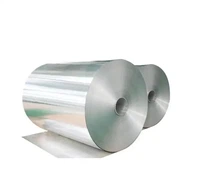
Refrigeration bending of insulated aluminum coils is a common process in construction, engineering and other industries. Its implementation requires certain technology and equipment, usually using professional bending machines and experienced operators.
Insulated aluminum coils are widely used in construction and engineering because it has many excellent properties. First of all, thermal insulation aluminum coils can maintain a stable temperature for a long time, which makes it suitable for use as thermal insulation material. Secondly, the thermal insulation aluminum coil also has good corrosion resistance and durability, which means that it can withstand the test of many environmental factors.

However, when the thermal insulation aluminum coils need to be made into different shapes, cold bending processing is required. This process requires significant pressure and bending forces on the material, which affects the properties and performance of the aluminum insulation coils.
First of all, refrigeration bending will affect the thermal conductivity of the thermal insulation aluminum coil. Because cold bending changes the crystal structure of the metal, this can lead to some defects and fragments within the material. These defects and debris will reduce the thermal conductivity of the metal, thereby affecting the insulation effect of the thermal insulation aluminum coil.
Secondly, cold bending will affect the mechanical properties of thermal insulation aluminum coils. Because refrigeration bending will change the grain structure and shape of the material, this may lead to a decrease in the strength and hardness of the material. This will have a great impact on the service life and durability of the thermal insulation aluminum coil.

Third, refrigeration bending will also affect the surface quality of thermal insulation aluminum coils. Because refrigeration bending exerts a large deformation force on the material, this may cause some cracks and chips on the surface of the material. These defects will reduce the appearance quality of thermal insulation aluminum coils and affect their use in construction and engineering.
In order to avoid the above problems, it is necessary to rationally design the cold bending process and strictly control the temperature and pressure during the processing. In addition, it is also necessary to use high-quality thermal insulation aluminum coil materials and select experienced operators for processing.
In short, refrigeration bending of insulating aluminum coils is very important for applications in construction and engineering, but it is also necessary to pay attention to its impact on material properties and performance. Only by mastering the correct processing methods and technologies can we ensure its good use effect and service life.