


Performance of GNEE 5083 H116 and H321 Aluminum Alloys in Marine Environments
In real marine environments, the corrosion resistance advantage of H321 over H116 becomes more apparent:
| Corrosive Environment | H116 Performance | H321 Performance | Recommendation |
|---|---|---|---|
| Marine Atmosphere (Ambient) | Excellent | Excellent | Either suitable |
| Static Seawater (20°C) | Excellent | Outstanding | Choose H321 if budget allows |
| Flowing Seawater (60°C) | Good | Excellent | Strongly recommend H321 |
| Tropical Marine Environment | Good | Excellent | Recommend H321 |
Application Recommendations
Select H321 if your project involves any of the following:
A design life exceeding 20 years without regular maintenance.
Continuous exposure to hot seawater above 60°C, such as in desalination systems.
Tropical marine environments with strong UV radiation and high salt spray.
Welded structures without post-weld corrosion protection.
Salt Spray Test Data Comparison (ASTM B117)
1000-Hour Test Results (5% NaCl solution, 35°C):
H116: Slight white corrosion products, corrosion rating RA9 (minimal corrosion).
H321: Minimal surface discoloration, corrosion rating RA10 (no visible corrosion).
3000-Hour Accelerated Test (equivalent to 10–15 years of marine exposure):
H116: Minor superficial pitting, corrosion rating RA8.
H321: No visible pitting, corrosion rating RA9.
These results show that H321 maintains more stable corrosion resistance over long-term exposure. For critical structures with a design life over 20 years, the extra cost is justified.
Chemical Corrosion Resistance Comparison
| Corrosive Medium | H116 Resistance | H321 Resistance | Recommendation |
|---|---|---|---|
| Dilute Nitric Acid (<30%) | Excellent | Excellent | Either suitable |
| Sodium Hydroxide Solution | Good | Excellent | H321 better |
| Organic Acids (e.g., Acetic Acid) | Excellent | Excellent | Either suitable |
| Petroleum Products | Excellent | Excellent | Either suitable |
| Ammonia and Compounds | Excellent | Excellent | Either suitable |
Thermal and Physical Properties Analysis
H116 and H321 share nearly identical thermal and physical characteristics since both are derived from the same 5083 alloy composition.
Melting Point and Phase Transformation
Solidus Temperature: 591°C (1095°F)
Liquidus Temperature: 638°C (1180°F)
Latent Heat of Fusion: 400 J/g
(Source: ASM Handbook, ASTM Standards)
Engineering Significance:
During MIG/TIG welding, arc temperature exceeds 2000°C to melt the base metal, but the heat-affected zone (HAZ) should be kept below 400°C to prevent excessive annealing.
Thermal Conductivity and Expansion Properties
| Property | Value (H116/H321) | Practical Implication |
|---|---|---|
| Thermal Conductivity (25°C) | 117 W/(m·K) | Heat dissipation 2.4× faster than steel |
| Specific Heat Capacity | 0.90 J/(g·K) | Requires more heat to increase temperature |
| Thermal Expansion Coefficient (20–100°C) | 23.8 × 10⁻⁶/K | Expands twice as much as steel |
| Thermal Diffusivity | 48 mm²/s | Rapid temperature equalization |
Application Example:
In LNG (-162°C) or liquid hydrogen (-253°C) storage tanks, high thermal conductivity ensures fast heat transfer and stable pressure, reducing thermal stress. A 10-meter hull made of 5083 expands 12mm with a temperature change from -10°C to 40°C-thus, expansion joints must be considered.
Maximum Service Temperature
| Condition | Limit | Effect |
|---|---|---|
| Continuous Operation | 65°C (149°F) | Safe limit-above this softening occurs |
| Short-Term Exposure | 100°C (1 hour) | Strength reduction 5–8% |
| Weld HAZ | 400°C (briefly) | Complete annealing occurs |
Temperature–Strength Relationship:
| Operating Temperature | Strength Retention | Recommendation |
|---|---|---|
| 20°C | 100% | Normal operation |
| 65°C | 95% | Long-term use limit |
| 100°C | 85% | Short-term emergency |
| 150°C | 60% | Not recommended |
Case Study:
A 5083 storage tank used in a chemical plant at 85°C for 3 years developed leaks due to 20% strength loss from overaging, falling below the safety factor. This shows that prolonged over-temperature exposure can cause serious long-term degradation even without immediate failure.
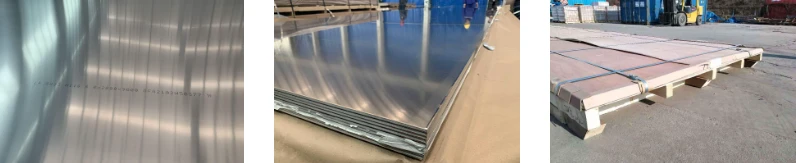
Density and Weight Advantages
Density of 5083: 2.66 g/cm³ (same for H116 and H321)
| Material | Density (g/cm³) | Weight Comparison |
|---|---|---|
| 5083 Aluminum Alloy | 2.66 | Baseline |
| Marine Steel (A36) | 7.85 | 195% heavier |
| Stainless Steel (316L) | 8.00 | 200% heavier |
| Titanium Alloy (Ti-6Al-4V) | 4.43 | 66% heavier |
Example:
Replacing a 15-meter steel yacht hull (2500kg) with 5083 aluminum reduces weight to 850kg, saving 1650kg (equivalent to 16 passengers). This significantly boosts speed and fuel efficiency.
Economic Benefit:
Though the unit cost of 5083 aluminum is 3–4 times higher than marine steel, its density is one-third, making the cost of equivalent structures only 20–30% higher. With savings in fuel and increased cargo capacity, the investment typically pays off in 2–3 years.
Workability and Fabrication Characteristics
Material formability directly affects manufacturing efficiency and cost. While H116 is more adaptable for general forming, H321 offers enhanced stability after fabrication.
Weldability Comparison
Both H116 and H321 possess excellent weldability-among the best of all aluminum alloys.
Recommended Welding Methods:
TIG (GTAW): For thin plates ≤6mm and precision work
MIG (GMAW): For thick plates and mass production
Recommended Filler Wires: 5183, 5356, or 5556
| Welding Characteristic | H116 | H321 | Remarks |
|---|---|---|---|
| Hot Cracking Sensitivity | Low | Low | Excellent for both |
| Weld Strength Retention | 90–95% | 90–95% | Identical |
| Porosity Tendency | Low | Low | Maintain cleanliness |
| Post-Weld Distortion | Moderate | Moderate | Use proper fixturing |
(Source: AWS D1.2 Welding Specification, Aluminum Association Guide)
Tip:
During welding, the HAZ softens to an annealed (O-temper) condition, yet weld strength still retains 90–95% of base metal. Thus, no post-weld heat treatment is required-simplifying production and lowering costs.
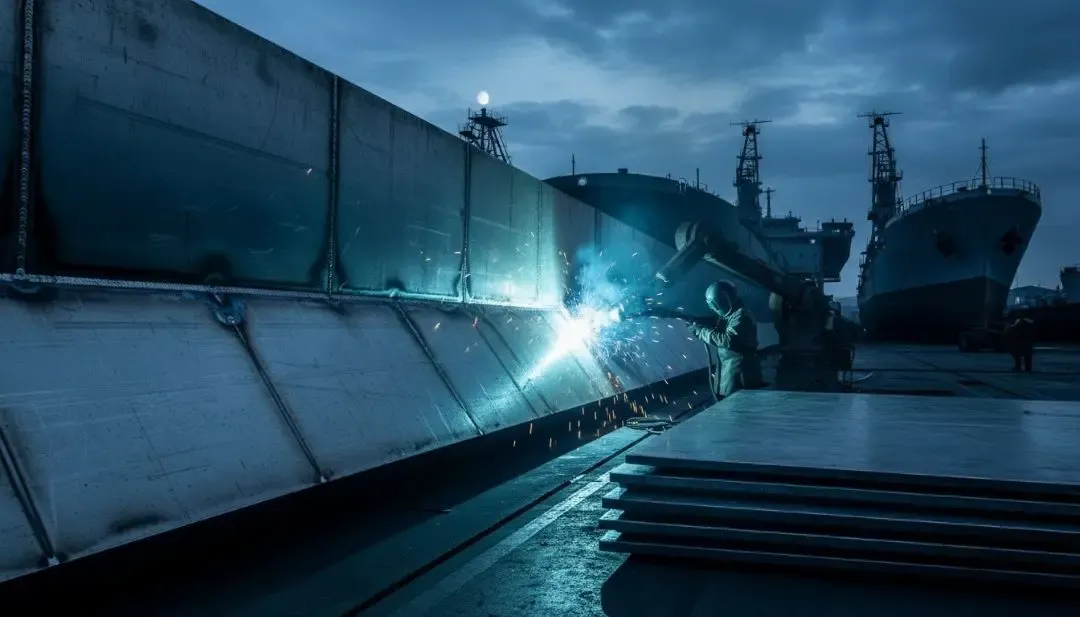
In summary, GNEE 5083 H321 aluminum alloy offers superior corrosion resistance and long-term stability compared to H116, making it the preferred choice for high-end marine, offshore, and chemical equipment projects requiring extended service life and minimal maintenance.


