If you are looking for the short, direct answer: Yes, 3003-H18 aluminum is significantly stronger than 3003-H14. The tensile strength of 3003-H18 is roughly 200 MPa, compared to about 150 MPa for 3003-H14.
Why 3003-H18 Aluminum is Stronger Than 3003-H14
To understand the strength difference, you must understand the "H" temper system. 3003 is an Aluminum-Manganese alloy. It is a non-heat-treatable alloy. This means you cannot bake it in a furnace to make it stronger (like you can with 6061 aerospace aluminum).
The only way to increase the strength of 3003 aluminum is by physically crushing it through heavy steel rollers at room temperature. This is called strain hardening or cold working.
- The "H1" part: This means the metal has been strain-hardened only. It receives zero thermal annealing to soften it back down.
- The "4" vs. "8" part: This number dictates the degree of cold rolling pressure.
"4" means Half-Hard. The metal is rolled to a moderate hardness.
"8" means Full-Hard. The rolling mill applies massive pressure to crush the sheet to its absolute maximum density and hardness.
Because 3003-H18 undergoes significantly more compression than 3003-H14, its internal grain structure is packed much tighter, making it far more rigid and stronger against physical impacts.
Mechanical Properties of 3003-H14 vs 3003-H18 Aluminum
Here is the exact data we guarantee at GNEE when you order these tempers. Pay very close attention to the Elongation row-that is the secret to avoiding manufacturing disasters.
Table 1: Strength and Ductility Comparison (Typical Values)
| Property | 3003-H14 Aluminum (Half Hard) | 3003-H18 Aluminum (Full Hard) |
| Tensile Strength (UTS) | 145 – 160 MPa | 190 – 210 MPa |
| Yield Strength | 115 – 130 MPa | 170 – 186 MPa |
| Elongation (A50 mm) | 8% – 12% | 1% – 4% |
| Brinell Hardness | ~ 40 HB | ~ 55 HB |
| Safe 90° Bending Radius | 1.0t to 1.5t (t=thickness) | Not Recommended (Will Crack) |
(Note: Data is based on ASTM B209 standards. Minor variations occur depending on the specific gauge/thickness of the sheet.)
Strength vs. Formability of 3003 H18 and 3003 H14
The 3003-H18 Reality:
Yes, it is 30% stronger than H14. It is incredibly rigid and will not dent easily. But look at the elongation: 1% to 4%. It has absolutely zero stretch left in it. If you try to bend a 2mm thick sheet of 3003-H18 to a 90-degree angle, it will fracture along the bend line. It sounds like a dry twig snapping. It is terrible for deep drawing or complex forming.
The 3003-H14 Reality:
This is the "sweet spot" for most fabricators. It is strong enough to hold its shape under load, but with an elongation of 8% to 12%, it can easily handle sharp 90-degree press brake operations without cracking.
Uses for 3003-H14 and 3003-H18 Aluminum
When to buy 3003-H18 Aluminum:
Thermal Insulation Jacketing: Wrapping large chemical pipes. The high surface hardness (55 HB) prevents dents from dropped tools, and the large diameter of the pipes means you don't need sharp bending.
Flat Panel Signage: Highway signs where the metal stays completely flat and needs maximum wind resistance.
Simple Corrugated Roofing: Panels that require very gentle, large-radius roll-forming.
When to buy 3003-H14 Aluminum:
HVAC Ductwork: Making square air ducts requires sharp folds and locks. H14 handles this perfectly.
Appliance Housings: Stamping out enclosures for electrical equipment or refrigerators.
Folded Metal Boxes & Brackets: Any application requiring standard CNC press braking.
How GNEE Prices 3003 Aluminum Sheets
Final Price = SMM Daily A00 Aluminum Ingot Price + Mill Processing Fee.
SMM Base Rate: We use the daily Shanghai Metals Market (SMM) rate to ensure you are paying the true, real-time commodity price.
Processing Fee: This covers our cold rolling, slitting, and packaging. Note: Because 3003-H18 requires more passes through the cold-rolling mill to crush it down to full-hard, the processing fee might be slightly different depending on the final thickness you require. Thinner gauges always cost slightly more per ton to roll.
GNEE's Manufacturing Strength & Export Packaging
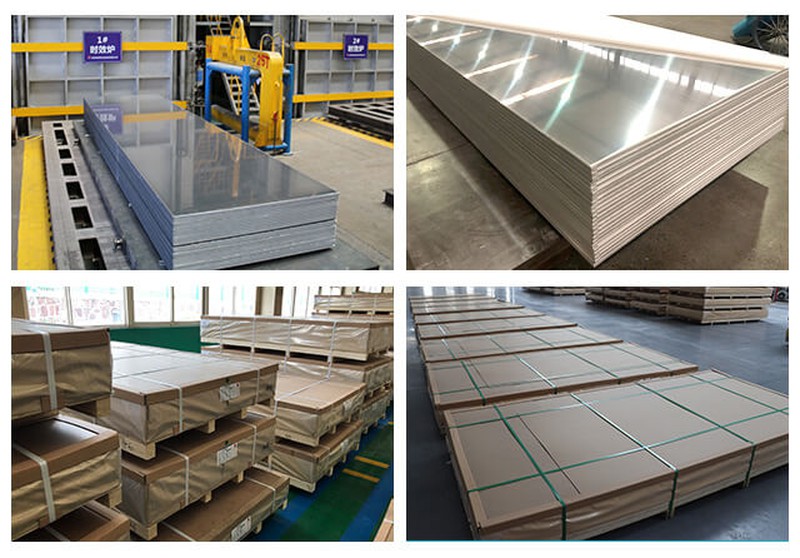
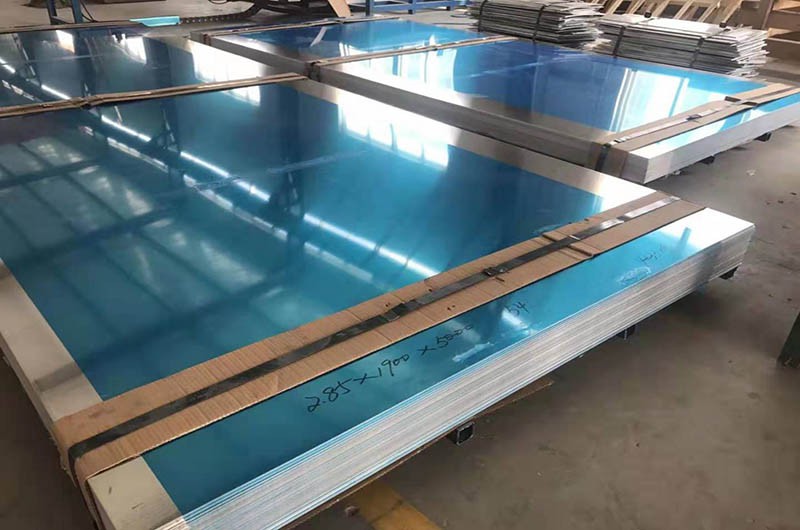
As a premier manufacturer, GNEE guarantees export-grade seaworthy packaging for every single order. We do not cut corners.
- Moisture Barrier: Every coil or pallet of sheets is tightly wrapped in waterproof PE film.
- Kraft Paper Layer: Heavy-duty kraft paper is wrapped around the film for physical protection.
- Industrial Desiccants: We place moisture-absorbing packets inside the wrapping to eliminate trapped condensation.
- Fumigated Pallets: The material is secured with heavy-duty steel banding onto ISPM-15 compliant fumigated wooden pallets, ensuring forklift safety at the port and zero movement inside the container.