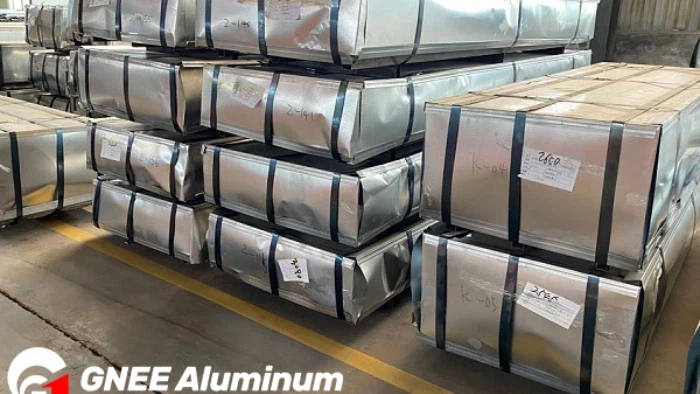
Yes, 3003-H18 aluminum is excellent for corrugated roofing panels, but it is a terrible choice for standing seam metal roofs.
Why 3003-H18 Aluminum is Used in Roofing
The 3003 alloy is the undisputed workhorse of the metal roofing industry. It is an Aluminum-Manganese (Al-Mn) alloy. Because it contains virtually no iron, it does not rust. Even if the paint scratches off over time, the exposed 3003 aluminum will simply form a natural oxide layer that protects it from the elements.
But what about the H18 temper?
Because 3003 is a non-heat-treatable alloy, we cannot bake it in a furnace to make it stronger. To achieve the H18 temper, the rolling mill applies massive physical pressure to crush the metal down to its final thickness at room temperature. This is called strain hardening.
- "H1" means it is purely strain-hardened with no softening (annealing) process.
- "8" means it is Full-Hard (8/8). It is rolled to its absolute maximum physical density.
The result is a highly rigid, exceptionally strong aluminum sheet. For roofing, this means superior wind uplift resistance and excellent hail impact resistance. A roof made of 3003-H18 will not dent easily when walked on by maintenance crews or pelted by severe weather.
3003-H18 vs 3003-H14 Aluminum for Roofing Applications
| Property / Feature | 3003-H18 Aluminum (Full Hard) | 3003-H14 Aluminum (Half Hard) |
| Tensile Strength | 190 – 210 MPa (Very Strong) | 145 – 160 MPa (Moderate) |
| Yield Strength | 170 – 186 MPa | 115 – 130 MPa |
| Elongation (Stretch) | 1% – 4% (Extremely Brittle) | 8% – 12% (Good Flexibility) |
| Best Roofing Type | Corrugated / Ribbed Panels | Standing Seam / Complex Flashings |
| Bending Limit | Very large, gentle curves only. | Can handle sharp 90° and 180° hems. |
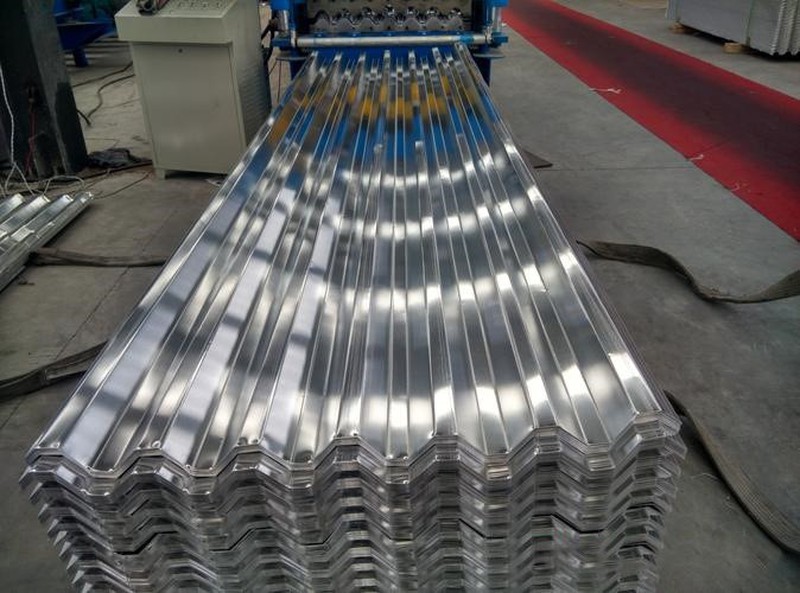
The Corrugated Roof (Perfect for 3003 H18):
Corrugated metal roofing consists of wavy, ribbed patterns. When a roll-forming machine creates these waves, it uses very large, gentle curves. Because the bends are not sharp, the 1% - 4% elongation of 3003-H18 is perfectly fine. The H18 temper gives the corrugated panel incredible rigidity, preventing the roof from sagging between the wooden purlins.
The Standing Seam Roof (Disaster for 3003 H18):
Standing seam roofing requires the metal edges to be folded sharply at 90 degrees and then crimped over themselves completely (a 180-degree hem) to lock the panels together. Because 3003-H18 is crushed to its maximum density during manufacturing, it has zero stretch left. If you try to fold it 180 degrees, it will instantly fracture along the seam, leading to massive water leaks.
For standing seam roofs, you must downgrade the hardness and order a 3003-H14 or 3003-H24 aluminum plate.
How We Price Roofing Aluminum at GNEE
At GNEE, we are a direct manufacturer. Our pricing is calculated using a standard, globally transparent formula:
Final Price = Daily SMM (Shanghai Metals Market) A00 Aluminum Ingot Price + Mill Processing Fee.
The SMM Base Rate: We use the real-time SMM rate to ensure you are paying the true, raw commodity value of the aluminum.
The Mill Processing Fee: This covers our cold rolling, color coating (if you order pre-painted coils), slitting, and export packaging. Procurement tip: Thinner roofing sheets (e.g., 0.4mm) require more passes through the cold-rolling mill than thicker sheets (e.g., 1.0mm), meaning the processing fee per ton is slightly higher for very thin gauges.
GNEE's Color Coating & Export Packaging
Most 3003-H18 aluminum used for roofing is ordered as pre-painted aluminum coils (PPAL). We apply premium PE (Polyester) or PVDF (Fluorocarbon) coatings that guarantee 15 to 25 years of fade resistance against extreme UV rays and acid rain.
However, sourcing aluminum internationally carries a huge logistical risk: White Rust. If salty ocean humidity penetrates the shipping container, the aluminum will oxidize, destroying the surface finish before it even reaches your facility.
At GNEE, we eliminate this nightmare with our rigorous 4-layer export packaging standard:
- Moisture Barrier: Every roofing coil is tightly wrapped in waterproof PE plastic film.
- Heavy-Duty Kraft Paper: A thick layer of waterproof kraft paper covers the film for physical protection.
- Industrial Desiccants: We place heavy-duty moisture-absorbing packets inside the core and around the wrapping to aggressively absorb any trapped container humidity.
- Fumigated Wooden Pallets "Eye to Sky" or "Eye to Wall": The material is secured with high-tension steel bands onto ISPM-15 compliant, fumigated wooden pallets. This ensures safe forklift handling at the port and zero coil telescoping during rough ocean transit.
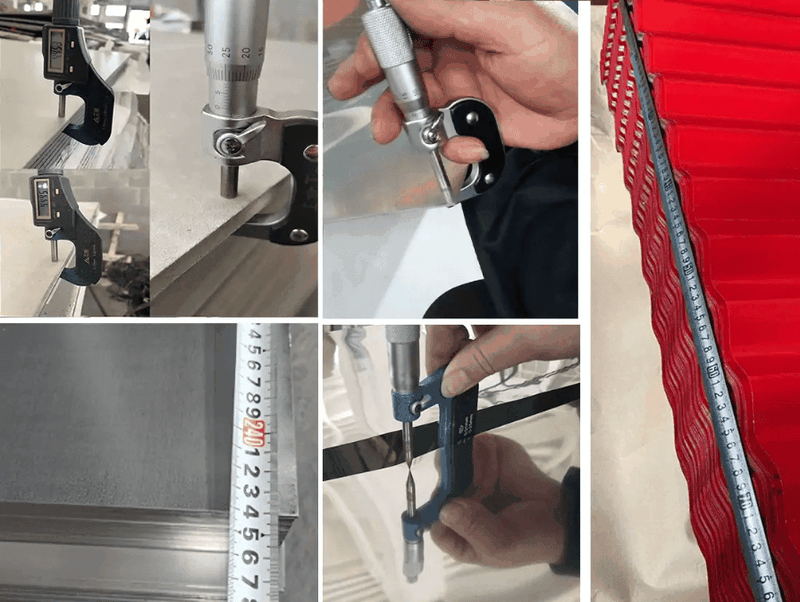
With our advanced automatic gauge controls, we guarantee thickness tolerances strictly within ±0.02mm. Your roll-forming machines will run smoothly without jamming.