1100 aluminum is not typically used for structural aerospace applications. However, it is an excellent material for non-structural, corrosion-resistant, and highly formable components inside an aircraft.
To build a safe aircraft, you must use the right material in the right place. In this guide, we will explain exactly why 1100 aluminum fails as a structural part and where aerospace engineers actually use it successfully every day.
What is 1100 Aluminum Extruded Tube?
1100 aluminum belongs to the 1xxx series. This means it is "commercially pure aluminum" with a purity of 99.0% or higher. It does not contain strengthening elements like copper, zinc, or magnesium.
Because it is so pure, it has three defining characteristics:
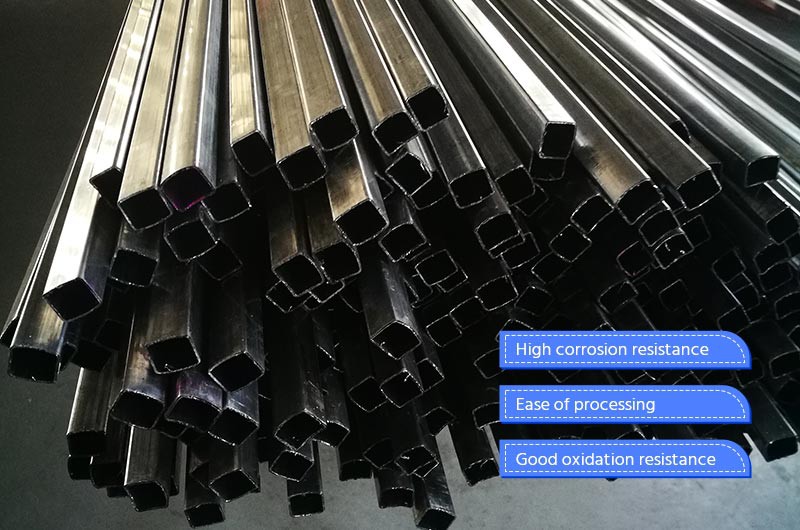
- Excellent corrosion resistance: It does not rust or degrade easily, even when exposed to harsh chemicals or weather.
- High ductility: You can bend, stretch, and shape it without breaking it.
- Low strength: It bends easily under pressure and cannot hold heavy weights.
read more: How Strong Is AA1100 Aluminum?
Aerospace Standards vs. 1100 Aluminum Tubing
When a mechanical engineer designs an aircraft, they look at specific requirements for the materials. Let's compare standard aerospace requirements against an 1100 aerospace aluminum tubing supplier's data.
- High Strength-to-Weight Ratio: Planes need materials that are light but incredibly strong to carry cargo and passengers. 1100 is light, but it is very weak.
- Fatigue Resistance: Aircraft vibrate constantly. The metal must survive thousands of hours of vibration without cracking. 1100 does not handle fatigue well.
- Temperature Stability: Materials must stay strong in freezing high altitudes and hot engine environments.
The conclusion is simple. Pure 1100 aluminum fails the heavy-duty aerospace standards.
Why 1100 Seamless Aluminum Pipe Fails in Structures
Extremely Low Strength
The tensile strength of 1100 aluminum is only around 90 to 110 MPa (depending on the temper). To put that into perspective, the air pressure and wind force hitting an airplane wing would bend an 1100 aluminum spar in seconds.
No Heat Treatment Strengthening
Strong aerospace alloys (like 6061 or 7075) can be put into an oven and "heat-treated" (like T6 temper) to multiply their strength. 1100 aluminum is non-heat treatable. You cannot bake it to make it stronger. Its strength is basically fixed.
Poor Fatigue Resistance
If you repeatedly bend a piece of wire, it eventually snaps. That is fatigue failure. In an aircraft frame, constant engine vibration and air turbulence create fatigue. A wholesale 1100 seamless aluminum pipe has low fatigue limits. If used as a load-bearing strut, it will eventually suffer from micro-cracks and fail.
Rule of thumb: Never use 1100 aluminum for aircraft frames, wing structures, landing gear, or any load-bearing parts.
Do not risk a failure. Send your design requirements to GNEE. Our engineers will review your application and tell you if 1100 aluminum is safe to use or if you need to upgrade to 5052 or 6061. Contact us for free technical support.
Aerospace Uses for 1100 Aluminum Round Tube
Heat Exchangers
Airplanes need cooling systems. Because 1100 aluminum has fantastic thermal conductivity and is very easy to bend into tight coils, it is the perfect material for manufacturing internal heat exchangers and radiators.
HVAC Ducting Systems
The system that pumps fresh air into the passenger cabin uses thin aluminum ducts. These ducts carry no structural weight, but they need to be lightweight and corrosion-resistant. An 1100 aluminum extruded tube is ideal for this.
Low-Pressure Fuel and Fluid Lines
Inside the aircraft, there are many low-pressure lines moving non-critical fluids. 1100 aluminum is highly resistant to chemical corrosion from aviation fuels and oils, making it a safe choice for low-pressure routing.
Insulation Cladding
Wiring bundles and sensitive instruments are often wrapped or shielded in thin 1100 aluminum. It provides a lightweight physical barrier and electrical shielding without adding heavy mass to the aircraft.
AA1100 Aluminum Pipe vs. True Aerospace Alloys
To make the right purchasing decision, you need to see how 1100 compares to the true heavyweights of the aerospace industry.
| Alloy Grade | Typical Strength Level | Primary Aerospace Application |
| 1100 | Very Low (~110 MPa) | Non-structural (HVAC, heat exchangers, light tubing) |
| 3003 | Medium-Low (~130 MPa) | Limited use (Fluid lines, cowlings) |
| 5052 | Medium (~230 MPa) | Secondary parts (Fuel tanks, sheet metal enclosures) |
| 6061-T6 | High (~310 MPa) | Structural (Fuselages, wing spars, general aviation frames) |
| 7075-T6 | Very High (~570 MPa) | Critical aerospace (Fighter jets, commercial aircraft main gears) |
As you can see, 6061 and 7075 are the true aerospace alloys. 1100 is a strictly supporting material.
When to Buy 1100 Aluminum Square Tube
How do you make the final decision? Follow these basic rules when writing your purchase order.
Choose 1100 Aluminum if:
- Mechanical strength is not important to the part's function.
- You need maximum corrosion resistance against moisture or mild chemicals.
- Your manufacturing process requires deep drawing, tight bending, or complex forming.
- You need high thermal or electrical conductivity.
Avoid 1100 Aluminum if:
- The part will carry weight or hold structural tension.
- The part will experience constant, heavy vibration (fatigue loads).
- The part is a safety-critical structure (if it breaks, the plane crashes).
Upgrading Your 1100 Aerospace Aluminum Tubing
If you want to use 1100 aluminum because of its excellent corrosion resistance, but you find it is slightly too weak for your application, you have a few options to improve the design:
Specify a Harder Temper: Do not buy the "O" (annealed) temper. Ask for a custom 1100-H14 aluminum tube or H18 temper. The cold-working process gives the metal a noticeable boost in rigidity.
Increase the Wall Thickness: If the pipe feels too flimsy, simply order a thicker wall. It will add a little weight but greatly improve the pipe's resistance to bending.
Upgrade to 5052 or 6061: If increasing the thickness adds too much weight to the aircraft, you must change the alloy. 5052 offers great corrosion resistance with double the strength of 1100.
Upgrading Your 1100 Aerospace Aluminum Tubing
If you want to use 1100 aluminum because of its excellent corrosion resistance, but you find it is slightly too weak for your application, you have a few options to improve the design:
- Specify a Harder Temper: Do not buy the "O" (annealed) temper. Ask for a custom 1100-H14 aluminum tube or H18 temper. The cold-working process gives the metal a noticeable boost in rigidity.
- Increase the Wall Thickness: If the pipe feels too flimsy, simply order a thicker wall. It will add a little weight but greatly improve the pipe's resistance to bending.
- Upgrade to 5052 or 6061: If increasing the thickness adds too much weight to the aircraft, you must change the alloy. 5052 offers great corrosion resistance with double the strength of 1100.

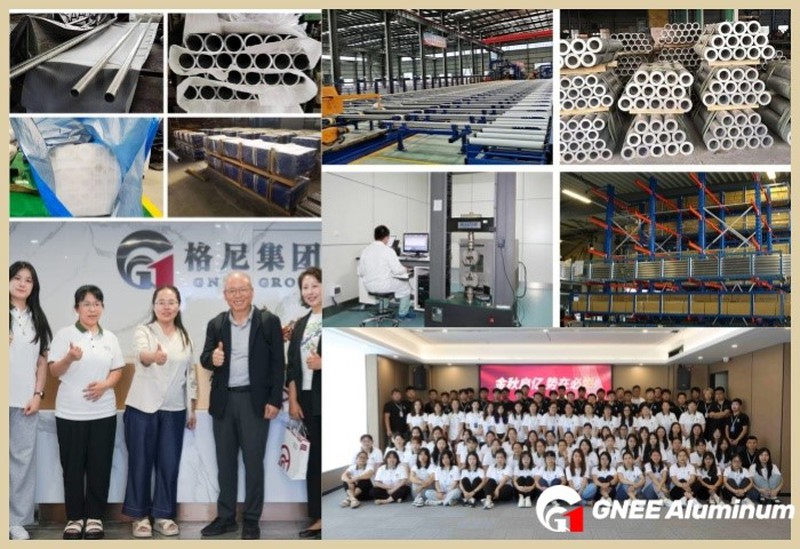
Why Choose GNEE as Your Aluminum Supplier
1. Certified Material Supply: All GNEE aluminum products are strictly compliant with ASTM, EN, and JIS standards. We provide full Mill Test Certificates (MTC) with every order, guaranteeing chemical and mechanical traceability.
2. Complete Alloy Range: We don't just supply 1100. We offer a full spectrum of aerospace and industrial grades, including 3003, 5052, 6061, 5083, and 7075.
3. Tube & Pipe Expertise: We specialize in high-quality seamless aluminum pipes and precision extruded tubes designed for critical fluid transfer and structural support.
4. Custom Manufacturing: Need a specific 1100 aluminum extruded tube price? We offer complete customization for sizes, wall thicknesses, and tempers (O, H14, H18, H112) to match your exact CAD drawings.
5. Global Export Experience: With years of experience serving the aerospace, marine, and industrial sectors worldwide, our logistics and packaging teams ensure your metal arrives in perfect condition, free from transit damage or corrosion.