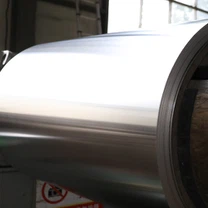
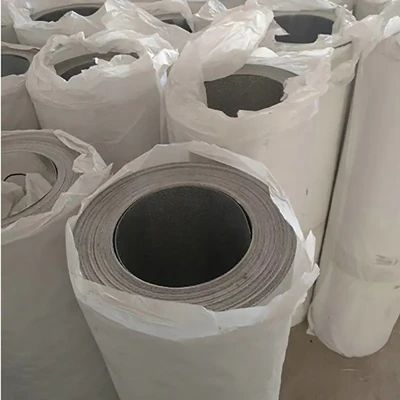
When choosing between H116 and H321, it is essential to evaluate the application environment, budget, performance needs, and long-term cost implications. The following framework provides a practical approach for decision-making.

Decision Framework and Selection Criteria
Step 1: Assess Corrosive Environment Severity
| Corrosion Level | Typical Environment | Recommended Temperature |
|---|---|---|
| Mild | Inland atmosphere, freshwater | H116 |
| Moderate | Marine atmosphere, industrial settings | H116 |
| Severe | Static seawater, high salt spray | H116 or H321 |
| Extreme | Hot seawater (>60°C), tropical marine | H321 |
Step 2: Determine Design Life Requirements
<10 years: H116 (cost-effective solution)
10–20 years: H116 (with regular maintenance) or H321 (if low maintenance is desired)
>20 years: H321 (ensures better long-term stability)
Step 3: Consider Maintenance Capability
Regular maintenance feasible: H116 (lower cost)
Maintenance difficult or impossible: H321 (one-time investment, long-term reliability)
Selection Based on Application Environment
Marine Applications
| Application Type | Environment Temperature | Maintenance Frequency | Recommended Solution |
|---|---|---|---|
| Recreational Yachts | Ambient | Annual | H116 |
| Luxury Yachts | Ambient | Low-frequency | H321 |
| Fishing/Work Boats | Ambient | Regular | H116 |
| Cruise Ships / Cargo Ships | Ambient | Critical sections | H321 + H116 mix |
| Offshore Platforms | Ambient to high | Low-frequency | H321 |
| Seawater Desalination | 60–80°C | Low-frequency | H321 |
Industrial Applications
| Application Scenario | Recommended Temperature |
|---|---|
| Ambient pressure vessels (<65°C) | H116 |
| Corrosive media storage tanks | H321 |
| Cryogenic vessels (<-80°C) | H116 or H321 |
| Critical aerospace components | H321 (for long-term stability) |

Selection Based on Performance Requirements
Strength Requirements:
Both H116 and H321 meet standard structural strength requirements.
For extreme strength demands, H321 may deliver 3–5% higher actual tensile values.
Corrosion Resistance Requirements:
Standard marine conditions: H116 is adequate.
Severe corrosive environments: H321 provides superior protection.
Long-term, maintenance-free operation, H321 is the preferred choice.
Forming and Processing Requirements:
Complex cold bending: H116 is more suitable.
Simple bending: Both H116 and H321 are acceptable.
Welding-intensive fabrication: Both perform equally well.
Summary:
GNEE 5083 H116 offers cost-efficiency and superior workability for moderate environments and regular maintenance scenarios, while H321 provides enhanced corrosion resistance and long-term stability, ideal for harsh marine conditions, high-temperature exposure, and maintenance-free applications.