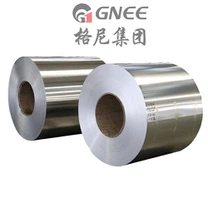
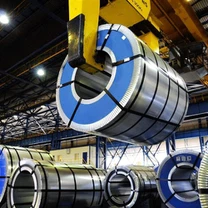
The 5083 H116 marine grade aluminum plate is a non-heat-treatable Al–Mg alloy product supplied in the H116 temper for corrosion-critical marine and structural use. It belongs to the 5xxx series, with magnesium (4.0–4.9 %) as the principal alloying element and manganese and chromium added for strength and grain control.
Per ASTM B928 / ASTM B209, it offers a minimum tensile strength of 276 MPa (40 ksi) and minimum yield strength of 193 MPa (28 ksi), combined with excellent seawater corrosion resistance and good weldability without post-weld heat treatment. These properties make 5083 H116 aluminum plate the default choice for ship hulls, decks, LNG tanks, and pressure vessels where weight savings and long-term durability matter.
1. What Is 5083 H116 Aluminum Plate?
5083 aluminum plate is a rolled flat product made from alloy 5083, a member of the 5xxx (Al–Mg) family of aluminum alloys. The "5" denotes the principal alloying element magnesium, which gives the material its high strength, outstanding corrosion resistance, and good weldability. Because 5083 is non-heat-treatable, its strength comes from strain hardening (cold work) and temper selection rather than solution heat treatment.
The "H116" temper is a stabilized strain-hardened condition developed specifically for high-magnesium marine alloys. It provides the strength needed for structural plate while controlling the microstructure to resist exfoliation and intergranular corrosion in seawater. The material is supplied as plate (typically ≥ 6 mm / 0.25 in), sheet (< 6 mm), coil, strip, or foil depending on the order.
5083 is produced to several international standards: ASTM B209 (general sheet and plate), ASTM B928 (marine plate in H116/H321), EN 485 / EN 573-3 (European), AMS-QQ-A-250/6 (aerospace), and MIL-DTL-46027 (armor). Its key performance features are: high as-fabricated strength, excellent resistance to marine and industrial atmospheres, retained corrosion resistance after welding, and the ability to gain strength through work hardening instead of heat treatment.
2. 5083 Aluminum Plate Manufacturer and Supplier
GNEE supplies 5083 aluminum plate across the full range of commercial tempers, including O, H111, H112, H116, H321, H32, H34, and H131 (armor). This allows buyers to specify one alloy for multiple fabricated components without changing suppliers.
GNEE's rolling and processing capability covers:
Product forms: hot-rolled plate, cold-rolled sheet, and coil where applicable.
Thickness: from thin sheet (~0.2 mm) up to heavy plate (up to ~250 mm for certain forms), with marine plate commonly supplied in 3–150 mm.
Width: up to approximately 3,800 mm for plate and 2,650 mm for wide sheet (exact maximum confirmed per inquiry).
Length: standard cut lengths and customized lengths up to about 6 m, or coil where applicable.
Processing: cut-to-length, slitting, CNC machining, bending, and edge preparation on request.
Surface options: mill finish, bright/brush, polishing, sand blasting, anodizing, and PVC/protective lamination (blue, transparent, or black-and-white film).
Tread/checkered plate: anti-slip 5083 patterned sheet available for flooring and walkways.

3. Why Choose 5083 Aluminum Plate?
Marine corrosion resistance → performs in continuous seawater and salt-spray exposure → ship hulls, decks, and offshore structures.
High strength at low weight → lower density (about 2.66 g/cm³) than steel with usable structural strength → fuel-saving hulls and lightweight tank bodies.
Weldability without heat treatment → joins with 5xxx fillers and keeps corrosion resistance in the heat-affected zone → welded tanks, vessels, and fabricated assemblies.
Work-hardened strength → strength can be raised by cold work (H32/H34) instead of heat treatment → formed parts that need more rigidity than O temper.
Cryogenic toughness → retains ductility at low temperature → LNG and liquid gas storage tanks.
Broad temper and form availability → one alloy covers O through H131, sheet through heavy plate → consolidated sourcing for mixed projects.
4. 5083 Aluminum Plate Specification
|
Item |
Specification |
|
Alloy |
5083 (Al–Mg, 5xxx series) |
|
Temper |
O, H111, H112, H116, H321, H32, H34, H131 (armor) |
|
Standard |
ASTM B209, ASTM B928, EN 485, EN 573-3, AMS-QQ-A-250/6, MIL-DTL-46027 |
|
Product Form |
Plate, Sheet, Coil, Strip, Foil (plate focused here) |
|
Thickness |
Sheet ~0.2–6 mm; Plate 6–250 mm (form dependent) |
|
Width |
Up to ~3,800 mm (plate), ~2,650 mm (wide sheet) |
|
Length |
Up to ~6,000 mm cut length, or coil |
|
Surface |
Mill finish, brushed, polished, anodized, checkered, PVC film |
|
Manufacturing Process |
Continuous cast / DC ingot → hot rolling → cold rolling → temper → cut/inspect |
|
Typical Applications |
Shipbuilding, marine, LNG tanks, pressure vessels, tank trucks, armor |
Values above describe GNEE's general supply range. Exact maxima are confirmed per inquiry.
5. Chemical Composition of 5083 Aluminum
The composition below follows ASTM B209 and EN 573-3. For 5083 the two standards are effectively aligned; both use percentage by mass, with "max" meaning maximum allowed and a range meaning minimum–maximum.
|
Element |
ASTM B209 (wt %) |
EN 573-3 / EN AW-5083 (wt %) |
|
Si |
0.40 max |
0.40 max |
|
Fe |
0.40 max |
0.40 max |
|
Cu |
0.10 max |
0.10 max |
|
Mn |
0.40 – 1.00 |
0.40 – 1.00 |
|
Mg |
4.0 – 4.9 |
4.0 – 4.9 |
|
Cr |
0.05 – 0.25 |
0.05 – 0.25 |
|
Zn |
0.25 max |
0.25 max |
|
Ti |
0.15 max |
0.15 max |
|
Others each |
0.05 max |
0.05 max |
|
Others total |
0.15 max |
0.15 max |
|
Al |
remainder |
remainder |
No data from other standards is mixed here. The magnesium content is what classifies 5083 as a high-Mg marine alloy and drives both its strength and its corrosion behavior; manganese and chromium refine the grain and improve resistance to recrystallization and localized corrosion.
6. Mechanical Properties of 5083 Aluminum Plate
The values below are minimum requirements from ASTM B209 for plate (typical thickness up to ~50 mm). They are not typical/average values. Elongation depends on thickness and is given as a representative minimum for common plate thicknesses.
|
Temper |
Tensile Strength (min) |
Yield Strength 0.2% (min) |
Elongation (min) |
|
O |
276 MPa / 40 ksi |
125 MPa / 18 ksi |
16 % |
|
H112 |
276 MPa / 40 ksi |
125 MPa / 18 ksi |
12 % |
|
H116 |
276 MPa / 40 ksi |
193 MPa / 28 ksi |
10 % |
|
H321 |
276 MPa / 40 ksi |
193 MPa / 28 ksi |
10 % |
|
H32 |
303 MPa / 44 ksi |
215 MPa / 31 ksi |
12 % |
|
H34 |
341 MPa / 49 ksi |
250 MPa / 36 ksi |
6 % |
Equivalent EN 485-2 minimums (Rm / Rp0.2) are consistent: O/H111 ≈ 275 / 125 MPa; H116/H321 ≈ 275 / 195 MPa; H32 ≈ 305 / 215 MPa; H112 ≈ 270 / 110 MPa. EN elongation minima also vary by thickness.
For H131 armor plate, mechanical properties are defined by MIL-DTL-46027K and are thickness-dependent; the condition is specified for ballistic performance rather than the general B209 table. Request the certified MTC for exact values on a given thickness.
Note: elongation and yield can shift when thickness exceeds the standard's base range. Always confirm the table that applies to your ordered thickness with the mill certificate.
7. What Does H116 Mean?
H116 is a temper designation for strain-hardened 5xxx alloys used in marine service.
O (annealed): fully softened, maximum ductility, lowest strength. Best formability; used where welding and shaping dominate over load.
H111: slightly strain-hardened during fabrication, a little stronger than O but still very formable. Common for tank bodies and general plate.
H112: strain-hardened during hot working with limited cold work; supplied for plate where full mechanical correction is not required. Lower cost structural plate.
H116: strain-hardened and stabilized to resist intergranular and exfoliation corrosion in seawater. Strength is set so yield reaches ~193 MPa min. This is the standard marine hull plate temper under ASTM B928.
H321: strain-hardened and thermally stabilized; very similar in properties to H116 but produced by a different stabilization route. Also a marine standard temper.
H32 / H34: strain-hardened then partially annealed to quarter-hard (H32) or half-hard (H34). Higher strength than H116 but lower corrosion stabilization; used where formability is still needed but more rigidity is required.
H131: an armor temper per MIL-DTL-46027K, strain-hardened to a defined ballistic level for protected vehicles and naval plate.
Compared with O/H111, H116 trades some formability for seawater corrosion stability and higher yield. Compared with H32/H34, H116 gives up a little strength for better long-term marine corrosion resistance.
8. 5083 Aluminum Plate Applications
Shipbuilding and Marine Structures
5083 H116/H321 is the standard hull and superstructure material because it resists seawater corrosion without coating and keeps that resistance after welding. It is used for side shells, bottom plating, decks, bulkheads, and offshore platform components. Classification societies (ABS, BV, CCS, DNV, KR, LR, RINA) commonly approve 5083 marine plate.
LNG and Cryogenic Storage Tanks
5083 retains toughness at cryogenic temperatures, so O and H111 tempers are used for LNG tank walls, containment systems, and low-temperature pressure vessels where brittleness must be avoided.
Pressure Vessels and Process Equipment
The combination of weldability and corrosion resistance makes 5083 suitable for welded pressure vessels, storage tanks, and chemical process equipment operating below the temperature limits of heat-treatable alloys.
Tank Trucks and Transport
5083 is widely used for aluminum tanker bodies, fuel tanks, and dry-bulk carriers. Lower weight increases payload, and weldability simplifies fabrication of curved shells.
Armor and Military Vehicles
5083 H131 armor plate is specified for protected vehicles and naval armor where a balance of ballistic resistance, low weight, and weldability is required.
Aluminum Tread Plate and General Fabrication
5083 checkered (tread) plate provides anti-slip flooring for vehicles, stairs, and walkways, with the same corrosion resistance as flat plate.

9. Manufacturing and Heat Treatment
5083 plate follows a non-heat-treatable route:
Raw material - primary aluminum and Mg/Mn/Cr additions.
Melting and refining - controlled degassing and filtration.
Casting - DC (direct chill) ingot or continuous cast.
Homogenization - high-temperature soak to dissolve and evenly distribute constituents.
Hot rolling - ingot reduced to transfer bar and then plate gauge.
Cold rolling - further reduction for sheet; skipped or limited for heavy plate.
Tempering - for H116/H321 the plate is strain-hardened then stabilized (thermal or mechanical) to fix corrosion performance; O is annealed; H112 is hot-work finished.
Cutting - cut-to-length, slitting, or CNC.
Inspection - chemistry, mechanical, and dimensional checks.
Packaging - protective wrapping and export packing.
Because 5083 is not strengthened by precipitation, there is no solution heat treatment or artificial aging step. The temper is created entirely by work hardening plus stabilization/annealing.
10. Quality Inspection and Certification
GNEE can provide the following controls and documents for 5083 plate:
Chemical composition analysis (spectrometry)
Tensile and yield strength test
Elongation measurement
Thickness, width, length, and flatness inspection
Surface and edge inspection
Ultrasonic testing when required (e.g., thick plate, pressure service)
Mill Test Certificate (MTC)
EN 10204 3.1 certificate where applicable
Classification society approvals for marine plate (per order)
Third-party inspection (SGS, BV, TÜV, etc.) on request
Buyers should state the required certificate type and inspection level when requesting a quote so the correct scope is built into the order.


11. Export Packaging
5083 plate is packed for long ocean shipment:
Interleaving with protective film or waterproof kraft paper
Wooden pallets or frames for sheet; seaworthy bundling for plate
Steel straps and edge protection to prevent transit damage
Coil protection (eye-to-sky or eye-to-wall) where coil is supplied
Bundle marking showing heat number, alloy, temper, dimensions, and quantity
Custom packing (case, crate, or customer label format) on request
Marking follows the heat number so any plate can be traced back to its MTC.

12. 5083 Aluminum Plate vs Similar Aluminum Alloys
5083 vs 5086
|
Property |
5083 |
5086 |
|
Alloy Series |
5xxx (Al–Mg) |
5xxx (Al–Mg) |
|
Strength |
Higher (Mg 4–4.9 %) |
Slightly lower (Mg ~3.5–4.5 %) |
|
Corrosion Resistance |
Excellent, marine-grade |
Excellent, marine-grade |
|
Weldability |
Excellent |
Excellent |
|
Formability |
Good |
Very good |
|
Machinability |
Fair |
Fair |
|
Typical Applications |
Hulls, LNG, armor, tanks |
Marine, cryogenic, general structural |
5086 is a close cousin with marginally lower magnesium; 5083 is preferred where maximum strength in the 5xxx range is needed.
5083 vs 5052
|
Property |
5083 |
5052 |
|
Alloy Series |
5xxx (Al–Mg) |
5xxx (Al–Mg) |
|
Strength |
Higher |
Lower (Mg ~2.2–2.8 %) |
|
Corrosion Resistance |
Excellent |
Excellent |
|
Weldability |
Excellent |
Excellent |
|
Formability |
Good |
Better |
|
Machinability |
Fair |
Fair |
|
Typical Applications |
Marine, heavy plate, tanks |
Sheet metal, appliances, general forming |
5052 is more formable and cheaper for light sheet work but lacks the strength of 5083 for structural and marine plate.
5083 vs 6061
|
Property |
5083 |
6061 |
|
Alloy Series |
5xxx (Al–Mg) |
6xxx (Al–Mg–Si) |
|
Strength |
High (work-hardened) |
High (heat-treated, T6) |
|
Corrosion Resistance |
Excellent, especially marine |
Good, less suited to seawater |
|
Weldability |
Excellent, retains properties |
Good, but strength drops in HAZ after welding |
|
Formability |
Good |
Moderate |
|
Machinability |
Fair |
Good |
|
Typical Applications |
Marine, LNG, tanks, armor |
Structural, frames, machined parts |
6061 is heat-treatable and machines better, but loses strength in the weld zone and is less corrosion-resistant in seawater, so 5083 wins for welded marine and cryogenic service.
13. Frequently Asked Questions
What is 5083 H116 aluminum plate? A marine-grade, non-heat-treatable Al–Mg plate in the stabilized H116 temper, used for ship hulls, decks, and welded tanks because of its seawater corrosion resistance and weldability.
What does H116 mean? H116 is a strain-hardened and corrosion-stabilized temper for high-Mg 5xxx alloys, defined for marine plate under ASTM B928, with a minimum yield strength of 193 MPa (28 ksi).
Is 5083 aluminum plate corrosion resistant? Yes. It has excellent resistance to seawater, salt spray, and industrial atmospheres, and keeps that resistance after welding - the main reason it is chosen for marine and offshore use.
Is 5083 aluminum plate weldable? Yes. It is readily welded with 5xxx fillers using MIG/TIG, and the heat-affected zone retains corrosion resistance. No post-weld heat treatment is needed.
Can 5083 aluminum plate be bent? Yes, especially in O and H111/H112 tempers. H116/H321 can be bent but need a larger minimum bend radius; GNEE can advise on the radius for your thickness and temper.
What standard covers 5083 aluminum plate? ASTM B209 (general), ASTM B928 (marine H116/H321), EN 485 / EN 573-3 (European), AMS-QQ-A-250/6 (aerospace), and MIL-DTL-46027 (armor, H131).
What sizes are available? Sheet from about 0.2 mm thick and plate up to roughly 250 mm, widths up to ~3,800 mm, lengths to ~6,000 mm or coil, with cut-to-length and custom dimensions on request.
Is 5083 suitable for LNG or cryogenic tanks? Yes. The O and H111 tempers retain toughness at low temperatures, making 5083 a standard material for LNG containment and cryogenic storage.
What is the difference between 5083 and 6061? 5083 is a work-hardened 5xxx marine alloy with superior seawater corrosion resistance and weldability; 6061 is a heat-treated 6xxx alloy that machines better but loses strength in welds and is less corrosion-resistant in seawater.
Can GNEE provide MTC and inspection certificates? Yes. GNEE supplies Mill Test Certificates, EN 10204 3.1 where applicable, ultrasonic testing on request, and third-party inspection by SGS/BV/TÜV.
14. Why Buy 5083 Aluminum Plate from GNEE?
GNEE offers consistent material from qualified mills, a wide temper and dimension range (O through H131, sheet through heavy plate), documented quality inspection with MTC and third-party options, in-house cutting and processing, export-grade seaworthy packaging, technical support on temper and fabrication, and a fast quotation turnaround. The aim is to make procurement straightforward: tell us the spec, and we confirm availability, certification, and delivery.
15. Request a Quote
Tell us your required:
Alloy: 5083
Temper: O / H111 / H112 / H116 / H321 / H32 / H34 / H131
Thickness
Width
Length
Quantity
Standard: ASTM B209, ASTM B928, EN 485, etc.
Application: marine, LNG, pressure vessel, tank truck, armor, etc.
Delivery destination
Send these details to GNEE to receive a quotation with lead time, certification scope, and packaging options for your 5083 H116 marine grade aluminum plate order.