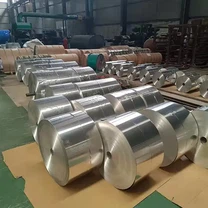
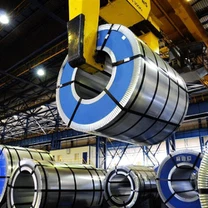
1. Core Materials and Types Aluminum roof panels are mainly made of aluminum alloy or aluminum composite materials. Common types include: Aluminum-magnesium-manganese alloy panels: mainly aluminum, magnesium, and manganese alloys, with a thickness of 0.6-1.2mm, with both lightweight (density 2.73g/cm³, about 1/3 of steel) and high strength, suitable for large-scale architectural curved surface modeling; Aluminum alloy insulation tiles: such as H24 state 3003 aluminum alloy, with fluorocarbon coating or nano-reflective layer on the surface, with polyurethane and air cavity insulation structure, reflecting 90% of ultraviolet rays, and reducing the temperature difference by 8-12℃; Composite aluminum panels: such as polyurethane Great Wall insulation aluminum tiles, with a closed-cell polyurethane core layer in the middle, which has sound insulation, moisture-proof and flame retardant properties, and a service life of up to 50 years.
2.Core performance advantages
| Indicator | Characteristic Description |
|---|---|
| Lightweight | Weight is only 1/3 of traditional tiles (3–5 kg/m²), reducing the structural load of the building by over 30% |
| Corrosion Resistance | Surface oxide film resists acid rain and salt spray; in coastal environments, service life is extended by more than 15 years vs. color steel tiles |
| Thermal Insulation | Quadruple insulation design: 1. Reflective layer 2. Insulation core 3. Air cavity 4. Metal substrate Thermal resistance: 1.5 m²·K/W, indoor temperature reduced by 8–12℃ |
| Service Life & Recycling | - Aluminum-magnesium-manganese plate: 50-year lifespan - Aluminum alloy tile: 50–60 years - High recycling value: up to 80% of raw material price |
3.Typical application scenarios
Industrial buildings: factory roofs, warehouses, etc., which require quick installation (500㎡/half day), corrosion resistance and fireproof A1 level scenarios;
Rural self-built houses: double-layer aluminum tiles solve leakage and high energy consumption problems, easy installation (can be completed by 2 people) and low maintenance costs;
Commercial buildings: curtain walls, special-shaped roof designs (such as gradient colors, curved structures), adapted to modern aesthetic needs;
Public facilities: open-air places such as carports and pavilions, relying on high weather resistance and impact resistance (resistant to 12-level typhoons).
4.Installation and maintenance points Installation method
Snap-on design + modular production, no professional tools required, daily paving area of 100-150㎡; The recommended keel spacing is 70-100cm, and the surface load-bearing capacity is 300-500kg/m². Maintenance requirements
Regularly check the sealing of joints, and use neutral detergent for cleaning; Check for loose fasteners after extreme weather.
5.Selection considerations
Cost considerations: The unit price is three times that of color steel tiles (80-300 yuan/m²), but it saves maintenance and energy costs in the long run;
Insulation optimization: It is recommended to select a polyurethane core layer in high-temperature areas, which increases the cost by about 20%;
Noise control: The rain noise is high during heavy rain, so it is necessary to match it with a sound-absorbing layer or choose a composite structural board;
Styling adaptation: Special-shaped designs require customized molds, which increases construction time and costs