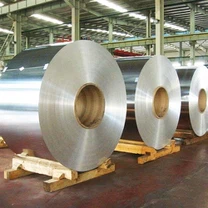
The primary difference between 5083-H111 and 5083-H321 aluminum lies in their strength, formability, and corrosion resistance. 5083-H111 is a softer, more formable temper with lower strength, while 5083-H321 is a harder, more corrosion-resistant temper with higher strength, achieved through strain hardening and stabilization heat treatment. In short, H111 is considered "moderate" or "soft," whereas H321 is a stable, high-performance, marine-grade temper.
Heat Treatment Condition:
The H111 temper is a lightly strain-hardened condition. It is essentially in the annealed (O) state but has undergone slight deformation to enhance its strength while maintaining excellent ductility.
Key Characteristics:
High Corrosion Resistance: With outstanding resistance to seawater corrosion, 5083 H111 is highly suitable for use in marine environments.
Good Formability: The H111 temper offers excellent ductility and workability, making it ideal for applications requiring complex forming processes.
Moderate Strength: Although its strength is lower than that of the H321 temper, it still provides sufficient mechanical performance for most marine applications.
GNEE Marine Grade Aluminum Plate 5083 H321
Heat Treatment Condition:
The H321 temper is a stabilized condition achieved through controlled heat treatment, which optimizes the alloy's strength after thermal processing while maintaining its excellent corrosion resistance.
Key Characteristics:
Excellent Corrosion Resistance: Similar to the H111 temper, 5083 H321 provides outstanding corrosion resistance in seawater and other aggressive environments.
Higher Strength: Compared to H111, the H321 temper delivers increased strength, making it suitable for structural components that require higher load-bearing capacity.
Enhanced Fatigue Strength: The stabilization process gives H321 improved resistance to fatigue and stress under cyclic loading conditions.
As a leading Chinese supplier, GNEE provides both 5083 H111 and 5083 H321 marine-grade aluminum plates, known for their exceptional corrosion resistance, reliable strength, and superior performance in shipbuilding and marine engineering applications.
GNEE 5083-H111 Aluminum
Temper: A soft condition achieved through annealing followed by a light degree of strain hardening (e.g., stretching or leveling).
Processing: The material is annealed and then lightly cold-worked but does not reach the strength of fully hardened tempers.
Mechanical Properties:
Lower tensile strength: approximately 270–345 MPa
High ductility and excellent formability
Easy to bend and shape
Applications: Ideal for applications that require superior formability rather than maximum strength, such as components needing complex shaping or moderate structural performance.

GNEE 5083-H321 Aluminum
Temper: A stabilized, strain-hardened temper that provides enhanced corrosion resistance and stable mechanical properties.
Processing: Produced through cold working followed by a low-temperature stabilization treatment, which improves ductility and reduces internal stress.
Mechanical Properties:
Higher tensile strength: approximately 305–385 MPa
Improved strength and corrosion resistance compared to H111
Stable performance under marine and industrial conditions
Applications: Extensively used in marine and structural fields, including shipbuilding, tank fabrication, and vehicle body manufacturing, where high strength, corrosion resistance, and dimensional stability are required.

As a leading Chinese supplier, GNEE provides both 5083-H111 and 5083-H321 aluminum plates, ensuring high quality, consistent mechanical properties, and excellent corrosion resistance for demanding marine and industrial environments.
Comparison Table of 5083 H321 and H111
| Property | 5083-H111 | 5083-H321 |
| Strength | Moderate tensile/yield strength | Higher tensile/yield strength |
| Ductility | High elongation, better formability | Lower elongation, stiffer |
| Corrosion Resistance | Good, but slightly inferior to H321 | Excellent, especially outstanding resistance to stress corrosion |
| Weldability | Excellent, suitable for complex welded structures | Excellent, better post-weld strength stability |
| Workability | Excellent cold workability, easy to form | Requires stabilization, slightly more difficult to process |
| Processing | Annealed + light strain hardening | Strain hardened and stabilized |
| Best For | Forming, welding, marine superstructures | High-stress structural components |