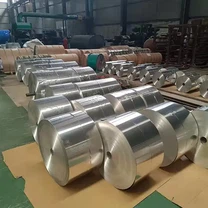
In the shipbuilding industry, 5083 aluminum alloy is more widely used than 6061, primarily for hulls and key structural components that require high strength and superior corrosion resistance. In contrast, 6061 aluminum alloy is better suited for secondary components that prioritize machinability and formability rather than prolonged seawater exposure.
Applications of 5083 and 6061 Aluminum Alloys in Shipbuilding
5083 Aluminum Alloy
5083 aluminum alloy is a marine-grade aluminum widely applied in ships and offshore structures due to its excellent corrosion resistance and weldability. It performs exceptionally well in long-term contact with seawater, making it ideal for critical marine components such as hulls, decks, and cargo hold bulkheads.
Key Characteristics of 5083 Aluminum Alloy
Corrosion Resistance: Exceptional resistance to seawater and salt mist corrosion, making it ideal for continuous exposure to marine environments.
Weldability: Excellent weldability using TIG, MIG, or arc welding methods while maintaining high structural integrity.
High Strength: Provides high strength among non-heat-treatable alloys, capable of withstanding significant structural loads in shipbuilding.
Typical Marine Applications
Hull Structures: Used in ship hulls to ensure durability against seawater corrosion and mechanical stress.
Decks: Suitable for deck plating due to its ability to withstand harsh marine conditions.
Cargo Hold Bulkheads: Provides strength and corrosion resistance for cargo compartments, ensuring structural safety and longevity.
6061 Aluminum Alloy
6061 aluminum alloy is known for its excellent machinability and good mechanical performance, making it suitable for secondary ship structures that are not directly exposed to seawater. It is frequently used for internal fittings and structural components requiring high processing precision.
Key Characteristics of 6061 Aluminum Alloy
Machinability: Excellent, making it ideal for producing precision parts and complex shapes.
Corrosion Resistance: Good in dry or mild environments, though inferior to 5083 in seawater conditions.
Strength: Moderate, sufficient for non-load-bearing or secondary marine structures.
Typical Marine Applications
Frames and Supports: Used for internal frameworks and secondary support components.
Hatches and Handrails: Excellent machinability makes it suitable for manufacturing ship hatches, handrails, and fittings.
Cabin Structures: Commonly applied in cabin partitions and interior fittings that require both strength and lightweight design.

Comparison: 5083 vs 6061 Aluminum Alloys in Marine Applications
| Category | 5083 Aluminum Alloy | 6061 Aluminum Alloy |
|---|---|---|
| Main Alloying Element | Magnesium (4.0–4.9%) | Magnesium (0.8–1.2%), Silicon (0.4–0.8%) |
| Corrosion Resistance | Excellent, especially in seawater | Moderate, suitable for mild or dry conditions |
| Strength | High | Moderate |
| Weldability | Excellent | Good |
| Machinability | Fair | Excellent |
| Formability | Fair | Excellent |
| Typical Applications | Hulls, decks, cargo bulkheads, offshore structures | Frames, hatches, handrails, internal ship fittings |
How to Choose Between 5083 and 6061 Aluminum Alloys
Choose 5083 aluminum alloy when the application requires:
Continuous or prolonged exposure to seawater
High strength and corrosion resistance
Structural integrity under heavy load conditions
Use in hulls, decks, or cargo hold bulkheads
Choose 6061 aluminum alloy when the application requires:
Superior machinability and formability
Good performance in non-marine or interior ship environments
Cost-effective material for secondary or non-critical structures
Use in frames, partitions, hatches, or handrails

Summary
Both 5083 and 6061 aluminum alloys supplied by GNEE, a leading Chinese aluminum manufacturer, are essential materials in the marine industry.
5083 aluminum alloy is the preferred choice for hulls and main ship structures, offering outstanding corrosion resistance, strength, and weldability.
6061 aluminum alloy provides excellent machinability and versatility, making it suitable for secondary and interior ship components.
By offering both high-performance alloys, GNEE ensures that shipbuilders can select the optimal aluminum material to meet diverse performance and cost requirements in modern marine engineering.