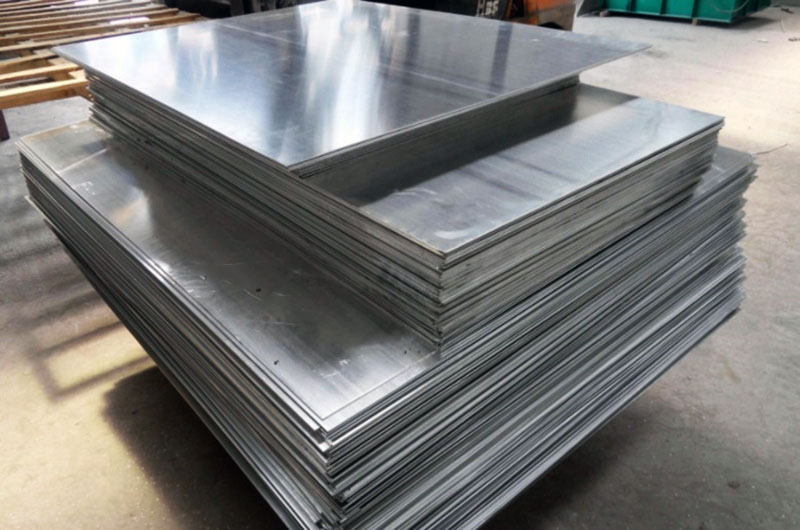
Marine-grade aluminum plates, particularly alloys such as 5052 and 5454, are widely used in the shipbuilding industry due to their excellent corrosion resistance, high strength, and lightweight characteristics. These properties make them ideal materials for offshore applications that demand superior durability and performance in harsh marine conditions.
The main aluminum alloys used in marine applications belong to the 5000 and 6000 series, including 5052, 5083, 5086, 5454, 6061, and 6063. Common tempers include O, H34, H112, H116, and H321, which are typically used for hulls, decks, and other ship structures. Their lightweight nature, high strength-to-weight ratio, excellent corrosion resistance, and ease of fabrication contribute significantly to improving the vessel's overall performance, service life, and maintenance efficiency.
In the marine industry, 5000 and 6000 series aluminum alloys are the most widely used. Each alloy offers unique characteristics suited for different ship components. When selecting the right alloy, factors such as strength, corrosion resistance, and formability must be carefully considered.
Vessel aluminum plates mainly include Al-Mg, Al-Zn-Mg, and Al-Mg-Si alloys. Based on application areas, they are divided into structural aluminum alloys for hulls and general-purpose components for other ship parts such as masts, portholes, chimneys, and cabins. The hull structure typically includes bulkheads, decks, outer plates, keels, and bottom plates.

Aluminum Sheets for Boat Building
5083 Aluminum Sheet for Boat Building
Composition: Primarily aluminum with 4.0–4.9% magnesium, 0.4–1.0% manganese, and trace amounts of other elements.
Features: Excellent corrosion resistance, high strength, good weldability, and superior fatigue resistance.
Applications:
Hull bottom plates: Constantly exposed to seawater and high pressure, requiring materials that resist corrosion and maintain strength. The 5083 alloy's excellent corrosion resistance makes it ideal for this application.
Side shells: The hull sides endure wave impact and abrasion. The high strength and toughness of 5083 ensure the durability and structural integrity of these sections.
5052 Aluminum Sheet for Boat Building
Composition: Contains 2.2–2.8% magnesium, 0.15–0.35% chromium, and trace elements.
Performance: Offers good corrosion resistance, medium-high strength, excellent workability, and weldability.
Applications:
Decks and superstructures: Ideal for areas requiring easy formability and welding, along with sufficient strength and corrosion resistance.
Internal structures: Used in components not directly exposed to seawater but requiring moderate strength and easy fabrication. The balanced performance of 5052 ensures durability and cost efficiency.
6000 Series Aluminum Alloys for Boat Building
6061 Aluminum Alloy
Composition: Contains 0.8–1.2% magnesium, 0.4–0.8% silicon, and trace amounts of copper and chromium.
Performance: High strength, good corrosion resistance, excellent welding, and great machinability.
Applications:
Structural components: Used in internal hull frameworks and cabins where higher strength and rigidity are essential.
Accessories and fixtures: Suitable for brackets, supports, and other lightweight yet strong parts due to its machinability and strength.
6082 Aluminum Alloy
Composition: Contains 0.6–1.2% magnesium, 0.7–1.3% silicon, and trace manganese.
Performance: High strength, good corrosion resistance, excellent weldability, and machinability.
Applications:
Reinforcements: Used in high-strength areas such as cabins and openings requiring additional support.
Machined components: Suitable for precision parts and custom accessories due to its excellent machinability and mechanical properties.
As a leading Chinese supplier, GNEE provides a complete range of marine-grade aluminum plates, including 5052, 5083, 5454, 6061, and 6082 alloys. With outstanding corrosion resistance, strength, and processability, GNEE aluminum materials are widely used in shipbuilding, marine engineering, and offshore structures, ensuring durability, reliability, and performance in demanding marine environments.