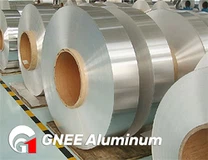
Marine-grade aluminium alloys 5052 and 5083 are among the most commonly used non-heat-treatable alloys for shipbuilding, small vessels, and marine components. Both alloys offer excellent corrosion resistance in seawater, good weldability and formability, and a favorable strength-to-weight ratio, making them ideal for hulls, superstructures, fuel tanks, decks, and fittings.
Alloy Overview
5052-An aluminium–magnesium alloy providing good formability and moderate strength, with outstanding corrosion resistance in seawater and salt spray.
5083-A higher-strength aluminum-magnesium-manganese alloy designed for marine applications, offering superior strength and exceptional corrosion resistance compared with 5052.
Features & Benefits
High resistance to seawater and chloride environments
Excellent weldability via TIG, MIG, or conventional methods; minimal post-weld heat treatment required
Good formability, especially 5052, for complex shapes and curved hull panels
Low density compared to steel, reducing vessel weight while improving fuel efficiency, stability, and payload
High impact resistance and toughness, particularly 5083 at low temperatures
Low maintenance: does not rust; coatings or anodic protection recommended for long-term aesthetics
Recyclable without loss of properties
Typical Marine Applications
Hull plating for small to medium recreational boats (5052 or 5083 depending on strength)
Commercial, patrol, and rescue vessels hulls and decks (5083 preferred)
Superstructures, bulkheads, and deck fittings
Brackets, hardware, and marine components
Fuel tanks and piping with appropriate surface treatment
Davits, gangways, ramps, and buoy frames
Corrosion-resistant lining, covers, and panels
Comparison of Key Properties
| Property | 5052 | 5083 |
|---|---|---|
| Strength | Moderate | High |
| Formability | Excellent | Good |
| Corrosion Resistance | Excellent | Excellent (slightly superior in aggressive seawater) |
| Weldability | Excellent | Excellent (requires attention to distortion control) |
| Typical Use | Lightly loaded panels, fittings | Structural hull plating, load-bearing parts |
Chemical Composition (Typical, wt%)
| Element | 5052 | 5083 |
|---|---|---|
| Al | Balance | Balance |
| Mg | 2.2 – 2.8 | 4.0 – 4.9 |
| Mn | ≤0.10 | 0.4 – 1.0 |
| Cr | ≤0.15 | 0.05 – 0.25 |
| Fe | 0.4 – 0.7 | 0.4 – 0.5 |
| Si | ≤0.25 | ≤0.4 |
| Cu | ≤0.10 | 0.05 – 0.20 |
| Zn | ≤0.10 | ≤0.25 |
| Others | Trace | Trace |
Notes:
5083 contains higher magnesium for enhanced strength and corrosion resistance.
Alloying elements (Mn, Cr) improve grain structure, toughness, and mechanical properties.
Mechanical Properties (Typical by Temper)
| Property | 5052-O/H32 | 5083-O/H116 |
|---|---|---|
| Tensile Strength (MPa) | 165–230 | 275–365 |
| Yield Strength 0.2% (MPa) | 35–150 | 145–300 |
| Elongation (%) | 8 – 20 | 10–20 |
| Hardness (HB) | ~25 – 70 | ~40 – 90 |
| Density (g/cm³) | 2.68 | 2.66 – 2.70 |
| Toughness | Good | Excellent, especially at low temperatures |
Notes:
5052-H32 is commonly used for sheets requiring moderate strength with excellent formability.
5083-H116 or H321 is preferred for welded marine structures for enhanced corrosion resistance and stable post-weld properties.
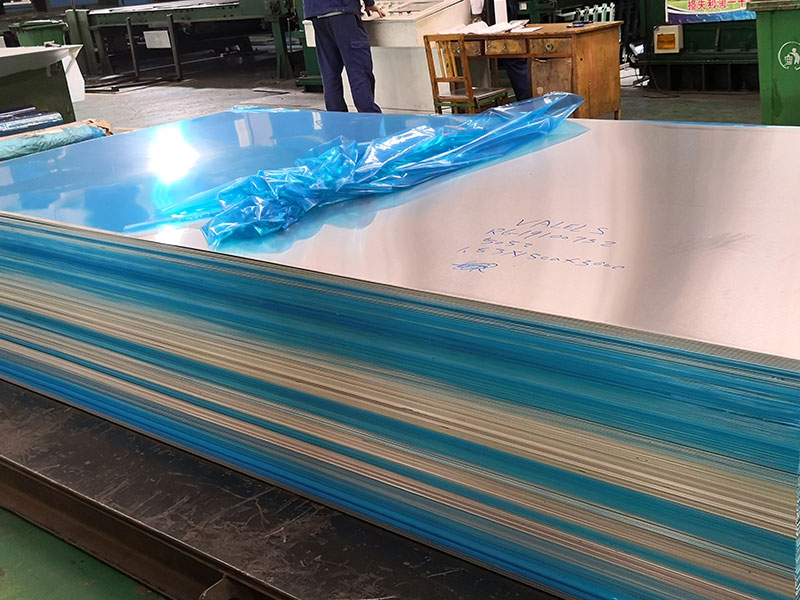
Performance in Marine Environments
Both alloys resist pitting and localized corrosion in seawater due to high magnesium content and stable oxide film.
5083 is preferred for aggressive or long-term marine applications where structural strength is critical.
Galvanic compatibility: Use dielectric barriers, insulating pads, or compatible fasteners (stainless steel with isolation) to prevent galvanic corrosion.
Fatigue resistance: Good for hull plating; 5083 offers superior performance due to higher base strength.
Weld zone performance: H116/H321 tempers maintain corrosion resistance and strength better than other tempers.
Fabrication & Welding
Forming: 5052 is highly formable for bends and complex shapes; minimum bend radii depend on thickness and temper.
Cutting: Suitable for shearing, waterjet, plasma, or laser cutting. Burr control and edge finishing improve fatigue life and coating adhesion.
Welding: MIG (GMAW) and TIG (GTAW) with compatible fillers (5356 or 5183) are recommended. Pre-weld cleaning is essential.
Surface treatment: Anodizing, chromate conversion, and marine-grade paint systems improve corrosion resistance and aesthetics.
Typical Specifications & Sizes
Thickness: 0.8–12mm (sheet/plate); thicker plates for structural members
Width: 1000, 1250, 1500, 2000 mm (custom widths available)
Length: 2000–6000 mm or custom cut-to-length
Tempers: 5052 – O, H32, H34, H111; 5083 – O, H116, H321
Surface finish: Mill finish, brushed, pre-painted, or coated
Certification: EN, ASTM, ABS, LR, DNV-GL (verify with supplier)
Quality & Certification
Standards: EN 485 / EN 573 / EN 515, ASTM B209
Classification approvals: ABS, Lloyd's Register, DNV-GL, Bureau Veritas
Material Test Reports (MTRs): Show chemical composition, mechanical tests, heat number traceability
Design & Selection Guidance
Use 5052 for non-structural panels, interior fittings, tanks, and accessories where formability is critical and load is moderate.
Use 5083 for hull plating, structural members, and high-strength applications where resistance to stress-corrosion cracking is essential.
Specify appropriate temper (H116, H321) for welded structures.
Thickness selection should meet bending stiffness and buckling requirements; aluminium requires slightly greater thickness than steel for equivalent stiffness but offers significant weight savings.
Protect fastener joints and contacts with dissimilar metals using insulation and coatings to prevent galvanic corrosion.
Handling & Maintenance
Rinse with fresh water in saltwater environments to remove deposits
Inspect welds, fasteners, and seals periodically for corrosion or fatigue
Reapply coatings as recommended; repair scratches promptly
Avoid prolonged contact with dissimilar metals; use protective washers, sleeves, or coatings
Example Specification Table
| Parameter | Example Value |
|---|---|
| Alloy | 5052 / 5083 |
| Temper | 5052-H32, 5083-H116 |
| Thickness | 1.5–8.0 mm |
| Width | 1250 mm (typical) |
| Length | 2500–6000 mm (cut-to-length) |
| Surface | Mill finish / pre-painted optional |
| Certification | ASTM B209 / EN / ABS / LR / DNV-GL (on request) |
| Filler Metal | 5356 / 5183 (for welding 5xxx series) |
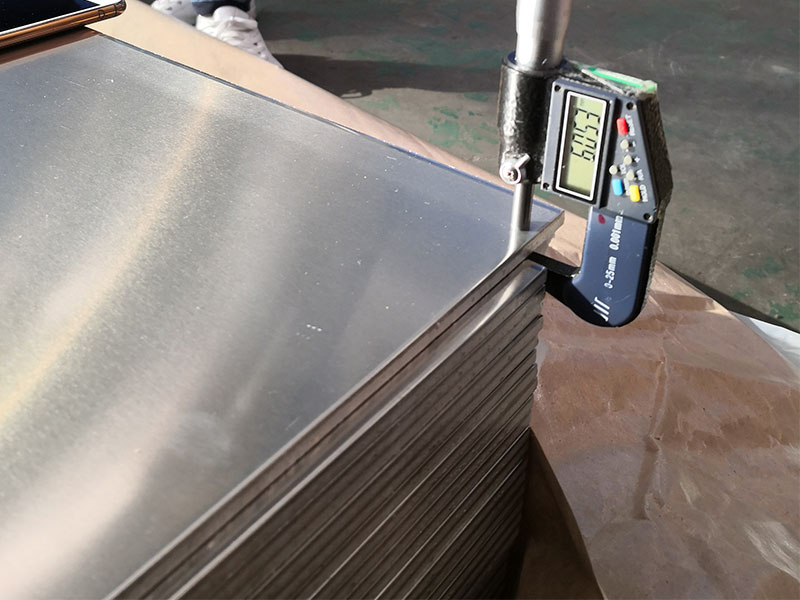
GNEE marine-grade aluminium alloys 5052 and 5083 provide excellent corrosion resistance, weldability, formability, and strength-to-weight ratio, making them ideal for marine structures, vessels, and coastal applications. Selecting the right alloy, temper, thickness, and surface finish ensures long-term performance and reliability in demanding marine environments.