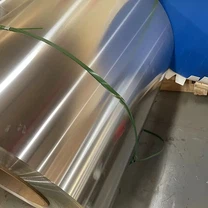
Drawn aluminum tubes offer much higher precision and better mechanical properties, while extruded aluminum tubes are more cost-effective and widely used for general, less-demanding applications.
Choosing the wrong tube will either ruin your product or waste your budget. In this guide, we will break down the exact differences between an 1100 drawn tube and an 1100 extruded tube and tell you exactly when to use each.
What is 1100 Aluminum Tubing?
Before comparing the manufacturing processes, you need to understand the material itself.
1100 aluminum is known as "commercially pure aluminum." It contains at least 99.0% pure aluminum with no major alloying elements. Because of its purity, it has three defining features:
- Excellent corrosion resistance: It handles moisture, weather, and mild chemicals effortlessly.
- High formability: It bends, forms, and shapes without cracking.
- Low strength: It is a soft metal, meaning it is not suitable for heavy load-bearing structural parts.
Because of these properties, 1100 aluminum is heavily used to manufacture pipes and tubes for fluid transfer and heat exchange. If you are looking for a reliable 1100 seamless aluminum tubing supplier, you will usually be offered two choices: extruded or drawn.
What is an 1100 Extruded Aluminum Pipe?
Extrusion is the most common and basic way to make an aluminum tube.
The Process:
Imagine squeezing toothpaste out of a tube. That is extrusion. The factory heats a solid block of 1100 aluminum (called a billet) until it is soft but not melted. A massive hydraulic ram then pushes this hot metal through a steel die that has a hole in the shape of a tube.
The Characteristics:
- Lower Cost: The process is fast and requires fewer steps.
- Wide Size Range: It is very easy to push out large-diameter pipes.
- Average Precision: Because the metal is pushed out while hot, it shrinks slightly as it cools. This means the dimensional tolerance (how exact the size is) is only standard.
What is an 1100 Drawn Aluminum Tube?
A drawn tube is a premium product. It actually starts its life as an extruded tube but goes through an extra, highly controlled manufacturing step.
The Process:
After the basic tube is extruded and cooled down, it is pulled (drawn) through a smaller, highly precise steel die at room temperature. A metal plug (mandrel) is often placed inside the tube during this pulling process to control the inside diameter.
The Characteristics:
- High Precision: Pulling the cold metal through a fixed die guarantees the exact outer diameter (OD) and inner diameter (ID).
- Smoother Surface: The friction of drawing polishes the metal, removing the "extrusion lines" and leaving a mirror-smooth finish.
- Higher Strength: Pulling the metal while it is cold compresses the grain structure, which hardens the tube.
Differences between 1100 Drawn Aluminum Tube and Extruded Aluminum Tube
| Feature | 1100 Aluminum Drawn Tube | 1100 Aluminum Extruded Tube |
| Manufacturing Process | Cold drawn through a die | Hot extruded through a die |
| Dimensional Precision | Very High (Tight tolerances) | Medium (Standard tolerances) |
| Surface Finish | Very Smooth (Inside and Out) | Rougher (Visible extrusion lines) |
| Mechanical Strength | Higher (Due to cold working) | Lower (As-fabricated condition) |
| Production Cost | Higher | Lower |
| Best For | Precision fittings, aerospace, heat exchangers | General construction, large fluid lines |
Mechanical Properties of 1100 Aluminum Seamless Tube
1100 aluminum cannot be heat-treated. You cannot put it in an oven to make it harder. The only way to strengthen pure aluminum is through "strain hardening" (cold working).
When the factory cold-draws the tube, the physical pulling force crushes and tightens the metal's internal grain structure. This process creates tempers like H14 (half-hard) or H18 (full-hard).
The Conclusion: Drawn tubes typically have better tensile and yield strength than standard extruded tubes. If your fluid line experiences moderate internal pressure, the drawn tube is less likely to swell or burst.
When to Use 1100 Drawn Aluminum Tube
Best applications for Drawn Tubes:
- Precision applications: Where the tube must slide perfectly into another part or valve.
- Tight tolerances: When your engineering drawing requires variations of less than +/- 0.1mm.
- Smooth internal surfaces: When you are transporting gases or liquids and need zero friction or bacteria buildup.
- Heat exchangers: The precise wall thickness ensures even heat transfer.
- Aerospace (non-structural): For lightweight fuel lines or HVAC ducting inside aircraft.
When to Use 1100 Extruded Aluminum Pipe
Best applications for Extruded Tubes:
- General structural use: Handrails, light framing, or protective sleeves.
- Cost-sensitive projects: When you need thousands of meters of pipe and budget is the priority.
- Large diameter tubes: Extrusion can easily create 10-inch or 20-inch pipes, whereas cold drawing very large tubes is difficult and expensive.
- Standard construction and industrial uses: Basic fluid routing where minor dimensional variations do not matter.
1100 Drawn and Extruded Aluminum Tube Applications Comparison
To make it easy, here is a quick cheat sheet for everyday industrial applications:
| Application | Recommended Tube Type | Why? |
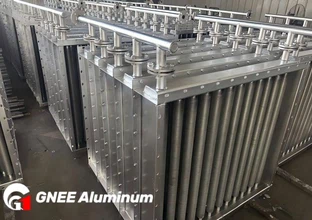
| Heat Exchangers & Condensers | Drawn Tube | Needs precise wall thickness for heat transfer. |
| Pneumatic / Hydraulic Cylinders | Drawn Tube | Needs a perfectly smooth ID for piston seals. |
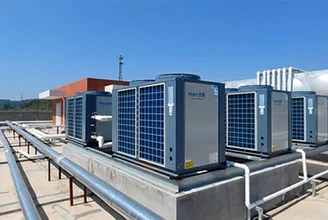
| HVAC Ducting & Systems | Both | Extruded for main lines; Drawn for precision coils. |
| Protective Cable Sleeves | Extruded Tube | Only needs to cover the wire; precision doesn't matter. |
| Structural Frames / Handrails | Extruded Tube | Low cost, large volume, basic shape needed. |

Cost vs Performance Trade-off
At the end of the day, procurement is about balancing cost and performance.
- Drawn = More expensive, but more precise. You pay for the extra manufacturing step. In return, you save money on the assembly line because every single tube fits perfectly into your fittings. There is zero rework.
- Extruded = Cheaper, but average performance. If you want to check the custom 1100 aluminum drawn tube price versus extruded, you will see extrusion is cheaper. If your workers are just cutting the pipe and welding it to a basic frame, extruded is the smart financial choice.
The Golden Rule of Sourcing: Choose drawn tubes when performance, tight seals, and precision matter. Choose extruded tubes when cost efficiency and large volumes are your main priorities.
Why Choose GNEE as Your Aluminum Tube Supplier?
- Seamless & Drawn Tube Capability: We own advanced extrusion presses and cold-drawing machines, allowing us to supply both standard pipes and ultra-precise drawn tubes.
- Wide Alloy Range: Beyond pure 1100 aluminum, we supply everything from 3003 to aerospace-grade 7075.
- Custom Precision Tolerances: We manufacture tubes to your exact OD, ID, and wall thickness specifications.
- Certified Materials: Every shipment comes with a full Mill Test Certificate (MTC), ensuring compliance with ASTM and EN standards.
- Fast Global Delivery: We export high-quality aluminum safely and rapidly to manufacturers all over the world.
Ready to buy the perfect aluminum tube for your project?
Stop worrying about loose tolerances and leaky fittings. If you need to buy a 1100 drawn aluminum tube or need a bulk order of extruded pipes, GNEE has you covered.
Send us your sizes today to get a fast, competitive factory quote and a free material consultation!