When you plan to buy 1070 aluminum sheet for your manufacturing project, selecting the alloy grade is only the first step. The most critical decision is choosing the correct temper (hardness condition). The two most debated tempers in the 1xxx pure aluminum series are 1070-O and 1070 H28.
1070-O is fully soft and offers maximum ductility, while 1070 H28 is hard and offers maximum stiffness for this alloy series.
Choosing the wrong temper will lead to immediate production failure. If you try to deep draw H28, it will crack. If you try to use O-temper for a rigid panel, it will bend under its own weight.
In this guide, GNEE breaks down the exact differences between 1070-O and 1070 H28 aluminum sheets to help you make the right purchasing decision.
The 1070-O Aluminum Sheet :
The "O" stands for "Annealed". During production, the aluminum is heated in a furnace to a specific temperature and cooled slowly. This removes all internal stress. Imagine a piece of thick aluminum foil used in baking-it bends effortlessly, holds the new shape without springing back, and feels very soft.
The 1070 H28 Aluminum Sheet:
The "H28" indicates that the metal is strain-hardened (cold rolled to increase hardness) and then partially annealed. The "8" means it is in a "Full Hard" condition. If you hold a sheet of 1070 H28, it feels rigid and stiff, much like a dense piece of cardboard or a standard credit card. If you try to bend it sharply by hand, it will resist, and if forced, it will snap.
Core Differences Of 1070-O vs 1070 H28 Aluminum
To give purchasing managers and engineers a quick overview, here is the direct comparison between the two tempers.
| Feature / Property | 1070-O Aluminum Sheet | 1070 H28 Aluminum Sheet |
| Temper Meaning | Fully Annealed (Softest state) | Strain-Hardened (Full Hard state) |
| Mechanical Strength | Very Low | High (relative to pure aluminum) |
| Ductility (Stretching) | Excellent | Very Poor |
| Elongation Rate | ≥ 35% | ≤ 10% |
| Formability / Bending | Excellent (Can fold flat 180 degrees) | Limited (Will crack on sharp bends) |
| Material Hardness | Very Low | High |
| Primary Manufacturing Use | Deep drawing, severe forming, spinning | Flat stamping, rigid panels, drilling |
Mechanical Properties Comparison of 1070-O vs 1070 H28
If you are an engineer programming a CNC machine or setting up a press brake, you need the exact data. The difference in mechanical properties dictates your die clearance and pressure settings.
| Mechanical Property | 1070-O Value | 1070 H28 Value | What It Means for You |
| Tensile Strength (Rm) | 60 – 95 MPa | 120 – 160 MPa | H28 can handle more pulling force before breaking. O is much weaker. |
| Yield Strength (Rp0.2) | ≥ 25 MPa | ≥ 100 MPa | H28 takes 4 times more force to begin bending permanently compared to O. |
| Elongation (A50mm) | ≥ 35% | ≤ 10% | O temper will stretch over 35% of its length without tearing. H28 will snap quickly. |
The Engineering Explanation:
Because 1070-O is recrystallized through heat, the metal grains are relaxed. This allows the metal to stretch immensely (High Elongation).
1070 H28 is work-hardened. The metal grains are tightly crushed together during the cold rolling process. This makes the sheet stronger (High Yield Strength) but leaves no room for the grains to move, making it brittle when bent.
Main Applications of 1070-O vs 1070 H28 Aluminum Sheet
Because their mechanical properties are exact opposites, these two sheets are used in completely different industries.
Applications of 1070-O Aluminum Sheet
Because of its extreme ductility and 99.7% purity, 1070-O is the absolute standard for processes that force the metal into deep, complex molds.
- Deep Drawing Kitchenware: Used to stamp seamless pots, pans, and food containers. The metal flows into the die without tearing.
- Capacitor Foil Base: Soft pure aluminum is deeply etched and used as the core material in electrolytic capacitors for electronics.
- Flexible Electrical Components: When electrical busbars or transformer windings need to be folded into tight spaces inside machinery, O temper bends perfectly without losing its 61% IACS conductivity.
- Cosmetic Packaging: Deep drawn to create seamless aluminum tubes and bottle caps.
Applications of 1070 H28 Aluminum Sheet
Even though H28 is the "hard" temper, it is NOT a load-bearing structural material. You cannot build a machine frame with it. However, it is perfect for parts that need to remain flat and rigid while offering excellent corrosion resistance.
- Roofing and Insulation Panels: The H28 rigidity ensures the sheet does not sag when installed on factory roofs or wrapped around industrial pipes.
- Flat Decorative Panels & Nameplates: Stamped into flat signs or appliance panels where surface flatness is critical.
- Rigid Electrical Busbars: For straight power distribution lines where the aluminum needs to support its own weight between mounting brackets.
- Lighting Reflectors: Flat reflector panels that require mirror polishing and cannot deform during installation.
How to Choose Between 1070-O and 1070 H28?
Choose 1070-O if your production requires:
- Deep drawing or spinning.
- Bending the sheet past 90 degrees or folding it flat onto itself (180 degrees).
- Making complex, 3D hollow shapes.
- Maximum flexibility for hand-installation (like thermal insulation wrapping).
Choose 1070 H28 if your production requires:
- A flat surface that resists denting or warping.
- Simple flat stamping (like punching holes or cutting basic shapes).
- Parts that must remain rigid and support their own weight.
- No sharp bending (only very gentle, large-radius curving is allowed).
Common Manufacturing Mistakes with 1070 Aluminum
Mistake 1: Using 1070 H28 for Deep Drawing.
If you try to stamp a cup or a deep enclosure using H28, the metal will fracture and tear at the corners instantly. The elongation is too low. You must use O-temper.
Mistake 2: Using 1070 O Temper for Flat Signs or Busbars.
1070 O temper is extremely soft. If you cut it into a long, flat sign or a rigid electrical busbar, it will warp, bend, and look terrible just by being handled or installed. You must use H28 or H14 for rigidity.
Mistake 3: Bending 1070 H28 with a Sharp Radius.
If you put 1070 H28 into a press brake and try to bend it 90 degrees with a sharp tool, the outer edge of the bend will crack wide open. If you must bend a hard sheet, you need a very large inside bend radius, or you should switch to a half-hard temper like H14 or H24.
GNEE Processing Services for 1070 Aluminum
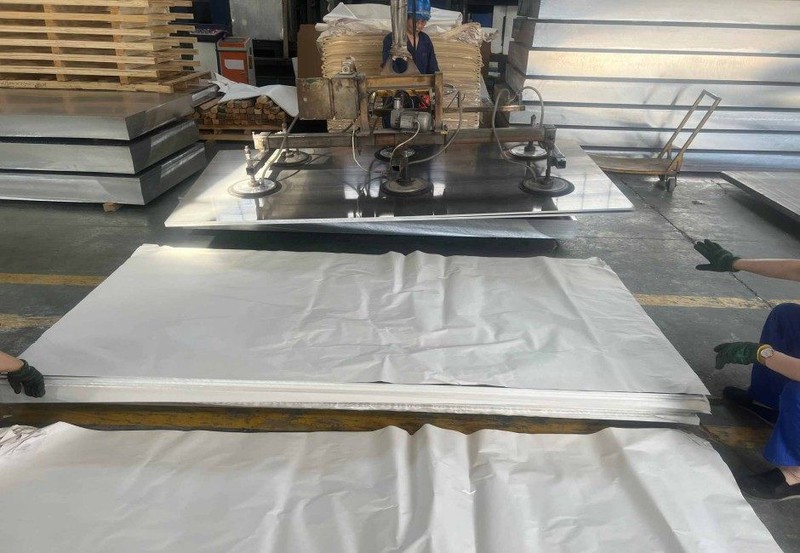
- Custom Cutting & Slitting: We supply exact-width coils and cut-to-length sheets. We supply both O and H28 with customized thickness (0.2mm to 10mm) and width (up to 3000mm).
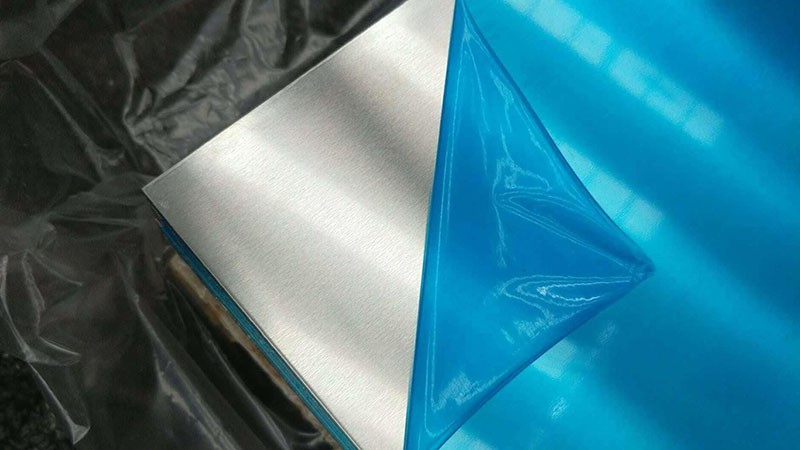
- Surface Protection: Because 1070-O is very soft, it scratches easily. We can apply transparent PE film or blue PVC film to one or both sides to protect the surface during your stamping process.
- Blanking: We can provide pre-cut aluminum circles/discs in O temper, ready to go directly into your deep drawing machines.
- Surface Finishes: We supply mill finish, mirror polished (excellent for H28 reflectors), and anodized surfaces.