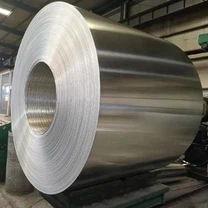
When sourcing pure aluminum for your manufacturing project, selecting the correct temper is just as important as selecting the alloy itself. For the 1070 aluminum series (≥99.7% purity), the two most commonly compared tempers are 1070-O and 1070 H26.
Here is the direct conclusion:
1070-O is fully soft with maximum ductility. It is the absolute best choice for deep drawing and extreme forming.
1070 H26 is strain-hardened for medium strength. It provides the perfect balance between mechanical strength and moderate formability.
Choose "O" when forming is your top priority. Choose "H26" when you need a balance of rigidity and workability.
As a professional 1070 aluminum supplier, GNEE has created this technical guide to help engineers and purchasing managers understand the exact differences and make the right material choice.
The 1070-O Aluminum Sheet State:
"O" stands for annealed. This metal has been heated in a furnace to remove all internal stress. When you handle a 1070-O sheet, it feels extremely soft and pliable. If you bend it by hand, it folds easily and stays in that position without springing back. It acts very much like heavy-duty kitchen foil.
The 1070 H26 Aluminum Sheet State:
"H26" means the metal has been strain-hardened (cold-rolled) and then partially annealed to reach a 3/4 hard state. When you handle a 1070 H26 sheet, it feels semi-rigid. It holds its flat shape well. If you try to bend it by hand, you will feel distinct resistance. It has a slight "spring-back" effect compared to the O temper.
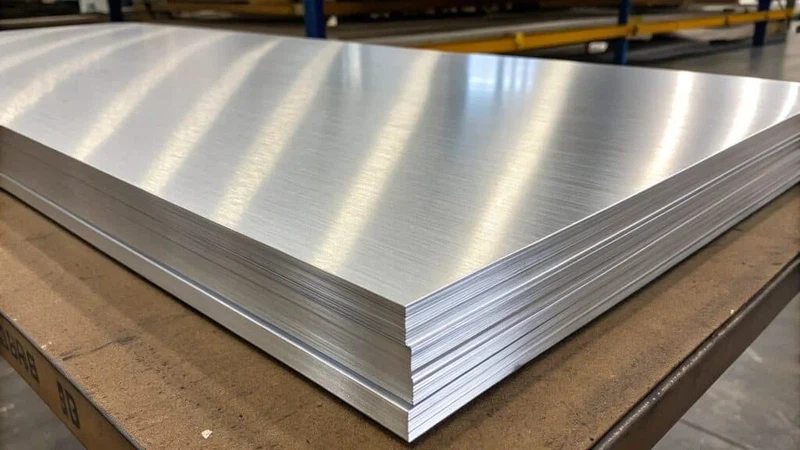
Core Differences of 1070-O vs 1070 H26 Aluminum
This quick comparison table highlights the fundamental property differences between the two tempers.
| Property | 1070-O Aluminum Sheet | 1070 H26 Aluminum Sheet |
| Temper Condition | Annealed (Fully Soft) | Strain Hardened & Partially Annealed |
| Mechanical Strength | Low | Medium |
| Ductility (Stretching) | Excellent | Good |
| Elongation Rate | ≥ 35% | 10% – 20% |
| Material Hardness | Very Low | Medium |
| Formability | Excellent | Moderate |
| Bendability | Excellent (Can fold 180°) | Good (Requires limited bend radius) |
The O-temper will stretch and flow into deep molds without tearing. The H26 temper provides enough strength to act as a panel but can still undergo basic bending operations.
Mechanical Properties of 1070-O vs 1070 H26 Aluminum
| Mechanical Property | 1070-O Value | 1070 H26 Value |
| Tensile Strength (Rm) | 60 – 95 MPa | 95 – 135 MPa |
| Yield Strength (Rp0.2) | ≥ 25 MPa | ≥ 70 MPa |
Why is 1070-O so soft?
During the annealing process, the aluminum undergoes grain recrystallization. The metal grains relax and reform, completely eliminating the stress from the rolling mill. This gives it a very low yield strength (≥ 25 MPa), meaning it takes very little force to permanently shape the metal.
Why is 1070 H26 stronger but still workable?
The H26 temper is achieved through work hardening (compressing the metal through cold rollers) followed by partial annealing. This process increases the tensile and yield strength significantly (Yield ≥ 70 MPa) while retaining enough grain mobility to allow for 10% to 20% elongation.
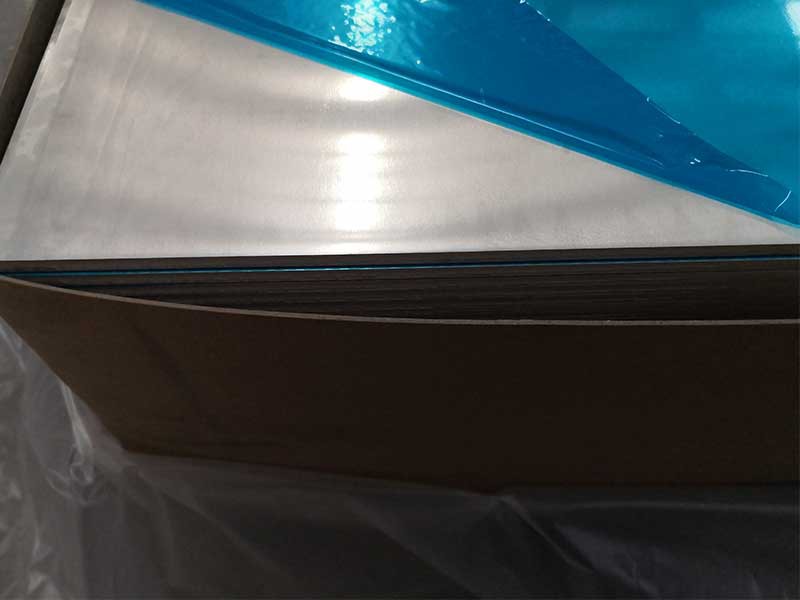
Application Comparison of 1070-O vs 1070 H26 Aluminum Alloy Sheet
Applications for 1070-O Aluminum Sheet
1070-O is designed for "Complex Forming." It is used when the manufacturing process demands maximum ductility without cracking.
- Deep Drawing Parts (Kitchenware & Containers): Perfect for stamping deep pots, pans, and seamless cosmetic bottles. The metal flows smoothly into the deep drawing die.
- Capacitor Foil Base: Used in the electronics industry. The soft metal can be deeply etched to increase surface area for electrical charge storage.
- Flexible Electrical Parts: Used for conductive wrapping or flexible busbars that must be twisted or tightly folded inside electrical cabinets.

Applications for 1070 H26 Aluminum Sheet
1070 H26 is designed for "Strength + Moderate Forming." It is used when the final product needs to hold its shape but requires some fabrication.
- Roofing Sheets: The medium strength prevents the metal from sagging under wind or snow loads, while the formability allows it to be corrugated or roll-formed into roofing profiles.
- Decorative Panels: Used for interior architecture and appliance casings where flatness is required, but edges need to be folded for mounting.
- Lighting Components: Flat reflector panels or gently curved lamp housings that require rigidity to maintain the correct light angle.

How to Choose the Right Temper
Choose 1070-O if your production requires:
- Deep drawing, heavy stamping, or metal spinning.
- Complex, 3D shapes with sharp corners.
- Maximum flexibility and zero spring-back.
- Applications where mechanical strength is not important.
Choose 1070 H26 if your production requires:
- A balance of panel rigidity and basic bending.
- Light to moderate folding (with proper bend radiuses).
- Parts that must not easily dent or deform during everyday use.
- Flatness stability for architectural or decorative uses.
Common Manufacturing Mistakes to Avoid
Mistake 1: Using 1070H26 for Deep Drawing
If you load a 1070 H26 sheet into a deep drawing press to make a cup or cylinder, the bottom will tear out, and the corners will fracture. The elongation (10-20%) is simply not high enough for deep cavity forming. You must use O temper (≥ 35% elongation) for deep drawing.
Mistake 2: Using 1070 O Temper for Structural/Flat Panels
Because O temper is fully annealed, it lacks rigidity. If you use it to make a flat sign, a roof panel, or a decorative wall piece, it will warp, dent, and sag under its own weight. For flat parts that need to maintain their shape, you must use H26 (or H14/H24).
Mistake 3: Ignoring the Bend Radius on 1070 H26
While 1070 H26 can be bent, it cannot be folded completely flat against itself (a zero-radius bend) like O temper can. If you use a sharp press brake tool on H26, the outer edge of the bend will crack. You must calculate and use the appropriate inside bend radius when fabricating H26.
Processing Performance Comparison of 1070-O vs 1070 H26 Aluminum Alloy Sheet
Different factory setups require different material behaviors. Here is a quick reference guide on how both tempers perform under standard workshop processes.
| Manufacturing Process | 1070-O Aluminum Sheet | 1070 H26 Aluminum Sheet |
| Deep Drawing | Excellent (Best Choice) | Not Recommended (Will crack) |
| Bending | Excellent (Sharp bends OK) | Good (Requires correct radius) |
| Flat Stamping / Punching | Good | Moderate (Cleaner punched edges) |
| Machining (CNC) | Poor (Gummy, sticks to tools) | Moderate (Chips break slightly better) |
| Welding (TIG/MIG) | Excellent | Excellent |