What is 1060 Aluminum Grade?
The term "1060 aluminum grade" refers to an alloy in the aluminum family. Specifically, it is a pure aluminum alloy, containing 99.6% aluminum with minimal impurities. As part of the 1000 series, it is known for its excellent corrosion resistance, high thermal and electrical conductivity, and good formability.
1060 aluminum is very similar to 1050 aluminum but with a slightly higher aluminum content (0.1% more). It is commonly formed by extrusion or rolling processes and is used primarily in industries where high conductivity, corrosion resistance, and ease of processing are essential. While it has low mechanical strength, it can be strengthened through cold working, but not through heat treatment.
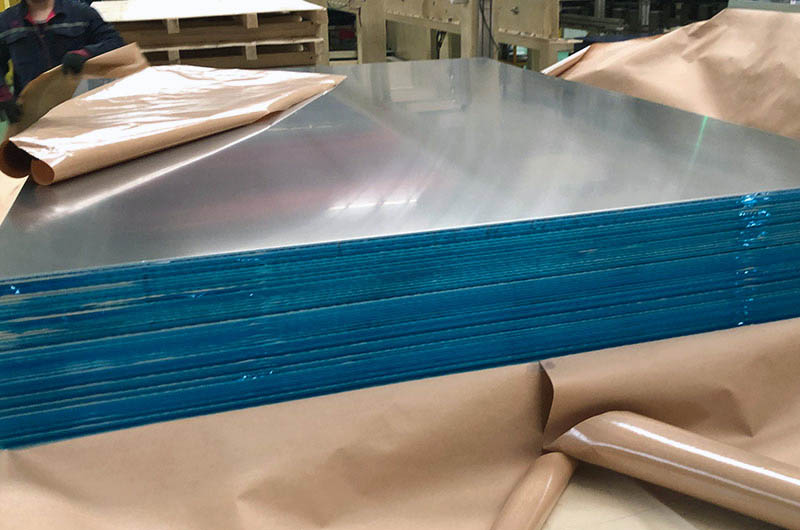
1060 Aluminum Sheet
The number 1060 indicates the alloy composition:
1xxx series alloys contain primarily pure aluminum.
The first number (1) indicates aluminum as the base element.
The second number (0) shows that it is a base alloy without significant alloying elements.
Thus, 1060 is almost pure aluminum with only trace impurities. It is commonly used in applications requiring high electrical conductivity, such as wires, bus bars, and transformer windings, as well as in sheet metal processing, lighting fixtures, reflectors, and nameplates.
1060 Aluminum Plate Features
1060 aluminum is known for its high purity, versatility, formability, corrosion resistance, and electrical conductivity, making it suitable for a wide range of applications. Some of its key features include:
Corrosion Resistance: Excellent resistance to atmospheric conditions and moisture.
Thermal Conductivity: High thermal conductivity, making it ideal for heat sinks and other heat transfer applications.
Conductivity: Highly conductive, suitable for electrical applications like wiring and circuit boards.
Low Strength: Not suitable for applications requiring high tensile strength or resistance to deformation.
Common Applications of 1060 Aluminum Plate
1060 aluminum's unique properties make it ideal for a variety of industries, including:
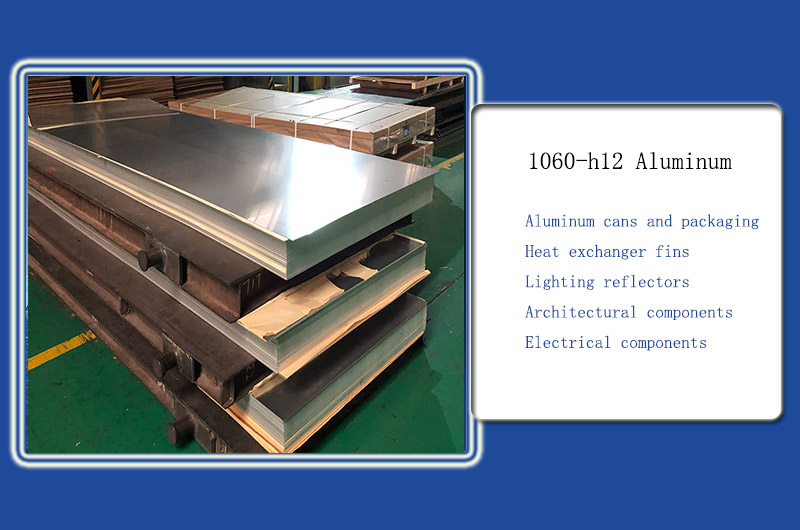
Electrical Conductors: Used in power transmission lines, busbars, wiring, and transformer windings.
Heat Exchangers: Suitable for fins, tubes, and plates that require efficient heat transfer.
Reflectors and Lighting: Used for fluorescent light reflectors, LED luminaires, and decorative lighting.
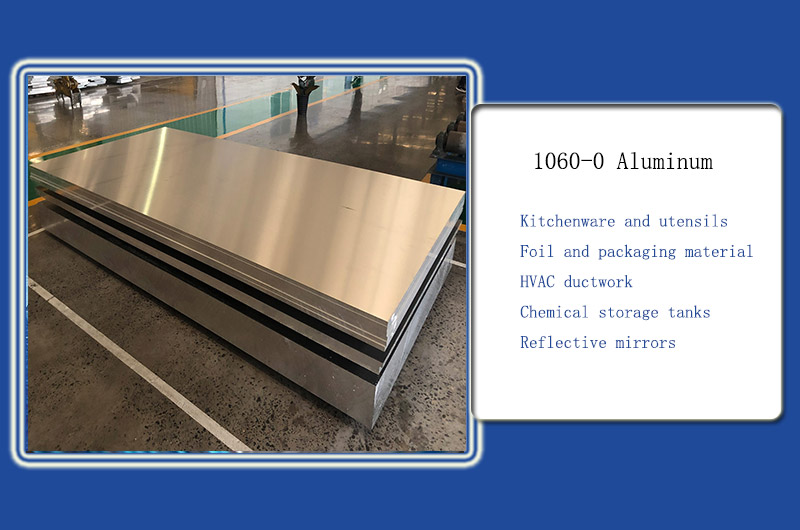
Kitchenware and Utensils: Ideal for pans, pots, cooking utensils, and food storage containers.
Packaging and Foil: Widely used in the food and beverage industry for packaging materials and foil.
Signage and Nameplates: Often used in road signs, building signage, and industrial labels.
Roofing and Siding: Common in roofing sheets and building siding.
Automotive Trim and Parts: Used for decorative accents and structural components.
Chemical Equipment: Ideal for non-corrosive chemical storage tanks and equipment.
General Engineering Applications: Used in machinery components, equipment, and structures.
1060 Aluminum Temper Types
1060 O: Fully annealed, soft condition, ideal for easy forming.
1060 H12: Strain-hardened, 1/4 hard condition, good for moderate strength and formability.
1060 H14: Strain-hardened, 1/2 hard condition, suitable for applications requiring balance between strength and formability.
1060 H16: Strain-hardened, 3/4 hard condition, offering more strength.
1060 H18: Strain-hardened, full hard condition, providing maximum strength.
Surface Treatments for 1060 Aluminum
Mill finish: Raw, untreated surface with slight roughness.
Anodized: Surface treated with an anodic layer for enhanced corrosion resistance and decorative effects.
Powder-coated: Coated with a durable, decorative powder finish.
Polished: Smooth, reflective surface finish.
1060 Aluminum Plate Specifications
Common Thicknesses: Range from 0.1 mm to 6.0 mm, depending on the application.
Common Widths: Available in widths from 20 mm to 2600 mm.
Production Standards:
ASTM B209: Standard Specification for Aluminum and Aluminum-Alloy Sheet and Plate.
EN 485: European Standard for Aluminum Alloys in Sheet, Strip, and Plate form.
GB/T 3880: Chinese Standard for Wrought Aluminum Alloy Plates and Sheets.
Chemical Composition of 1060 Aluminum Plate
| Element | Composition Range (%) |
|---|---|
| Aluminum (Al) | 99.6 min |
| Silicon (Si) | 0.25 max |
| Iron (Fe) | 0.35 max |
| Copper (Cu) | 0.05 max |
| Manganese (Mn) | 0.03 max |
| Magnesium (Mg) | 0.03 max |
| Zinc (Zn) | 0.05 max |
| Titanium (Ti) | 0.03 max |
| Others | Each 0.05 max, Total 0.15 max |
1060 vs. 1050 Aluminum Plate
Both alloys belong to the 1xxx series, but there are key differences:
Composition: 1050 has a minimum aluminum content of 99.50%, while 1060 has 99.60%.
Strength: 1060 has slightly higher strength, with a tensile strength range of 55 to 110 MPa, compared to 1050's tensile strength of 55 MPa.
Applications: 1050 is often used for electrical applications, while 1060 is more versatile, used in reflectors, heat exchangers, kitchenware, and packaging.
1060 vs. 6061 Aluminum Plate
Composition: 1060 is a pure aluminum alloy, while 6061 is an aluminum-magnesium-silicon alloy.
Strength: 6061 is significantly stronger (tensile strength of 276–310 MPa), while 1060 is softer (55 MPa tensile strength).
Applications: 1060 is suitable for electrical and general manufacturing applications, while 6061 is preferred for structural and high-strength applications like aircraft, marine, and automotive components.
Conclusion
The choice between 1060 aluminum and other alloys like 1050 or 6061 depends on the specific requirements of the application, such as the need for electrical conductivity, strength, corrosion resistance, and formability. 1060 is ideal for high conductivity and general engineering applications, while 6061 is better suited for high-strength and structural needs.