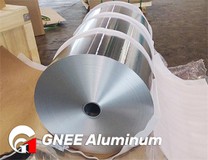
1050 Aluminum Tube: Essential Industrial Material for Modern Applications
In today's industrial and metal fabrication sectors, 1050 aluminum tube from GNEE has become a popular choice across multiple industries. Its unique combination of high purity, corrosion resistance, and excellent workability makes it suitable for a wide range of applications. Understanding its properties, production processes, and usage scenarios can help engineers, designers, and procurement specialists make informed decisions for their projects.
Material Characteristics of 1050 Aluminum Tube
1050 aluminum tube is made from 1050 commercially pure aluminum, with an aluminum content typically above 99.5%. The remainder consists of trace amounts of iron, silicon, copper, and other elements. This high-purity composition provides several advantages:
- Excellent ductility and workability: Easy to bend, cut, and form into desired shapes.
- Corrosion resistance: Resists rust and oxidation under normal environmental conditions.
- Lightweight: Lower density facilitates transport and installation.
- Good thermal and electrical conductivity: Suitable for heat transfer and certain electrical applications.
- Limitation: Due to its lower strength, 1050 aluminum tube is not ideal for high-load structural applications.
Production Process of 1050 Aluminum Tube
The manufacture of 1050 aluminum tubes involves careful control of production methods to ensure consistent quality:
- Hot extrusion: Aluminum ingots are heated to a suitable temperature and pushed through dies to form tubes. This process allows high-volume production with good dimensional consistency.
- Cold drawing: Performed at room temperature, cold drawing improves surface finish and enhances dimensional accuracy.
- Annealing: Tubes are often annealed to relieve internal stresses and improve ductility.
- Quality control: Optimization of die design, temperature, and processing parameters ensures uniformity and stable product performance.

Performance Data of 1050 Aluminum Tube
The table below summarizes key mechanical and physical properties of 1050 aluminum tube, useful for selecting the right material for industrial applications.
| Property | Typical Value |
|---|---|
| Aluminum Content | ≥ 99.5% |
| Density | 2.70 g/cm³ |
| Electrical Conductivity | ~62% IACS |
| Thermal Conductivity | ~229 W/m ·K |
| Corrosion Resistance | Excellent |
| Tensile Strength | 55–110 MPa |
| Yield Strength | 30–70 MPa |
| Elongation | ≥ 25% (O temper) |
Note: Properties may vary slightly depending on temperature and processing conditions.
Applications of 1050 Aluminum Tube
1050 aluminum tube is widely used in applications where corrosion resistance, light weight, and thermal or electrical conductivity are more important than high strength:
Architectural use: Decorative piping, structural supports with low load requirements.
Electrical components: Conductive elements, heat sinks, or busbar connections.
Chemical and food industries: Conveying systems, processing tubes, and sanitary piping due to non-reactive properties and ease of cleaning.
Frequently Asked Questions About 1050 Aluminum Tube
Q1: How does a 1050 aluminum tube differ from 1060 or 3003 tubes?
A: 1050 has higher aluminum purity, offering better corrosion resistance and conductivity but lower strength. 1060 is slightly less pure but similar in performance. 3003 contains manganese, providing higher strength and corrosion resistance but at a higher cost.
Q2: What are the quality features of the 1050 aluminum tube?
A: Produced in China with a solid aluminum industry foundation, these tubes generally maintain high purity and process stability. Quality can vary slightly depending on the manufacturer.
Q3: Is 1050 aluminum tube easy to process?
A: Yes, its ductility allows cutting, bending, and welding. However, care must be taken to avoid deformation during handling.
Q4: What environmental factors should be considered?
A: While corrosion-resistant, 1050 aluminum should not be exposed to strong acids, bases, or highly saline environments for extended periods. Regular inspection is recommended.
Selection and Usage Tips
When purchasing 1050 aluminum tube, consider:
Specifications: Diameter, wall thickness, and length according to application requirements.
Material certification: Ensure compliance with relevant industry standards.
Handling and storage: Keep tubes dry, avoid contact with hard surfaces, and prevent overloading during use.
Conclusion: GNEE 1050 Aluminum Tube for Reliable Industrial Applications
1050 aluminum tube from GNEE combines excellent corrosion resistance, high ductility, and good conductivity, making it a reliable material for electrical, architectural, chemical, and food-processing industries. By understanding its properties and limitations, users can select and apply it efficiently in real-world scenarios.
Explore GNEE's 1050 aluminum tube solutions today and secure high-quality, precision-engineered tubes for your industrial needs.