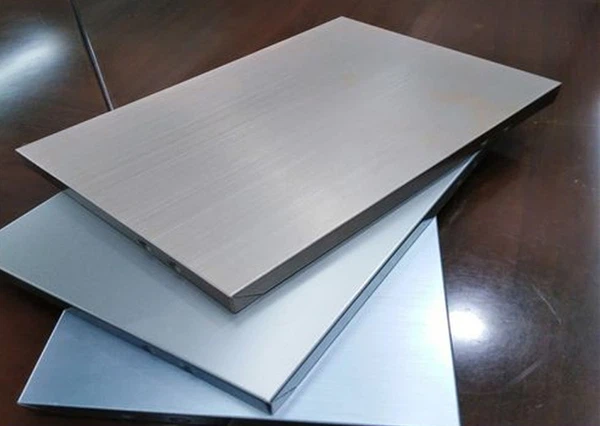
GNEE 3003 H14 aluminum is widely used across many industries. To better understand its performance, it is important to compare its characteristics with those of other common aluminum alloys. Such comparisons help identify its strengths and limitations, enabling engineers and buyers to select the most suitable material for specific project requirements.
Below is a comparison of GNEE 3003 H14 aluminum with two widely used alloys: 5052 and 6061.
GNEE 3003 Aluminum vs. 5052 Aluminum
Both 3003 and 5052 aluminum alloys are non-heat-treatable. Their strength is primarily achieved through cold working rather than heat treatment. However, differences in their alloying elements lead to different mechanical properties.
5052 aluminum contains a higher magnesium content, which results in greater tensile and yield strength compared to 3003. Because of this, 5052 is better suited for applications that require higher load-bearing capacity.
Key Property Comparison
| Property | 3003 H14 | 5052 H32 |
|---|---|---|
| Tensile Strength | 20–26 ksi | 31–38 ksi |
| Yield Strength | ~21 ksi | ~28 ksi |
| Elongation | ~8% | ~12% |
| Weldability | Good | Good (with certain precautions) |
| Formability | Excellent | Good |
While 5052 offers higher strength, GNEE 3003 aluminum provides superior formability, making it easier to fabricate into complex shapes. The final material choice depends on whether strength or ease of forming is the primary requirement.
GNEE 3003 Aluminum vs. 6061 Aluminum
6061 aluminum differs significantly from 3003 because it is heat-treatable. Through appropriate heat treatment processes, 6061 can achieve much higher tensile and yield strength levels than 3003.
Heat-treated 6061 aluminum typically reaches tensile strengths above 40 ksi. However, this added strength comes with increased manufacturing complexity, as additional heat treatment steps are required. In contrast, GNEE 3003 aluminum cannot be heat treated, making it easier to process and more cost-effective for applications that only require moderate strength.
The choice between 3003 and 6061 depends largely on performance requirements. If higher strength and heat treatment capability are necessary, 6061 is the preferred option. If good mechanical performance, ease of fabrication, and lower cost are priorities, 3003 is often the better solution.
Conclusion
In summary, understanding the properties and applications of GNEE 3003 H14 aluminum is valuable for industries such as construction, automotive manufacturing, and packaging. Its balanced chemical composition and practical mechanical characteristics make it a highly versatile alloy. When compared with other aluminum grades, 3003 offers clear advantages in formability, corrosion resistance, and cost efficiency, while also having limitations in high-strength applications. Selecting the right aluminum alloy becomes much easier when these differences are clearly understood.
Frequently Asked Questions
What is the difference between Aluminum 1100 and Aluminum 3003?
Aluminum 1100 is nearly pure aluminum, making it softer and lower in tensile strength than 3003. The addition of manganese in 3003 improves its strength and overall performance, allowing it to meet broader industrial aluminum standards.
What makes 3003 H14 different from other aluminum alloys?
The H14 temper indicates that the alloy has been strain-hardened, giving it higher strength than annealed material. This combination of improved strength, good formability, and compliance with aluminum standards makes GNEE 3003 H14 a popular choice.
Which industries commonly use 3003 H14 aluminum?
GNEE 3003 H14 aluminum is widely used in construction, automotive, and packaging industries due to its reliable strength, excellent formability, and versatility.
Is 3003 H14 aluminum easy to weld and machine?
Yes. GNEE 3003 H14 aluminum offers good weldability using standard arc welding methods. It is also easy to cut and form, making it well suited for a wide range of fabrication and manufacturing processes.