


3003-H18 aluminum has a typical tensile strength of 190–210 MPa (28–30 ksi) and a yield strength of 170–186 MPa. It is the strongest temper available in the standard 3003 alloy series.
In this guide, I will break down exactly what the strength metrics of 3003-H18 aluminum mean, how it compares to other tempers, and whether it is the right material for your manufacturing line.
The Core Strength Metrics of 3003-H18 Aluminum
- Tensile Strength (UTS): 190–210 MPa. This is the absolute maximum pulling force the metal can handle before it tears apart completely. For a non-heat-treatable alloy like 3003, 200 MPa is considered a very solid, rigid structure.
- Yield Strength: 180–186 MPa. This is the exact point where the metal permanently dents or bends. Notice how incredibly close this number is to the ultimate tensile strength. This means the metal will hold its flat shape under high pressure, but once it starts to bend, it will almost immediately break.
- Elongation: 1% - 4%. This is the killer metric. Elongation measures how much the metal can stretch before fracturing. At 1-4%, 3003-H18 has virtually zero stretchability.
3003-H18 Aluminum Mechanical Properties Data
| Property | Value (Metric) | Value (Imperial) | Practical Factory Note |
| Tensile Strength (UTS) | 190 – 210 MPa | 28 – 30 ksi | Full hard condition; very rigid. |
| Yield Strength | 170 – 186 MPa | 25 – 27 ksi | High yield ratio; resists denting well. |
| Elongation | 1% – 4% | 1% – 4% | Extremely low ductility; avoid sharp bends. |
| Hardness (Brinell) | ~55 HB | ~55 HB | High surface hardness for the 3xxx series. |
| Shear Strength | ~110 MPa | ~16 ksi | Clean, crisp edges when sheared or punched. |
| Elastic Modulus | ~70 GPa | 10 Msi | Standard stiffness across all aluminum alloys. |
(Note: Data is based on ASTM B209 standards. Actual values may vary slightly depending on the exact thickness of the sheet.)
Why is 3003-H18 Aluminum So Strong?
3003 is an Aluminum-Manganese alloy. It does not contain high levels of copper or magnesium, so it cannot be strengthened by baking it in a heat-treatment oven (like the aerospace 7000 series).
Instead, the strength of 3003-H18 comes entirely from cold working (strain hardening) at the rolling mill.
- The "H1" designation means the metal is purely strain-hardened without any subsequent thermal annealing.
- The "8" designation means it is rolled to a Full Hard (8/8) state.
During the cold rolling process, the metal is crushed down to its final thickness. This massive pressure causes the internal grain structure to compress, increasing the dislocation density. The metal becomes highly rigid and extremely strong but loses almost all its natural flexibility.
Strength Comparison of 3003-H18 vs Other Tempers
To understand just how rigid H18 is, you need to compare it to the other common 3003 tempers we supply at GNEE.
3003 Aluminum Temper Strength Comparison
| Temper | Tensile Strength (MPa) | Yield Strength (MPa) | Elongation (%) | Best Factory Use Case |
| 3003-O (Fully Soft) | 110 – 130 | ~ 40 | 20% – 30% | Deep drawing, complex spinning (e.g., cooking pots). |
| 3003-H14 (Half Hard) | 130 – 160 | 115 – 130 | 8% – 12% | Standard sheet metal work, CNC bending, and HVAC ducts. |
| 3003-H18 (Full Hard) | 190 – 210 | 170 – 186 | 1% – 4% | Flat panels and insulation jacketing, where NO bending is needed. |
The Takeaway: 3003-H18 gives you maximum structural strength, roughly 30% stronger than H14, but you sacrifice all formability.
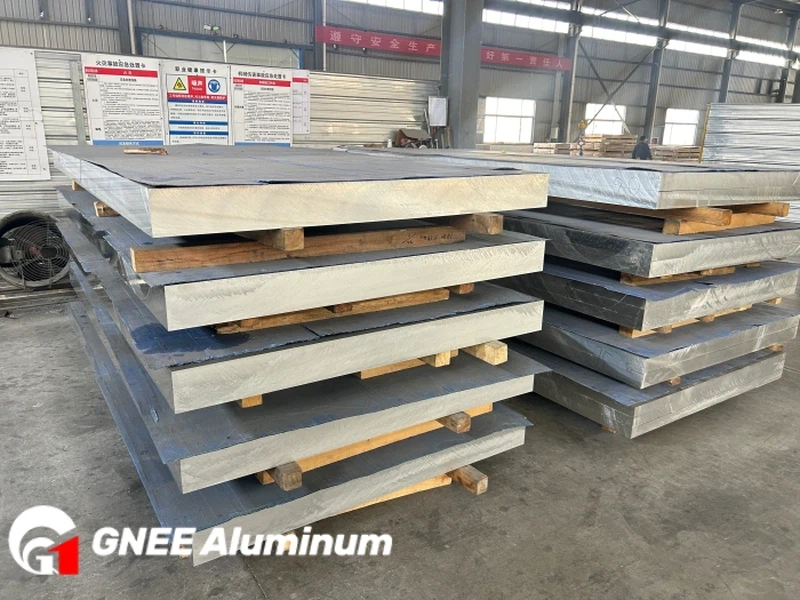
Is 3003-H18 Aluminum Strong Enough for Your Project?
Applications of 3003-H18 Aluminum:
- Thermal Insulation Jacketing: Refineries and chemical plants wrap their large pipes in thin 3003-H18 aluminum coils. The high yield strength prevents the jacketing from denting when workers accidentally bump into it, and wrapping it around a massive pipe does not require a sharp bending radius.
- Corrugated Roofing Panels: When roll-forming roofing sheets with very gentle, large-radius curves, H18 provides incredible rigidity to withstand heavy wind loads without sagging.
- Flat Signage and Base Plates: Applications where the metal stays completely flat and needs to resist surface scratching and impact.
Where 3003-H18 Will Fail
- 90-Degree Press Braking: If you try to fold an H18 sheet into a box or bracket, the outer radius will crack instantly.
- Deep Drawing: Stamping it into a sink or a casing will result in immediate tearing.
If your design requires sharp bends but you still need high strength, you should immediately switch your sourcing to either 3003-H14 or upgrade to the 5052-H32 marine-grade alloy.
The GNEE Advantage
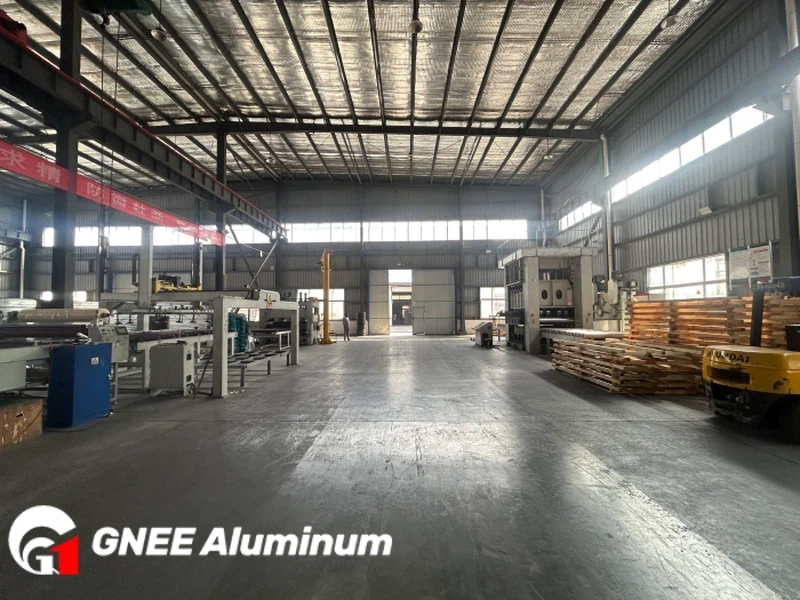
Sourcing full-hard aluminum requires a factory that controls its rolling process precisely. If the rolling pressure is uneven, the sheet will warp and fail your flatness requirements.
As a leading manufacturer, GNEE delivers premium 3003-H18 aluminum coils and flat sheets tailored for global export. Here is why buyers trust our production:
- Transparent Pricing: We do not play games with hidden margins. Our factory-direct quotes are strictly based on the daily SMM (Shanghai Metals Market) A00 Aluminum Ingot Price plus a transparent mill processing fee.
- Strict Thickness Tolerances: Because H18 is often used in automated blanking lines, inconsistent thickness causes machine jams. Our advanced cold rolling mills maintain thickness tolerances strictly within ±0.02mm.
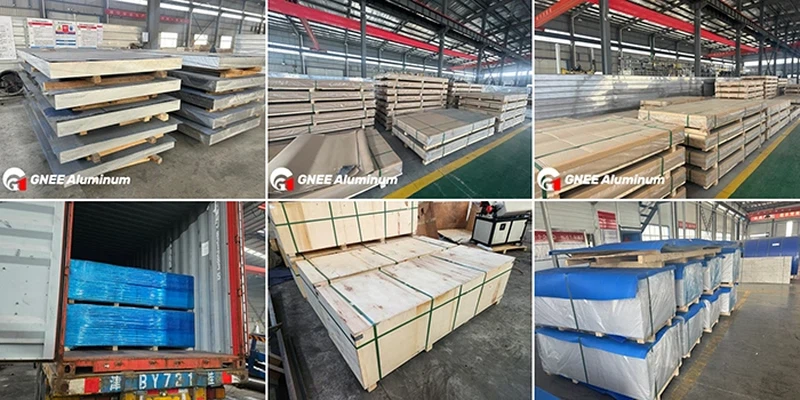
- Export-Grade Seaworthy Packaging: High-strength aluminum is useless if it arrives covered in white rust. Every GNEE pallet is wrapped in moisture-proof PE film, followed by heavy-duty kraft paper, packed with industrial desiccants, and secured with steel banding on ISPM-15 fumigated wooden pallets. Your metal arrives clean, dry, and ready for production.
FAQ
Q1: Can I bend 3003-H18 aluminum at all?
A: Practically, no. The elongation is only 1-4%. If you must bend it, you need an extremely large bend radius (usually 4 to 6 times the thickness of the metal). For standard 90-degree sheet metal flanging, it will crack. Use H14 or H24 instead.
Q2: Is 3003-H18 stronger than 5052-H32?
A: They are very close in tensile strength, but 5052-H32 is generally considered superior. 5052-H32 has a tensile strength of around 210-230 MPa, but more importantly, it maintains about 7-12% elongation. This means 5052 is both stronger and much easier to bend than 3003-H18.
Q3: Can I weld 3003-H18 aluminum?
A: Yes, 3003-H18 is highly weldable using TIG or MIG (typically with ER1100 or ER4043 filler wire). However, the extreme heat from the welding torch will fully anneal (soften) the metal in the heat-affected zone (HAZ) back to an "O" temper. The area around your weld will lose its H18 strength and drop to around 110 MPa.
Q4: Will 3003-H18 aluminum rust outdoors?
A: No. Like all 3000 series alloys, it contains no iron and forms a natural protective oxide layer. It is highly resistant to atmospheric corrosion, which is why it is the standard material for outdoor roofing and pipe jacketing.


